
Suffering Redeemed — Joy, Growth & Victory in Suffering
Host: Rodney Olsen
Date: Jan 15, 2023
Listen on: Bleeding Daylight
Themes: Healing & Hope · Faith & Doubt · Testimony & Story
Format: Has Transcript
Featured quote
Can suffering and victory coexist? Karis’s life answers: yes.
— Karis Meier, on Bleeding Daylight with Rodney Olsen
About this episode
- Can there be joy amidst sorrow?
- Can there be growth when circumstances knock us backwards?
- Can suffering and victory coexist?
- Karis’s journey with chronic illness and finding beauty in the struggle.
Highlights
The Big Question
Can suffering and victory coexist? Karis’s life answers: yes.
Joy in Sorrow
Finding joy amidst sorrow and growth when circumstances knock us backwards.
What makes this unique
Host Rodney Olsen is Australian — this is Karis’s international podcast appearance. The show’s tagline ‘kicking against the darkness until it bleeds daylight’ perfectly frames her message.
Full transcript
Read the full transcript
Transcript source: Whisper (large-v3, cleaned).
Wherever there are shadows, there are people ready to kick at the darkness until it bleeds daylight. This is Bleeding Daylight with your host, Rodney Olson. Thanks for listening. You can find our social media links and many other Bleeding Daylight episodes at bleedingdaylight.net. My guest today will give us a glimpse into how she has redeemed years of chronic illness. I’ll introduce you in just a moment. As you’re listening, consider who else would benefit from hearing this episode and let them know where to find Bleeding Daylight. We all love a good fairy tale where the hero faces a seemingly insurmountable problem only to have everything wrapped up in a neat bow where everyone lives happily ever after. Unfortunately, life doesn’t always follow that narrative. So can there be joy amidst the sorrow? Can there be growth and progress when our everyday circumstances seem to be knocking us backwards? Can suffering and victory coexist? My guest today has written the book Suffering Redeemed, Finding Strength to Endure, Purpose in Pain, and Hope for Tomorrow. Karis Meier lives in Northern Virginia with her husband and four children, and it’s a real honor to welcome her to Bleeding Daylight. Thank you so much for your time. Thank you for having me. Karis, you’ve walked a journey with chronic illness for many years. Take me back to the time when illness wasn’t a daily part of your life. How far back was that? And how did life look for you at that time? About 18 years ago is when I got sick initially. Prior to that, very healthy. I played soccer through college and so very athletic. And I grew up in a Christian home, so God has always been a part of my life. My parents are missionaries and traveled a lot, so I had a very culturally diverse childhood, which was amazing. And it was actually on my honeymoon that I started feeling sick. I had visited my sister, who was a missionary in Pakistan, a few months earlier, started having different symptoms. It was from parasites that I initially got sick, but because of the scope and the magnitude and different circumstances, it ended up leading into a lot of different organ problems. 25 years old when I got married and that’s the same time when I got sick. So, I always joke with my husband that I’m allergic to him because as soon as I got married, I started, you know, I came into this journey of chronic illness. And you say that it was the parasites that you picked up while you were on your honeymoon, But were the doctors able to diagnose that fairly quickly or was that something that took longer? No, it took a while. My husband is in the army and so our first duty station was Alaska. And so after we returned from our honeymoon, he got deployed to Iraq. And so the whole military scene was very new to me and trying to figure out the doctor’s system and everything took a while. And by that time, it was several months. I mean, it was probably about eight months after I had contracted the parasites. And by that time, there was a lot of damage that had been done. It kind of just spiraled after that. I just never really returned back to my normal healthy self. My body just couldn’t recover from it. And after that, it just started affecting different organs in different ways. And in those early days, of course, as I mentioned, we all love that fairy tale where everything resolves. And you must have had in your mind that, ah, we’re going to get the better of this. Things are going to improve. That must have been the thought that you had. And doctors probably were quite optimistic that they’d be able to sort out whatever it was that was causing you this distress, this disease. Yeah, that’s correct. I kept thinking, yeah, I’ll wake up tomorrow and I’ll start feeling better. And I’m someone who doesn’t really like to share what’s going on personally. I’m more of a private, so I didn’t share with a lot of people, you know, what I was struggling with, with my health at that time, because I thought, you know, it’ll, it’ll pass and, you know, I can just bear down and, and get through this until, until things get better. You know, I mean, I, I was open with the Lord and prayed about it, but things did not get better and things continued to decline and got, I mean, a few different times. Now I had problems with my pancreas and kidneys and then, and my heart. So I was in and out of the hospital for a few years there, pretty under severe circumstances. At some point along the journey, I began to realize that it was something that I was going to have to learn to live with. It’s not something I could just kind of sweep under the carpet and say, I’ll just try to live a normal life because I realized it wasn’t. It wasn’t a normal life. I could not do the things or eat the things that I used to be able to do. And I know that in those early days, the doctors, as they were seeking for some sort of diagnosis, they were telling you, this is just nerves. What was it that tipped them off to say, no, we need to investigate things further? Yeah. So in the beginning, they did try me on different medications. You know, they’re thinking, well, maybe you’re depressed or anxious because your husband’s deployed. You’re in a new, you know, a new state. It’s dark. There’s, you don’t know anyone. So there’s a lot of other, you know, circumstances going on. I lost quite a bit of weight. I was very malnourished and I couldn’t gain the weight back, which then started affecting my heart. But that’s kind of when they’re like, okay, there’s something going on that’s not, even though the parasites at that point were gone, the damage that had been done at that point was kind of irreversible, at least what the doctors said, you know, it’s not going to be something that you can just, we don’t have a cure for this. It’s just something you’re going to have to learn how to live with. You’re going to learn how to have to, you know, just change your life so that you can live with this new condition. And the hard thing was, is that it was kind of always changing. You know, the problem would shift from one area. Our bodies are so amazing and complicated, but every part, you know, depends on another part. I lived in a lot of fear, especially in those first several years, like, okay, what’s, you know, what’s going to happen next? Like, what’s going to go wrong next? And I already had a struggle with fear. Fear had always been something that I had, kind of a root of fear that I had developed as a child, kind of that took hold in this illness. And so it’s something that I really had to fight on a daily basis and learn how to come to victory and come to the truth and seek God for the victory in that area. It’s interesting that you’re talking about a lot of those physical ailments and the way that it kept shifting. and so you didn’t know how it was going to affect you next. But this must have had a major effect on you mentally. I’m interested in particular your relationship with your husband because you had only just said for better or for worse in sickness and in health and yet suddenly right at the start of this marriage relationship, you’re getting the worst. You’re getting the sickness. Did that cause you anxiety thinking, is he really going to want to stay with me? if things continue this way? Yeah. So right after we got married, my husband deployed and he was gone for almost two years actually. And so in our communication, he was in a very remote area. So we had very little communication. And the time that we did have, I did not want to burden him with what was going on with me at home because he was in a very dangerous area. And so I really didn’t share much of anything that was going on with me so when he came back it was quite a shock for him to see how sick I was and yes I think I you know I was thinking oh you know like I wanted to get married for so many years and here you know it’s it was very different it’s interesting that you started off with that that fairy tale you know mentality because I think we often think oh yeah like it’s we have this idea of what it’s going to be like at a certain point of our lives. And it was very, very different than I ever expected. So I had to learn through realizing that I couldn’t hold it all myself. I think I tried to just hold the burden by myself and not share it with my husband. There came to a point where I kind of was forced to because I was kind of, yeah, mentally, like you said, it was not only physically, but mentally and spiritually, it was very challenging for me and a lot of questions coming, a lot of doubts arising from who I thought God was and the relationship I did have with the Lord at the time and how that kind of changed as I grew and matured in my faith through the suffering through the physical pain that I was experiencing on a daily basis so to get back to your question yeah I it was it was definitely a process of me learning how to open up and to receive help and support and to realize that it was okay for me not to be okay not to have it all together but to bring other people into that especially my husband and as you are bringing other people into that that must have been difficult because they would have a different reaction to you as you’re trying to deal with it yourself. And we look back to that Old Testament book of Job, which we so often go to once we start talking about suffering. And we know that Job had some friends that gave him some less than helpful advice. Were there people like that in your life that were trying to help and yet were actually doing the opposite? Yes, very much so. I mean, And it’s so hard because, like you said, I know the people who love me. And sometimes it was just acquaintances that I didn’t know very well. But everyone, when you share, when you’re in a suffering, and I’ve come to learn this over the years, is that people are very uncomfortable with suffering and they’re uncomfortable with pain. So they want to try to offer advice or offer solution, which is, I think, our human nature and good that we want to bring other people out of that. But oftentimes, it is not helpful, the things that they offer, whether it be Christians who would say, well, are you living in sin? Do you have unconfessed? Maybe you don’t have enough faith. And I think those things are good to explore. And I think naturally, when we’re in places of suffering, I think it brings us to a deeper humility and repentance, which is beautiful. But other people maybe speaking when they haven’t spent the time just being with you and trying to understand, those comments can be quite damaging, especially when you’re already dealing. I mean, for me, I was already dealing with guilt and doubt and, you know, wondering why me and because just the enemy, you know, there’s a lot of lies that come when you’re in, you know, whether it be physical or mental or, you know, just circumstantial issues or problems or pain or suffering that we start to think certain things have lies coming to our minds that kind of go along with what we see versus the truth of the word. in the Bible that we know is truth, but it’s hard to believe it when we’re living something that feels so completely different. So yeah, I think in the beginning, several years in the beginning when I was first dealing with this, I would take everyone’s comments and suggestions to hold them too highly, and it really did shake me quite a bit. I think I’ve learned kind of more how to let things go and tune my ear back to the Lord, take advice, try to answer questions, but also to know where to draw the boundaries at the same time. So often in our churches, we’re singing great songs of worship to our God, as we should, looking at scripture and we’re pulling out stories where there’s great victory, there’s great ways of moving forward, but we don’t often spend a lot of time in places like the Psalms where it talks about suffering, where it talks about difficulty. Was that a shift for you to have to actually go and find those parts of scripture that actually speak to every part of our human experience? Yes. I honestly don’t know how I would have survived without the Psalms. I had a hard time expressing negative emotions in general. I always felt, even as a kid, I remember feeling sadness and needing to hide it. I think that’s just part of my personality or something I picked up. Maybe as a missionary kid, I felt like I had to have a certain presence or, you know, be a good person and that didn’t allow for a negative, you know, maybe expression. But yeah, the Psalms really provided, provide so much, you know, just a depth of language that sometimes we don’t even know we are feeling until we start praying those prayers and it just opens up an avenue to connect with the Lord and also just a freedom to express things. I don’t at all want to dishonor the Lord or to say anything that’s disrespectful, but I think the Psalms really provide a way to both be very honest in a very broken way, but also to, most of them have the combination of that honesty, but also just the praise and the worship and the awe and the God-fearing that we also need to have to not keep our eyes on our situation, on ourselves, which is so easy to do in suffering, just to get self-focused and self-pity and all those things that come with it. And there’s even some Psalms that don’t end on a good note. They end in darkness because that’s honestly how life is sometimes. There’s not, every day is not, there’s not a good note that we end on, at least in this life right now, right? I mean, I know in heaven we will, but there’s not always a happy ending right now. One of the things I know that was troubling for you is the fact that with this diagnosis and your years down the track, the doctors are telling you, you’re never going to have children. What did that do for you? Oh, it broke my heart. As a kid, my sister and I, all we did was play dolls. I mean, until we were probably way too old, we just dreamed of being moms and that’s all. What I wanted from as a kid was to be a mom. And so, yeah, when they told us we wouldn’t be able to have kids, and my husband is also a lover of kids, so we were both devastated. We did continue to try to conceive for a few years, but it didn’t happen. So then my other desire was to do counseling. So I went back to school and got my master’s. But right towards the end of getting my master’s, I got pregnant. So we rejoiced in that. And we had our first son in 2010. By the grace of God, we have had three more. So we have four children who are all miracles and it really is amazing because, you know, I’ve been on feeding tubes and different, you know, different times where I couldn’t even sustain myself. So for the Lord to give us four children that I was able to hold in my body and, you know, to have healthy children is still something that we do not take for granted. And I look at them every day and I’m amazed that God has given me them. During pregnancy, there’s always that concern of what might happen. there’s always a joy but there’s always that yeah but is everything going to go all right i guess that would be amplified for you with your health issues that there’s this amazing joy that this thing that they said could never happen is happening yet at the same time you know that your body might not cope with it tell me about that mixture of emotion it’s something that my husband and I had to pray about each time and really bring to the Lord because, yeah, I mean, for me, the fear of, I mean, there’s a few times where it didn’t look, you know, I was, I wasn’t sure I was even going to make it. And so I was like, if I, I don’t want to leave kids behind, you know, I don’t want them not to have a mother. So that was one issue that was, that was on my heart and my mind. And also just taking care of the kids is hard. It’s hard when you’re healthy, let alone in my condition. So there’s that part. And then just a lot of people would have advice and have opinions like, oh, you probably shouldn’t have more kids. Is that a good idea? And so it’s something we really had to struggle with and pray about. And each time we felt like the Lord released us and have us trust Him, He did sustain me. I mean, I was able to, for a couple of the pregnancies, I was actually healthier than I had ever been the whole time for the last 18 years. And God just reversed some of my conditions while I was pregnant, which sometimes does happen. The doctor said that sometimes that does happen. So yeah, I mean, it was a range of feelings and it was a struggle. I think for me, the hardest part was looking back to God and not living in fear, but in faith and not living by what other people, you know, their opinions of what they thought was best, which is really hard to do, you know, when I tend to be a people pleaser, I want to honor people and their opinions, but first and foremost, I know we need to go back to God and heed what He is saying. There’s something that we talk about with teenagers, but I suspect that it actually goes through the rest of our lives. And that is that we don’t like to be seen as anything but normal. We like to be like everyone else. What was it like for you in turning up to places where people are having a meal, for instance, and not being the normal one, having to do things differently, having to be on guard all the time? What was that like for you? Yeah, it’s very challenging. It’s amazing how many things revolve around food in our culture. I never realized it until I was not able to eat most of the food. When we go to a party, like we went to a birthday party a few months ago for a little boy and everyone’s eating the food and I often have to drink meals because my body just can’t digest whole food a lot of the time. So yeah, I mean, I found myself at first kind of feeling, yeah, just kind of left in, like, I kind of wanted to withdraw. That’s sometimes how I feel because I don’t want people to ask questions. And it’s hard to explain everything because it’s not an easy, like, oh, I have this disease and this because, you know, it’s just, it’s a long history. It’s complicated. And I don’t always have a good attitude, honestly. I sometimes do feel like, why can’t I just eat what everyone else is eating, you know? So, but in that specific time, I really, the Lord reminded me of the verse that comes, you know, that says, taste and see that Lord is good. His steadfast love is better than life. And, you know, these truths that are, that when, you know, we are put in situations like that, it really tests, like, is it true for me that God is better than anything else? in this life. And, and, and in that moment, I was able to share, share Jesus with, with a person next to me because the Lord reminded me that he is so much better than anything that I would be missing out at, at that party. And those are the opportunities that I, I am so thankful for, you know, cause I don’t, I mean, in any situation, God, God can open up the door for us to share his goodness with others. But I think it’s often in the difficult times for us that God reveals our heart and then gives us opportunities to share His grace in those moments. I’m just blown away by His patience with us and with me. Throughout this process, you’ve come to an understanding. And as you say, there are still days and a lot of times when you’re just thinking, oh, I wish it could be different. But there’s obviously something that has settled within you, a greater understanding of God, even though you say that you had known God right through this process. Was there a pivotal moment that changed your thinking or was this a gradual thing throughout this time? It’s been a gradual process. There was a time about five years ago, I had an onset of neuropathy in my limbs. So basically, I all of a sudden could not walk or move my arms. And to this day, I still struggle with, I mean, I can walk now, but I still have tingling and numbness, which makes it difficult to do a lot of things. But it was that time where it just, it was, it got to a point, you know, I was, I was just so broken at that point. So utterly, I felt before that happened, I already felt like I was at the end of my rope. And then that happened. And I was, we were going through some hard things in marriage and in life and different aspects with the military also. And so it was a very, very low point where God opened up my eyes to realize how much more I needed Him and how much more I needed to receive from Him. Even after so many years into this illness, I was still holding parts of me back. I was still trying to hold parts of me together to look a certain way, or I don’t know. I don’t even know what it was, but I know it was in that complete brokenness where God really started getting into every crevice, you know, and just exposing His goodness and His grace to me in ways that I guess I just couldn’t see before. I wasn’t able to receive it. And so even though it was a very, very low point, I think it was that, that was what kind of started the blossom where I was able to start really reaching out to other people, kind of letting go of my life more, letting go of my desire to hold on and to control what was already falling apart. Part of your reaching out to others is the book that I mentioned in the introduction, Suffering Redeemed, Finding Strength to Endure, Purpose in Pain, and Hope for Tomorrow. At what point did you decide, I need to write this down, I need to be able to tell my story? So I was actually in that time that I mentioned about five years ago where I was laying in bed one night, and God just put on my heart very clearly to start writing. At that point, I didn’t know what. I was like, what am I going to write about? I didn’t consider myself a writer. I always enjoyed journaling, but I didn’t have anything that I thought was worthy of writing, but I was obedient. I started writing, just kept a log on my computer, just wrote as the Lord was speaking to me as I was wrestling with questions that I was having personally, just really kind of digging into the Bible about what does God say? What does He say we’re supposed to do when this happens? What does God say about suffering? If He’s the God of miracles, how does this line up with my own life? And so just a lot of questions, a lot of just internal struggling that I had to work through. And so I just, I was, yeah, I wrote for many, for a few years. And then I started a blog a few years ago. Then at the beginning of this year, I was just praying about what I should be focusing on. And I kind of felt inclined that I should take the last five years that I’ve been writing and turn it into a book basically, which was quite challenging because a lot of what I had written, I had not intended to share with other people. It was more of the internal processing and more of a personal working, wrestling with the Lord for my own personal life. But at the same time, I had been seeing through the blog and through corresponding with other people how God often uses, even if it’s a different situation, He will use what I had been going through to reach out to somebody in a completely different situation. So it kind of gave me, I guess, having that experience gave me the faith to say, okay, I think I can do this and turn it into a book. It’s been a remarkable journey to be able to write that down, to get that out to others. And even just reading a few of the pieces of your blog tells me that you are a gifted writer, that this is something that God has certainly gifted you in. But what has been the response to actually putting out those more private thoughts in the book? What has been the response from people who have read the book? I’ve had quite an array of responses. There’s several people who are close to me, even in my family, who were very surprised, for one, that I could write, and two, that of what I’ve been through because, like I said, I didn’t like to talk a lot about what was going on. at least I didn’t want to ever come across as complaining. So I think I just, I tended to kind of downplay what was going on for me. I was very open with God and also with my husband. So part of it was just some surprise, but then there was also just floods of emails from people just opening up about what was going on in their lives. When we are vulnerable, I think it just opens up this place for community and a willingness for other people to share. So I think it really just opened up more avenues for me to one-on-one especially, but even more in group settings to share and to hear from other people. I even had a few people who are not believers asked to read the book and have had some really positive responses, just even how they’ve learned to relate to God in reading the book, which was a very big surprise to me, but it’s a blessing because God can reach to anyone anytime through any situation, but I feel blessed. I feel blessed that God has opened up a way for me to share, and it’s all for His glory because I know even through the writing, I felt like it was all very inspired by Him. It wasn’t something that I was trying to push out on my own. A lot of times, our society tells us that hope is what comes at the end of a struggle. And yet you’re talking about finding hope in the midst of the struggle. For someone who’s going through something at the moment, and they’re not quite sure when or if this is going to end, what would your advice be to them? I would just say turn towards God and not away. I think there’s always a temptation when we’re going through something, especially when it feels too long and too hard to turn away from God, to harden. I have felt different times where my heart just hardening, like, God, how can you be good if you allow this to happen? But each time I felt that, I would just intentionally turn back towards God and pour out my heart to Him. We need to open ourselves out to God. He’s always willing to give us and to commune with us and to pour His love upon us. But we need to position ourselves to receive that. We need to be able to take in His comfort. And it’s only in affliction that we can be comforted, which is beautiful, I think, because God is the God of all comfort. and he wants to comfort us, but we need to let ourselves be comforted by him. And he is a very present help in time of need, as Psalm 46 says. He’s always present and he’s always ready to help. And I can say that 100% it is true, even if life feels too hard, because it will and it does often, but God is true to his word. Karis, if there are people who are wanting to get hold of your book or to read your blog posts where’s the easiest place for them to find you so my website is my name my first and last name k-a-r-i-s-m-e-i-e-r.com right now the book is exclusively on amazon it’s on kindle and paperback but you can also find the book on my website i mean it takes you to amazon that’s the easiest place to find it and i will put links in the shownotes at bleedingdaylight.net so that people can find that easily. Karis, it has been wonderful to spend a little bit of time with you to hear some of your story, which of course is outlined a whole lot more in that book, Suffering Redeemed. But thank you so much for your time on Bleeding Daylight. Thank you for having me. Thank you for listening to Bleeding Daylight. Please help us to shine more light into the darkness by sharing this episode with others. For further details and more episodes, please visit bleedingdaylight.net.
Listen to the full episode on Website →
{ “@context”: “https://schema.org”, “@type”: “PodcastEpisode”, “name”: “Suffering Redeemed — Joy, Growth & Victory in Suffering”, “url”: “https://karismeier.com/bleeding-daylight/”, “datePublished”: “2023-01-15”, “inLanguage”: “en”, “partOfSeries”: { “@type”: “PodcastSeries”, “name”: “Bleeding Daylight” }, “creator”: { “@type”: “Person”, “name”: “Rodney Olsen” }, “contributor”: { “@type”: “Person”, “name”: “Karis Meier”, “url”: “https://karismeier.com/about/”, “sameAs”: [ “https://www.amazon.com/author/karismeier”, “https://www.instagram.com/authorkarismeier/” ] }, “associatedMedia”: { “@type”: “MediaObject”, “contentUrl”: “https://www.bleedingdaylight.net/e/karis-meier-suffering-redeemed” } }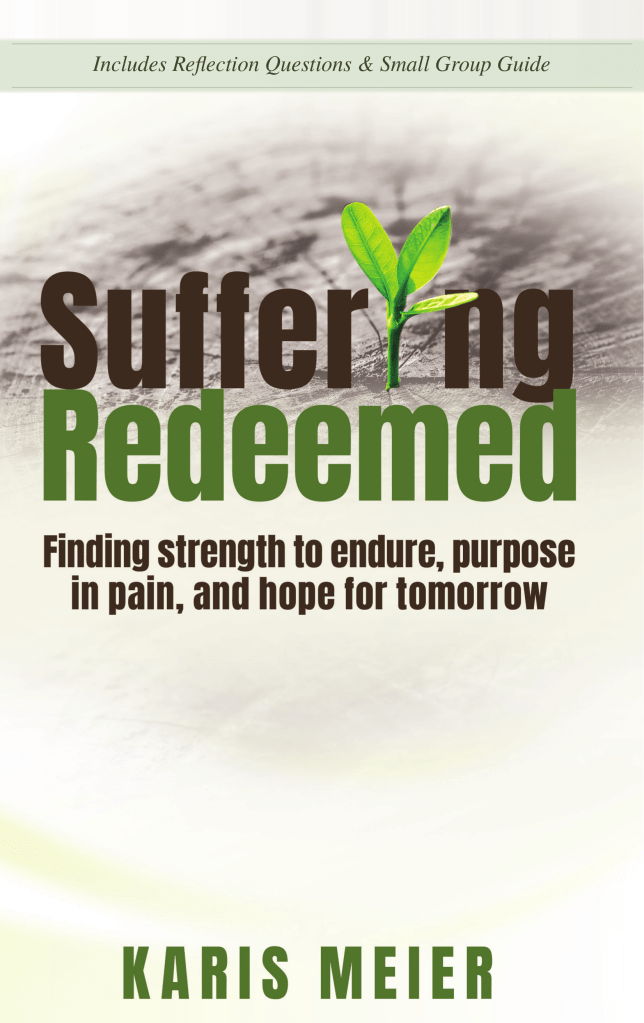


 Suffering Redeemed