Bouncing Back and Thriving Through Chronic Illness
Host: Grace Kew
Date: Apr 10, 2023
Listen on: Spreaker
Themes: Practical Resilience · Chronic Illness · Identity & Purpose
Featured quote
Bouncing back and thriving — not just surviving — through chronic illness.
— Karis Meier, on Bounce Back and Thrive — Episode 70 with Grace Kew
About this episode
- Resilience and bouncing back from adversity.
- Thriving despite ongoing chronic illness.
- Work-life balance and authenticity.
- Professional perspective on overcoming challenges.
Highlights
Thriving Not Just Surviving
Bouncing back and thriving — not just surviving — through chronic illness.
What makes this unique
A business/professional resilience podcast that features stories of overcoming challenges. Positions Karis’s story in a professional development context alongside entrepreneurs and business leaders.
Full transcript
Read the full transcript
Transcript source: Whisper (large-v3, cleaned).
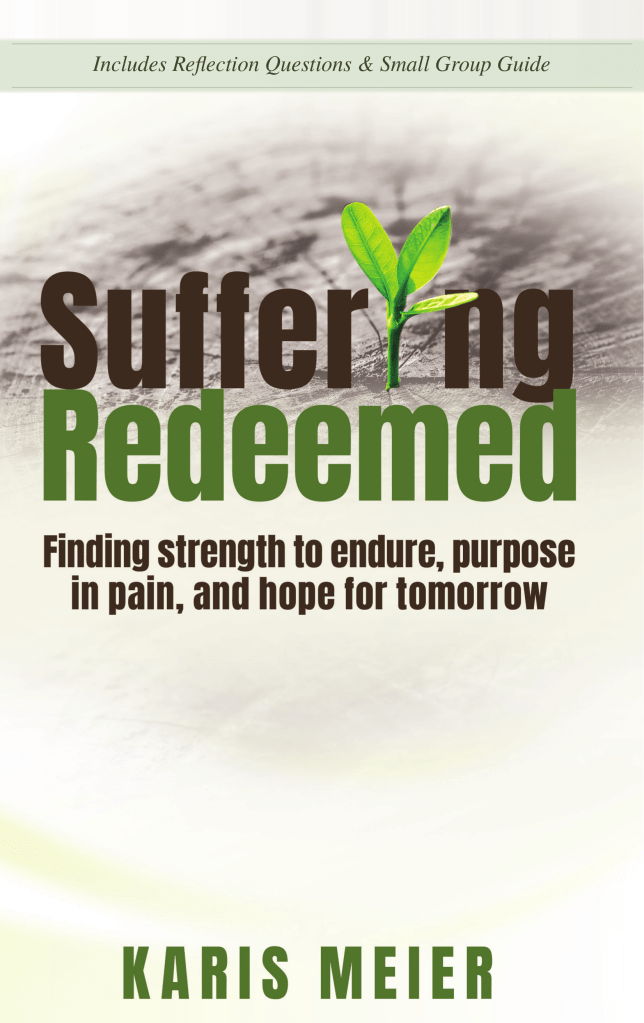
Bounce Back and Thrive, helping you build resilience with Grace Q. Hello, my wonderful listeners, and welcome back to another episode of Bounce Back and Thrive, the show where we take time to slow down, reflect, and listen to guests who openly share some real-life inspirational stories about how they have managed to bounce back from a challenging situation or experience. My guests also share some very practical advice and valuable insights that you can learn from and apply into your own situation. And today, sharing her story is a special guest joining me all the way from Northern Virginia, United States. Her name is Karis Meier. Karis, welcome to the show and it’s such a blessing to have you. Thank you. It’s great to be here. Fantastic. My great pleasure. So who is Karis? Well, Karis is a child of God, a wife, a mother of four children and a counsellor. She is also a published author of a book called Suffering Redeemed. Finding Strength to Endure Purpose in Pain and Hope for Tomorrow. It’s a part memoir, part spiritual growth and faith-based book for anyone going through hardship or suffering and wants to find hope and help to keep going even when life feels too hard. The book was published in 2022 and available for purchase on her website and on Amazon as a Kindle edition or paperback. Karis holds a BA in Christian Education and a Master’s in Counseling. To learn more about Karis, visit http://www.karismayer.com. So, Karis, just wondering, what do you get up to when you’re not busy? you know doing your Christian education and getting that master’s? That’s a great question and it’s kind of funny because sometimes when I see my kids and they say I’m bored I think and I tell them how could you ever be bored because I don’t feel like I’ve been bored for years so I don’t have much downtime honestly I have four kids ages 2 to 12 so most of my quote unquote spare time is chasing my two-year-old around and trying to keep my children in activities and up to homework and all those types of things. But I really do enjoy being outside. I love nature. Anytime I can get outside, I do. I enjoy soccer. My children play soccer. I love watching them um and reading i guess is another thing that um i really i really love to read so those are a few things lovely thank you for sharing that because when you mentioned the children saying they get they’re bored and i think did my children ever say that yes they did and i think sometimes it’s just when you’re young you get bored just even when you’re doing something i’m bored i’m bored and i used to say to them wait until you get older then you find out that you never get bored because you have quite a lot to do so yeah so i’m glad you’re pleased to hear you enjoy your outdoor and spending time with your wonderful family so caris as i did my research to learn more about you i came across a blog on your website the title to this blog is Sweet Silence. And I just quote this particular blog. It’s very, very interesting. And I would actually encourage my listeners to just go to your website and read this because there’s more to it. And I’m just taking two paragraphs from there to just give them a bit of a feel. So I quote, five minutes of quiet. That is what we heard when my parents needed a break from us talking, usually in the car or at the dinner table. Sometimes the whole family would sit in silence or we kids would be quiet and my parents would have an opportunity to talk. And then it carries on. Nearer the end, you write, not something any kid wants to hear, but now I understand this discipline’s value and the treasure it brings. Our world today shuns silence and avoids it at all costs. Anything to fill the void it exposes in our lives. So we turn up the music, scroll social media, find another app that dings at us, and rush to the next activity. I close the quote. So really, as I read this, Caris, it really applies to kids, but also adults. Because I thought, okay, nothing any kid wants to hear. But what about us adults? And I’m sure my listeners will agree with me and say, yes, this does resonate. so my thoughts around this really i would like to elaborate for us is what inspired you to write this blog and secondly how will taking five minutes of quiet time benefit us so the inspiration came from a retreat that that my family went on last summer and one of the speakers encouraged us that if we have a particular issue or problem in our lives, and he’s a pastor, so he often has opportunities to talk to people through issues they’re going through, but he challenged us to pray for a hundred hours about that specific issue and then come back and see what happens after that. And so my husband and I have been praying and thinking a lot about our future and kind of what is next. And so we kind of took that challenge on. I do quite a bit of time in prayer, but the time that we devoted to that and keeping track, it was amazing to me what that discipline of being silent and taking all distractions away and really how difficult it was. And I was kind of surprised. And so it kind of got me thinking, we live in a world where there’s always noise and there’s always something that’s a vine for our attention. And we often have radios on or the TV on, or there’s, you know, there’s so many social media outlets and there’s just, there’s not a lot of opportunity for silence. And you really have to be intentional to carve out that space and that time to be quiet. You know, just in talking to some other people about it too, I realized how we really get uncomfortable in silence. And as I share in the blog, I think some of it is when we are silent, when we don’t have the constant input, we really have to face what’s going on in our lives. And we’re kind of left with this realization of the reality and some of the hard things too, I think that come to mind and that we have to wrestle with. But on the flip side, there is such a value. And for me personally, as I spent that time in prayer and in silence and just really just taking time to listen and to even search my own soul and to quiet all the different thoughts that come up in my mind, for me, the biggest struggle was the different things that would just come up in my mind, things that I needed to do, to-do lists and things that I’m like, oh, I forgot to do that. And just the busyness of our minds that come, I think, from a culture that is very busy. The blessing of being able to be still and to just be silent and to slow down and to give ourselves that gift of quiet. And that’s what I really see it as. Although I think we often miss it because we fill our schedules so full and then we miss out on it. And I think especially when we, in different seasons, it might be more difficult if you have kids or if you’re going through a particularly busy season at work, there’s different times I think where it’s more challenging, but I’ve grown in appreciating this gift. good thank you for sharing that and as you were talking at carys i was just thinking with you having your you know your family children ranging from two to twelve curious have you passed on this value of embracing silence to your children it’s something that we really try to do as i mentioned at the beginning there you know it’s it’s a discipline and as kids when my parents you know either do the five minutes of quiet, which is something we do with our kids too. It’s good for kids to learn to be quiet and it’s not natural for them to do. And so sometimes we have to start over and it’s something they have to kind of grow in. But also as a family, we do times of prayer and times of reading together where they have to be quiet. And it’s not necessarily the same when you’re together and are reading. But still, I think the discipline of learning to just slow down, to be still, to concentrate on one thing is really valuable. And I hope it’s something that we’re passing on to our children. So Karis, can you tell me and my listeners about a time when you were faced with the challenge and how you managed to overcome it? So yeah, I could probably share many. I will pick one, but I have about almost 20 years ago now, I picked up some parasites when I was traveling overseas. And it turned into quite a long journey of chronic illness because of the type of parasites. I ended up having different organ problems, heart and liver and pancreas and kidney. Anyway, just in and out of the hospital many times. But I remember one particular time where I had two children at the time. So my second girl was six months old, and I was having heart problems. And so I was admitted to the cardiac unit of the hospital. And I was laying in bed, and my heart rate was in the 30s. It was very low because of malnourishment. I wasn’t just I wasn’t able to retain enough calories to survive basically and so they I was put on feeding tubes and but I remember laying in that hospital bed and thinking I don’t know if I’m gonna make it like I just and my heart just broke because my children couldn’t be there with me and they didn’t know what was going on and I had a six-month-old who was just yeah all of a sudden, I couldn’t see her anymore. And so I was in a very, very broken, very low place. And I remember God just speaking to me. And it was from one of the Psalms that says, my heart and my flesh may fail me, but God is the strength of my heart and my portion forever. And in that moment, I really felt like God was just infusing me with strength and hope. And not only physically, but also just spiritually and emotionally and mentally, it gave me, God has often spoken to me in those moments of being very low and giving me words of hope. And a couple of weeks later, I was able to go home and I was on IV feeding for several months after that. But God brought me through. And even though the rebonding with my daughter was difficult for a few months after that, I had such a sweet relationship with her. Even to this day, I have such a close and sweet relationship. And I see how God just redeemed that. I could share many more times, you know, where it seemed like it was the end and yet somehow I was brought out of it by God’s grace. Okay. Thank you for sharing that, Karis. I’ll just take you back in your story as I was listening. You know, there you are lying in a situation where you just felt probably this is it. I don’t know what’s going to happen to me. I don’t know what’s happening, you know, to my children who are not able to see me. And you turned to, you says, God spoke to you. I’m just trying to put this into perspective of somebody who might be listening right now, probably facing a similar situation. And they, unlike you, don’t have, or don’t know actually, not don’t have, don’t know about God, don’t know that God speaks, how would you be encouraging them not to give up? Or what strategies would you suggest to them? I think, you know, every moment that we are alive, you know, there is hope. And, And, you know, I think I look back to, and I think, you know, each moment we have a choice to make, you know, in our situations, we can’t always change our circumstances, right? But we can choose how to respond to them. And I have felt many times my own heart kind of hardening, becoming bitter, you know, just this is not fair. Like I have had so many things go wrong in my health. Like how could one more thing go wrong? And yet I have a choice in that moment to say, okay, I’m going to become, you know, and there’s times where I have been very depressed, but, and that’s not, I’m not saying there’s, there’s nothing wrong with being depressed, but, but we have a choice then to make, okay, am I just going to keep going down into this, into this despairing hole, or am I going to reach out and receive love? And I think that can come through people that can come through hope in God that can come through hope and things turning around. But for me, I was raised in a Christian home, and I came to a point in my early 20s where it wasn’t just about the rules or religion. It became more of a relationship for me where I felt like God was the source of my hope and faith in life. And so for me personally, that was really the foundation, you know, that I was able to keep going back to. And because I have read the Bible and have memorized some of the scriptures, that’s the way that God speaks to me is through his word. But I think also just look at the world around us and see just the incredible beauty and potential that God has made. And each person is so unique and has so many unique gifts. And so I don’t, I’m, you know, I think there’s, part of it is responding in a way that, like I said, it’s interesting. I just recently read Viktor Frankl’s book, Man’s Search for Meaning, where he was in a concentration camp. It really changed my life, that book, I think, because I see this man who was in the worst conditions possible, and yet he found meaning in life to keep going, to go on, because he saw his fellow human beings and he had passion to help them. He didn’t just say, oh, I’m just going to give up and die, which a lot of people did. And he’s a psychologist, so he could see. He kind of took it kind of like an experiment, kind of like watching people. Where was their hope? If they lost hope, then they didn’t make it. If they had hope, if they believed that life still held meaning, they were able to survive. And so I think, you know, just what is the foundation of hope? What is the foundation of my meaning for life? If I can still find meaning, even if I lose, you know, this, this, and this, which I think we can, I think each one of us can find hope and can find meaning to keep living, even if we lose the things that we think are the most precious to us. You know, I think we all have things like, if I lost this, I could never go on, you know. but I think there’s just, and to not feel like you’re alone. I think that’s something that when you’re in suffering, it’s a lie, I think, that comes to us just that I’m the only one going through this. No one’s going to understand. I can’t share because this is just too dark, too hard. And I’ve been there, but I’ve also seen the beauty of people coming into that suffering and extending a hand, extending a shoulder, the comfort and the love that we need to surround us in those times. Yeah. Thank you for sharing that. And as you spoke about the different ways, especially the hope, and referring back to the book you’ve just read, that hope is one of those things that really keeps us going. Because once we lose hope, it means we’re surrendering and we say we cannot move forward or we don’t want to move forward. So I think hope is something that is critical in this. But it also reminded me, and this is for, you know, some of the listeners who may not have the same strategies that, you know, you pulled onto and just giving them ideas as, you know, adding onto your things you’ve shared, is when I referred to the strategies that I used when I went through challenging times. And by the way, this is in an e-guide that I wrote and gave information about my personal story and summary of strategies. And I drew on different strength pillars. I call them different sort of strength pillars, the internal strength, my external and higher strength. And what I did there, when I talk about the internal strength, the focus, keeping that focus and saying, I’ve got to keep going. It could be self-belief. It could be what you just mentioned, Karis, which is hope. That is your internal strength. And then when you look at the external strength, I sort of tapped into family, my siblings, studying. Some people do that just to escape and just study. Relaxation, there’s a lot of strategies out there as well for that. And then for the higher strength, which is what you kindly refer to as faith and having God speaking to you. I tapped into that. I tapped into prayer, exercise, and there’s also nutrition. Sometimes people think I’ll change something in terms of nutrition and see if that will help me to move forward within that circumstances one may find themselves in. So it’s just sort of an illustration adding on to the things that you’ve shared That’s yes. The one which is the internal strength is so critical when people are deciding to move forward or not to move forward in whatever situation they may find themselves in. So I was just thinking about, you know, your family, who you tapped into. How did they support you during this time when you were unwell? I think a big part of it is just being present. And when you’re going through something that you don’t know if it’s going to end, and there doesn’t seem to be any answers, it can be very depressing. It seems like a hopeless case, kind of. But I think something that is so important when you’re in that situation is to share with people what you need because people really – I mean, whether it be your family or your friends or your community or church or whatever, everyone wants to help. They just don’t know how necessarily to help, and each person is different in what they need. So not to be afraid to share. I just need someone to come and sit with me. I just need someone to listen. Because one thing I did learn is people often offer advice or solutions. And maybe sometimes that’s needed and that’s wanted. But for me, that often wasn’t what I wanted or needed. I just more needed someone to be present and to feel like I wasn’t alone. Yeah. And it’s interesting you point this one out of asking for help. And some people are good at asking for help. Some people are not good at asking for help, even when they’re troubled and going through, you know, some challenges. But it’s letting people know what it is you need, you know. and i was just thinking how does one do that you know because we you know what i mean we find ourselves in a situation where you’ve heard oh somebody’s very unwell maybe they you know sadly they maybe have cancer or they’ve got it could be anything challenging they’re going through and it’s quite common but we all say what do i do what am i going to say mm-hmm to this person so it’s that approach of how do you actually do that how do you ask your friend or your loved ones how you can best support them i think it is being very straightforward because like i said i think you know in my experience people most you know most people just really do want to help. Sometimes people are afraid of suffering and afraid of a situation. You know, if somebody says, I know I’m really depressed, I can’t, you know, I can’t get out of bed. And, and for me, like when I’ve shared, you know, I’m going through this and they don’t under, you know, somebody doesn’t understand like medically, like what that means. And it kind of goes over their head. There’s, there’s usually two reactions, like kind of like a pullback, like, you know, I don’t know what to do. So just silence or, you know, kind of like offer advice. And so when that happens, instead of taking that as, oh, I’m being shut out by this person, you know, I think what’s really happening is they’re thinking, oh my goodness, this is so hard. And then they freeze, you know, and, but I’ve learned, I think the hard way is just saying it would really help me if this you did this you know because sometimes like people say oh can I bring you a meal and I was like actually I don’t really need a meal but if you could take my kids to the park for half an hour that would be so wonderful you know so it’s it’s a gift I really believe this because I’ve been on the other side where people have asked me and I love I love helping other I mean that’s something that I enjoy doing but we don’t give other people the chance if we don’t ask. And so I think of it like that. In the beginning, I think, oh, I don’t want to be a burden to them. I don’t want to add to their problems. But really, you could look at it differently and say, no, you’re giving them an opportunity to serve. And really, that’s a blessing. I think the Bible said it’s more blessed to give than to receive. And I think anyone who’s given really feels that, right? When you give a gift to someone and they receive it, there’s such joy in being able to give. And so when we don’t ask, we don’t give people the opportunity to do that. Yeah. Quite intriguing. The idea of helping others, which is also about gratitude. It’s now being, there’s a lot written about gratitude and how gratitude makes you feel better because you’re helping somebody else or you’re doing something for somebody else without expecting anything back. And as you were talking, I was thinking, well, most people will be on some form of a social media platform. Is it a space that is safe for somebody to ask their friends for help? Do they have to ask them directly? What are your thoughts around that based on your own experiences or what you experienced? I think it could go either way. But in my experience, it’s more of a one on one thing that that I, at least for me, like that, that’s been my experience is more, you know, when I’m having a conversation with someone or in a group setting, or, you know, even at someone’s house, or their house, but I think it could go either way. If you have a close group on social media and there’s i don’t think that’s like that could be a good place to ask too so i think it could both it could both go either way yeah it is a difficult one whichever way one wants to ask for help i think the key is are they willing to ask for that help have got they got that network and if they don’t have any network that’s there to support them then it’s you know the professionals that are there to tap into. You know, there are a lot of different ones you can ring, you know, or maybe send an email, but mostly it’s a phone call and there’s somebody at the end to be able to help. So just moving on from your situation when you came out of hospital, you know, how did you move on in life following that situation or the illness that you were challenged with? That was a time, like I said, I had two children then. And actually something else that I’ll share is when in the beginning of all this, I was told by a few doctors that I would never be able to have children. And so each child that I have had is a complete miracle. And, you know, sometimes I’m like, how can I take care of all these children? Because sometimes it’s hard with my health to even take care of myself. And yet I see each one of them as such a blessing and such a gift. And, you know, sometimes in the morning, I don’t feel like getting out of bed, honestly. I’m like, it’s hard. But knowing that my children are there and they’re depending on me, it’s a great motivation. And so I’m just thankful for each one of my children. From then, it’s just been up and down because my immune system became very compromised. I became very susceptible to different things. And shortly after that, a couple of years after that, I contracted Lyme’s and that led to other complications, nerve problems, and some other issues on top of other things that were happening. So, and it’s, it’s not like I have, you know, with some medical conditions. It’s like, okay, this is your diagnosis and this is what you have to deal with. And that’s how it’s going to go. But from my experience, you know, and I think, you know, other people have in different ways, it’s easier and more neat and tidy when you have something that’s more clear. But for me, it’s been kind of like, okay, now this happened and the doctors aren’t sure, you know, what to do with it. And so then I have to just wait and kind of go to another specialist. And with my husband being in the military, we’ve moved 12 times now in 17 years. And so that just adds an extra challenge to medical care and a lot of other things. But somehow, we’ve made it through. And we’ve been here in Northern Virginia now for almost four years, which has been a huge blessing to be more stable. yeah curious caris what is your greatest fear and i’m basing this on what you’ve shared in terms of having different types of things that are happening to your body you know now lyme’s disease in the picture you’ve got many different things that have happened biggest fears or maybe one so fear has been something that i’ve struggled with immensely since I was a child, I’ve always had a lot of fear. And so when all this health stuff started, it was something that I really had to face head on because fear can be so paralyzing and it can really destroy, it can destroy our lives if we let it. And so there was a time with, I developed neuropathy with the Lyme’s and where I, there was a time where I couldn’t walk and I couldn’t feel my legs, my feet, my hands at all. And that was probably the most frightening thing that has ever happened to me. And when we face our fears head on and realize, okay, I am going to take this and I am going to not back down. And I’m going to, you know, you have to be real and be like, if this happens, then what? Then am I going to just roll over and die? Or am I going to say, no, there’s people who have been through so much and have lost everything and yet somehow they continue. And so if other people can do it, I can do it. And so I think there’s been a lot of fears like that with different things happening over the years where I’m like, I may lose my ability to do this or that. And, you know, right now, I can’t do and I can’t eat what I used to, right? I do have a lot of limitations. And yet, I can still find joy and hope. And there’s so much more to life. I think we can handle a lot more than we think we can. And we put these scenarios in our mind, which drives us to fear, you know, worst case scenarios, like, oh, if this happens, you know, but when we’re, when we’re forced to face those fears, it almost like they diminish a little bit because we realize, you know, I went through that and I came out the other side. And so, yeah, I think it’s just, it’s something that, that I’m going to have to continue facing, but I also see how much I’ve grown and I’m definitely stronger now than I was, you know 10 15 20 years ago yeah yeah what is your greatest desire having gone through everything you’ve gone through and you think yeah i’m still here i think the two things that come to mind you know that that are the two commandments from the bible that are you know jesus the two two greatest commandments are to love the lord your god with all your heart your strength and and to love your neighbor as yourself. So really, I want to live a life where I love God and I love my neighbor, which means anyone around me. And that’s part of what going through this, I have been through things where I can speak out and help other people. I think there was a time where I was too caught up and too focused on what was going on for me personally that I couldn’t reach out and help others because I was paralyzed by the fear I was I was too stuck on my own suffering but I think slowly I’ve learned to let go more you know so yeah I just I have a heart to help people who are who are losing hope and who are struggling to keep going because they feel like it’s just too hard yeah yeah thank you and just uh last one before we wrap up Caris, if there’s one piece of advice you would impart to, you know, somebody who’s listening out there who may be going through the same thing, or maybe a friend, family member, what would it be? Well, I’m glad you brought up gratitude because that’s been something over the last probably two years that I’ve really been focused on. And I will say, I know there’s a lot of talk about gratitude, but it is so true. Like sometimes when we’re in a hard situation, we can think, well, what do I have to be thankful for? And yet there is always something to be thankful for. And it is just a quick story. Like during when I got, when I had COVID and I lost my smell for a while. And when I regained my smell, it was amazing how much I appreciated my smell. Like I, I remember smelling like the baby shampoo on my baby’s head. And I was like, oh, this is just amazing. Or the coffee brewing. And so sometimes we have to lose something in order to appreciate it. And hopefully not always. But it was during that time when I was like, you know what? Like I’m not often thankful for being able to smell. But just things like that that we take for granted all the time. And yet we have so much to be grateful for. And it really does change our whole perspective when we choose to focus on what we have to be thankful for versus on the many things we could choose to complain about. Wow. Thank you for that. Carice, I want to thank you for being my guest and sharing your story and wisdom. Thank you for having me, Grace. My greatest, greatest pleasure and a blessing. Well, well, my listeners, there is always a takeaway from my guests. And on this occasion, I would encourage you to really reflect on a couple of things. Firstly, how do you embrace your five minutes of quiet? And secondly, what are you thankful for? That’s all for this episode and thanks for listening.
Listen to the full episode on Spreaker →
{ “@context”: “https://schema.org”, “@type”: “PodcastEpisode”, “name”: “Bouncing Back and Thriving Through Chronic Illness”, “url”: “https://karismeier.com/bounce-back-thrive-70/”, “datePublished”: “2023-04-10”, “inLanguage”: “en”, “partOfSeries”: { “@type”: “PodcastSeries”, “name”: “Bounce Back and Thrive Podcast” }, “creator”: { “@type”: “Person”, “name”: “Grace Kew” }, “contributor”: { “@type”: “Person”, “name”: “Karis Meier”, “url”: “https://karismeier.com/about/”, “sameAs”: [ “https://www.amazon.com/author/karismeier”, “https://www.instagram.com/authorkarismeier/” ] }, “associatedMedia”: { “@type”: “MediaObject”, “contentUrl”: “https://www.spreaker.com/user/12940808/bounce-back-and-thrive-ep70-karis-meier” } }