
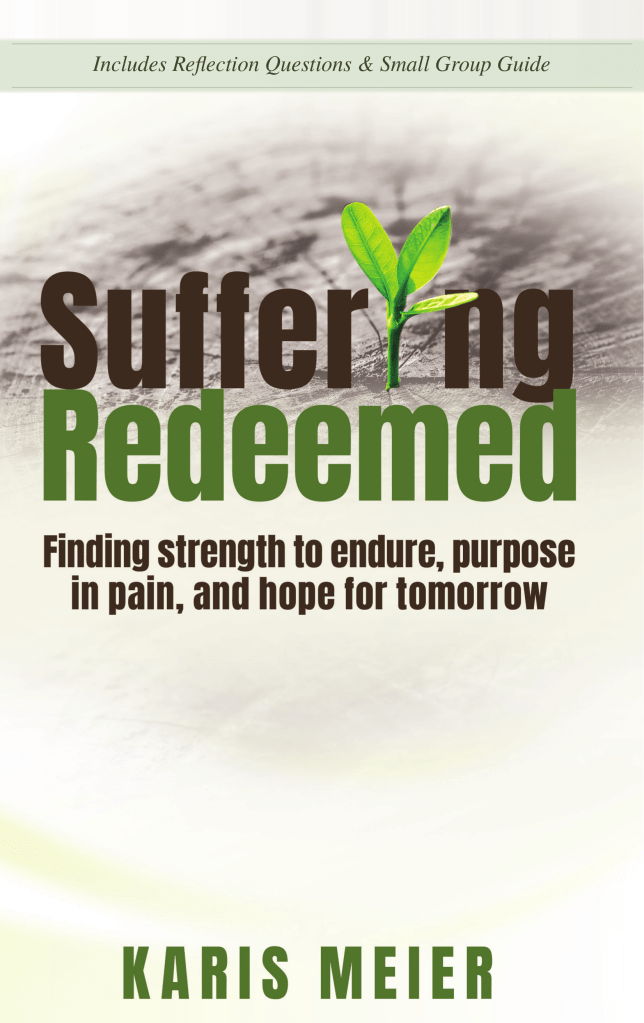
Suffering Redeemed — Grace in Chronic Illness
Host: Nate Davidson
Date: Dec 14, 2022
Listen on: Grace Story Podcast
Themes: Theology & Scripture · Healing & Hope · Chronic Illness
Format: Has Transcript
Featured quote
God’s grace sustains through ongoing, unresolved suffering.
— Karis Meier, on Grace Story Podcast with Nate Davidson
About this episode
- Karis shares her grace story of living with chronic illness.
- How grace sustains through ongoing suffering.
- The book Suffering Redeemed and its message of hope.
Highlights
Grace in Suffering
God’s grace sustains through ongoing, unresolved suffering.
What makes this unique
Framed as a ‘Grace Story’ — positions Karis’s narrative specifically through the lens of grace, a slightly different theological emphasis than some other appearances.
Full transcript
Read the full transcript
Transcript source: Whisper (large-v3, cleaned).
Welcome to Grace Story Podcast. We’re here to connect you with education, resources, and community that equip you for the journey of restoration. My name is Nate Davison. I’m your host here at Grace Story Podcast. Thank you for joining us on this episode, this one where we’re going to dive into a topic we haven’t really covered in the over 70 episodes we have so far, and that’s what suffering looks like, especially through the lens of chronic illness. And for that, we have Karis Meier on the show today. Karis and her husband have four children, and they reside in Northern Virginia. She holds a BA in Christian Education and a Master’s in Counseling. She is a homemaker and spends her time writing, counseling, and engaging in women’s ministry. Karis has struggled with chronic illness for many years, and she’s passionate about sharing how God leads her through this journey. Her heart is to walk alongside others in their suffering and seek God’s comfort and hope in that process. When Karis is not writing, you can find her enjoying the sun, taking walks, playing with her kids, watching soccer and reading, and she’s on Grace Story Podcast today. Karis, welcome to the show. Thank you. Now, I saw in your bio there you’re a soccer fan, so you’ve probably been following the World Cup pretty closely, or are you too busy with the kids? Well, my 12-year-old is a soccer fanatic, so he makes sure we stay up to what’s going on with soccer. So we have watched some of the games. So you grew up as a missionary kid, so you’ve been overseas a lot, just as much in the United States. So where do you land on the football versus soccer naming? Where do you land on that? I think it should be called football. That’s what I would say. But, you know, we got to go with what they give us so but I agree I think it should be football it was football before it was American football so that’s true you know as as an American I feel the same way it’s got to be football or soccer because we already have football but it makes more sense you’re using your foot but yes but I digress now with that the MK side of things being a missionaries kid you’ve been around a lot you’ve stopped a lot of places lived a lot of places how many places have you lived oh my goodness i actually probably can’t i would have to sit down and think about that for a minute this is the longest place we’ve ever lived somewhere between growing up and now so my parents are missionaries husbands in the military um moved around a lot we’ve been here in northern virginia now for three and a half years which is the longest place i’ve ever lived someplace which is actually feeling really nice three and a half so as someone who lived in one spot for 28 years that sounds like a like a blip on the that’s a different style of living like how do you what do you what is the probably the main difference between the way you’ve lived life and maybe someone who’s been in the same spot for 28 years there are the boxes is just always there or you have a duffel bag uh is it like camping what is that like being a nomad in the in this century yeah you know it’s been really hard like I did not really enjoy moving around a lot I was very introverted as a kid and so moving around was very challenging having to make new friends and kind of get to know everything over and over again um so I’m kind of surprised that i married someone who i knew was in the military um because i at that point we didn’t know where he was going to stay in for this long but um yeah it is challenging but you know i think we’ve just had to every time we move we try to just enter in fully into the community and to the neighborhood and to our church um we have to really be flexible because especially with the military they can tell us you know you’re going to be moving in two weeks and they’ve done that to us before. So it’s, it’s very, it’s hard. It’s, you kind of realize that you have to let go of your, your, your want to control things, which I think we all do it to some extent. And, and really trust God, because I know he’s sovereign even over where the military send sends us, but it’s been good. I think, you know, I’ve learned how to relate to so many different people and to adjust to make transition and you know this world is not our home anyways we’re heading toward heaven so I think in that way it’s kind of helped me not like get too rooted too comfortable so do you have multiple these that you come in a community you’re looking for a church do you have multiple church communities that you’re like linked to or how does that work and moving on after such a short time Yeah, so we, like I said, I think we’ve really, we just dive in quite deep wherever we are. Sometimes that’s been with the military chapel, which is sometimes easier because everyone is in transition. Sometimes it’s been through organizations like the Navigators, where it’s more of a parachurch organization. Sometimes it’s a local church. um so yeah we’ve we’ve we’ve gotten to know a lot of people and seen a lot of different christian communities over the years and i mean obviously we can’t stay connected to everyone but we do we do stay connected to a lot of people um and that’s a blessing well that’s a lot of christmas cards to send out remembering all the addresses quite the challenge speaking of challenges um we’re having you on here to talk about something again as i said in the intro I don’t think we’ve really addressed on this podcast we’ve talked about pain we’ve talked about grief we’ve talked about suffering but I don’t think we’ve talked about it from the context of a chronic illness and I think this is something that touches way more people than we even think because there’s many many different types of chronic illnesses I even think of something that’s just normalized like diabetes or something like that that’s this is a daily thing for people And it’s something you share about and something you share openly about. And so I’d ask maybe if we can just go back and give people a context. Where does your story with chronic illness start? I started feeling so I’d always been fairly healthy very athletic played soccer through college never had any major health problems um but on my honeymoon I started feeling sick losing weight um shortly after we so our first duty station was Alaska and um so after my honeymoon uh just trying to figure out what’s going on I started you know just having a lot of different issues and symptoms. And several months later, found out that I had some different kind of parasites that I had picked up when I was visiting my sister, who was a missionary in Pakistan at the time. And so I went through a lot of different treatment to try to get rid of them. But the kind that I have are very persistent and can travel to different organs. And so So it was just, it was, and my husband at that time, shortly after we got married, deployed to Iraq. So I was in Alaska just trying to figure out the military and also struggling with this very difficult illness. So eventually got rid of the parasites. But after that, I never was able to really regain my strength. Um, I never, I just had a lot of problems with, um, digestion, trying to, you know, eat regular food. Um, and from then on, it just kind of progressed from one thing to the next. I had a lot of problems with my pancreas, kidneys, and eventually I had problems with my heart also. Um, so, and actually in the beginning, the doctor said, you know, you’re, you’re, you won’t be able to have kids, um, which obviously God worked otherwise in that situation. But, um, yeah, ever, ever since then, it just, I, the doctors don’t really understand why, but it just started affecting different parts of my body. And 17 years later, 17 plus years later now today, I’m still dealing with, um, different, different issues that, you know, I don’t, I don’t know if that was the root or if it just kind of started a chain effect but we do know the body is very complicated and it’s um yeah so that’s that’s kind of where it started and the brief story so pull back the curtain for us a little bit on that because that’s what is caris feel when you’re in there the dog you’re going to someone who’s you know supposed to be the person with all the answers and then you have a team that’s supposed to have all the answers and no one no one knows why or what exactly, or they’re trying to find out what’s going on. And there’s poking here, prodding there. Maybe we should do this test. And you’re trying to figure out how invasive should we get to figure this out? What is risk versus reward here? What does that unknown process look like for Karis? How do you feel through that? And how did that affect your faith in just that part of your journey? It’s a big question. I think it has been extremely difficult. I think one of the hardest parts for me is knowing God is able to heal and that he is sovereign over all things. And so after so many years of praying and being prayerful about the doctors, too, you know, I’ve been very, I think, along the journey, been very aware of wanting to to honor God through this, you know, and to bring to bring the request to him to look at to look to him first, you know, not to doctors first, but I know God can use doctors to in medicine. So it is then I think it’s it’s been a very challenging because of what I know to be true about God. And then the reality sometimes in our lives don’t always line up to what we expect God to do. Even if we feel like, oh, I have faith, God, that you could do this or that you could, you know, make, reveal to the doctor what’s going on or put the right test, you know. So it’s, it has been very challenging. I think one thing I’ve had to learn is, you know, just that God does not, he doesn’t owe us an explanation for why he does what he does. And obviously in the word, we see all over the place that God, you know, his ways are just so far beyond our, our understanding. Um, and so, and that’s where faith, right. That’s where faith comes in is, is, is trusting. Okay, God, you know what you’re doing, even though things seem completely chaotic and don’t make sense. Um, cause I’ve had some, some procedures, you know, where the doctors are like, well, this is going to help. And it’s actually made it worse. Um, and so things like that, you know, there’s like, huh, you know, I don’t, I don’t know. I don’t know why. Um, but I will say as far as the faith piece, you know, I, I have become, and I still am, you know, I’m, I’m very desperate in a way that I think is a good desperation for God. I think I feel my need for him so much every day. You know, I don’t know. I honestly don’t know how I would survive if I didn’t have the hope in God, if I didn’t have the relationship, the life giving every morning, waking up and saying, okay, God, I need to entrust my day to you because sometimes it just feels too hard. It feels too hard, especially caring for four kids now, which I believe are gifts from the Lord, but it’s also adds a lot to my plate. And so, um, and, and I need, I need the strength from him. I need the feeling of the Holy spirit every day to make it through the day. So it’s, it’s definitely created a, um, a dependence and a need that I may not feel if I wasn’t going through this. And, and I’m not saying that everyone needs like something horrible in their lives to turn to God, but, but I will say for me personally, I, I have seen it in one of the chapters in my book that I wrote is, is called finding intimacy with God. And I think it is often through affliction, through difficulty that we are able to really go to the deep places that God wants us to go to because it’s easy to turn other places or to not realize how much we really do need God if we’re feeling strong or if we’re not facing the adversity you know in one way or the other there’s a lot of different not only chronic illness but I think this world provides lots of opportunity for us to see our need to God for God so well and you talk about that desperation that need. It reminds me of, of the, the woman in the Bible, Bible with the issue and the crowd who reached out to touch Christ’s garment. And, but, but even in that, like that’s where the similarity ends because she was healed. And so maybe turning that to you, how do you reconcile a loving God in your, in your, your strong in your faith? How do you reconcile a loving God with you’re not being healed and you’re continuing in your suffering and what have you learned through that yeah I you know there’s a lot of people who a lot of people I even know personally who have turned away from God because they can’t reconcile the suffering the evil in the world with God and so I don’t I think very early on even in my struggle something my pastor would often would often when I was a kid actually he would often say this which I thought was kind of strange you would say you know I pray every day that I’m gonna that I that I keep trusting Jesus that I keep having faith in Jesus and I just think I just thought it was weird because I was like well I’m gonna keep trusting Jesus forever no matter what but I think with the struggle that I’ve endured that’s something that I have had to pray quite regularly too is like God help me help me to keep trusting you help me to keep the faith even though this is too hard even though I don’t understand even though I don’t understand why it’s you know why me like what have you know just so many questions so many questions that I think a lot of people struggle with and some people end up turning away because they can’t they don’t have the answers and I think that’s where um that’s where you know the what are we going to do with that lack of knowing with the lack of um assurance and i think you know the presence of god is powerful his love doesn’t change no matter what is going on in our lives um and that it takes um it takes a lot of, uh, intimacy and, and, and being in God’s presence to really feel that. I think I struggled a lot, especially I would say four or five years ago when I was going through a very, very difficult time where I had a new, um, diagnosis with, with neuropathy, where I started having numbness in my, in my limbs. And it was just very frightening time. Cause I couldn’t, um, I couldn’t, I was, I became very weak, wasn’t able to care for the children, and it affected my life a lot more than anything else ever had. And so I really I really came to a place where I needed I was questioning God’s love. Like, God, do you do you actually love me? Do you actually care about me? And I think in those moments of complete brokenness, when God did show up and confirm his love for me in ways that only God can do, I can’t really explain. I think it’s an experience that God in his grace allows us to have. But I think it’s through those moments of him showing himself faithful, of speaking through the word over and over and over again that just built up has built up my faith. You know, and I’m not saying I still struggle like I still there’s still days where I the questions seem to outweigh the goodness of his presence. Um, but I, I do feel a lot stronger, um, than I, than I have in the past. And I, I do feel, um, like when I look back and I, and I see some of the things, you know, that I’ve written in the past and I look at myself today, I’m like, okay, I, I do see God at work and I can, I can see that, that he’s, he’s working through this for good, even though it doesn’t always feel good. Yeah, I love that honesty there, because I sometimes want to hear a glorious testimony of somebody and, and they say, you know, no doubts, no questions. I’m, I’m going through no turning around. I was like, no, no questions. None. That sounds like a disingenuous relationship with a dynamic being who has all the answers. And you have no questions for him on a confusing journey that you’ve never been on before? That doesn’t sound very authentic to me. And speaking of those people around us, it seems like, and I’m just making this up, but it seems like it’d be easy in the beginning as you get a diagnosis, maybe a lot of support, but you mentioned 17 years. How does that support of friends, what does it look like, first of all? and then how does that change over a an acute illness versus a chronic illness you know something where somebody breaks a leg let’s sign the cast and then what you’re going through a decade almost two decades later there’s nothing to sign do we bring meals what does that look like how does that change for chronic illness I think it’s a lot more yeah it’s more challenging definitely with chronic illness. I’ve had more acute emergencies where I’ve been in the hospital for a few weeks at a time. And then people kind of rise up again. And, and that’s, and that’s a blessing. And I think we’ve embraced that, but I think there’s also the longevity kind of wears people out. And also when it’s something that’s not quite clear, like the diagnosis isn’t clear and people don’t really understand. And I don’t blame anyone for not, it’s confusing. The doctors don’t even understand it and I don’t always understand it. And so it’s not like I’m judging anyone for not, but it can become, yeah, people don’t always know how to help or what to ask. So that’s, that’s challenging for me personally, the beginning, I, for several years, I kind of kept everything, um, kind of internal. I didn’t, I didn’t share with a lot of people what was going through. I’m more of a, like, I don’t want to be a burden to other people. I didn’t want to complain about it. So I just, I kind of kept it inward until several years into it where I, I had kind of a breaking point and then needed felt like I and it was actually a lot through the Psalms where God revealed to me how it is good to share our pain first foremost with God and learning how to relate to God in a more honest way because I think I was really afraid to dishonor God, to, um, yeah, to come across as, as, as complaining. Um, and so I, I, I wanted to say the right things, you know, have the right prayers, but in, in my, in this time of really becoming very broken, it was really the Psalms that helped me, uh, open up in a more raw and vulnerable way, first of all, with God, but then also with other people, which, which was very humbling, but also very good because other people aren’t going to be able to help unless, you know, unless they know what’s going on. And so I think, um, just finding the people and I have, I have two sisters and a brother, um, and my parents too are very supportive. So, you know, whether it be your family or you know church members um for me it’s finding a few a few people who are I know are going to be there um and sticking with them well as you’re talking there it makes me think about you know sometimes we can get into the comparing game too kind of a sidebar here but was there ever a time where you struggled with like well at least I’m not as bad as them or downplaying your own suffering and not giving yourself the ability to be honest, uh, with yourself, with God about, Hey, this, this just sucks. Um, and, and, and what is the importance maybe of understanding that you’re suffering, you can be honest about it and be real. And like, you don’t have to diminish your own experience. Yeah. I grew up, I said some overseas and my parents are missionaries. So we were exposed to, you know, people who were in, um, difficult situations. And so I think, especially for me too, I, I would often think, well, yeah, I’m not, I’m not starving. I’m not in a third world country where, you know, I don’t have medical care or such things like that. And so, yeah, I think there is, um, the, the tendency for us to look at other people and say, oh, well, it’s yeah, it’s not that bad. So what right do I have to to say anything about this? But whatever, you know, however you think about it, this the struggle is still going on internally. So whether we say it, I mean, God knows. Right. And it’s going to come out one way or the other. So, yeah, being honest about it is definitely the best um and being able to have a conversation with people who are who care about you I think is also hugely important just to share um I mean you know like when my kids like my one of my daughters got a paper cut this morning she was like so distraught and every time anything’s bleeding on her she just falls apart you know and but she still shares with me you know she’s like she’s doesn’t hold it back and so I just think about her and I’m like oh I love her so much like I’m not gonna say oh it’s just a paper cut you know um and I think that’s how God is with us he cares about the little things and he wants us to go to him so I know one of those people say the best way to have your joy uh removed is to start comparing and I think that can be true also of suffering you compare your suffering with other words and then you’re like well I’m I’m nothing and you know I’m suffering still but that can steal your joy as well as you’ve moved through this and you’ve had 17 years to glean resources and in your book now is one of those resources for others we’re going to get to that in a moment but what are some of those resources or people that you found most helpful along the way whether it’s for your illness or parenting through an illness being a military spouse with an illness? I mean, there’s so many different ways you could talk about this in your life experience. What are some of those resources that have been most helpful to you on this journey? That’s a good question. There are so, there are so many. Hey, you know, something that I have really been strengthened with through the years is to read biographies or autobiographies of different saints, um, across the years and, and specifically maybe, you know, 50, a hundred years ago, I think the perspective on suffering has changed quite a bit in our culture, um, over the last, I don’t know, several years, a couple of decades, maybe where it’s, it’s suffering is looked at and, and I don’t know, try to like avoid it at all costs you know like oh it’s horrible get out of it which is I think is a natural human tendency but it’s not I mean obviously in the bible there’s a lot of verses that talk about you know the fact that we will have trouble that there will be suffering and to not be surprised by it and so um some of the you know like Gladys Gladys Elwood Allward um or Elizabeth Elliot um there’s I mean, there’s several who I’ve read like all of their books and I’ve gleaned so much about how to, yeah, just how to walk in a way that is God glorifying, not magnifying the suffering, but how to magnify the Lord through it and how to keep him at the center, which I think is so important. because when you are suffering, at least for me, it is very difficult to not make that an idol even trying to get out of that suffering and idol and had to have that kind of consume your mind and in everything in your life because you’re so desperate. So I think that’s that’s definitely one thing. And then I’ve also there are also so many good books. I really like timothy keller’s book walking through suffering that’s one of the ones that i have read several times it’s very theological very i mean i say theological but it’s also very practical like both so you kind of get both sides to it but that’s that’s one that i’ve i would recommend to anyone um and then as far as i there’s so many people who are who are suffering silently and who don’t share until someone else like opens up the way, which I’ve seen so much in my journey, you know, from, from my, from me sharing it from a place of vulnerability and then other people opening up also, also to me, and then having that just kind of a, the community, but also the what’s the word empathy and um a companionship I guess I have a couple friends who who are also you know have suffered chronically for years and having a having a group of people who understand where you’re at and being able to relate to them on a regular basis is it’s so life-giving um because you don’t then you don’t feel alone you know which is a lie I think we can believe in our suffering is I’m alone and nobody understands. So those are a few things. So you’ve mentioned how important it is for you to hear the stories of others and kind of stand on the shoulders of those that have come before you. But you’re also doing that for those that are coming after you through a book that you’ve written and even titled that book Suffering redeemed. Where did that title come from for you? So I started a blog a few years, three or four years ago, called Suffering Well. And that was kind of just out of a lot of writing that I had done over the years, just about how God was teaching me to walk this journey, um, and also kind of wanting to, to, to share with other people and to build a community. Um, so as I was kind of praying about that, um, and just in reading the Bible about how many verses there are about how God redeems us and in different ways, there, there’s a verse, um, Psalm 103 verse four that says, bless the Lord who redeems your life from the pit new crowns you with steadfast love and mercy and I’ve always I’ve always enjoyed that that whole chapter Psalm 103 but uh so when I thought about that like God redeeming our lives from the pit that’s kind of how I felt like my life was in a pit and yet he can he can bring redemption out of out of suffering which I don’t you know so many times it feels like the suffering is at least for something, something like a chronic illness. It doesn’t seem like there’s any, um, like benefit or what, what’s the, what’s the good part. So if you’re, if you’re, if you’ve been persecuted for your faith, that seems like, oh, that’s a worthy cause to, to be suffering. But if it’s chronic illness or something that seems so meaningless, seamless, then, um, you know, but, but, but we don’t understand, you know, the, the, all the things behind the scenes and what God is doing through it. And so that’s why I said suffering redeemed because God, I don’t think he’s going to waste anything in our lives when we offer it to him. And that will be revealed one day, but that’s that. So that’s kind of how I came with the name. Yeah, you bring up that point of, it seems like a natural human tendency to always be looking for the purpose in something that costs us something. Like, okay, whether I’ve wanted to or not, I’ve paid the price for chronic illness. I’ve paid the price for this suffering here. So what’s the purpose in it? and it’s so hard to look down the line and be like okay or continually be guessing and we can drive ourselves crazy saying okay there’s a reason for this and it seems aggravating too when people come up to us and they try to tell us what that purpose is in the pain like they know or something like well god told you that uh that’s amazing because i haven’t found the purpose in my pain just yet um but yours seems to be being able to minister from your point of pain and touch other lives and, and have others have a safe place to communicate and be understood right where they are. And that is an amazing ministry in and of itself. And I’d ask this, how has your life changed since you’ve wrote this book and other inspirational stories of others who’ve connected with you through your writings? It has opened up a lot of opportunities. Some, you know, for speaking at, you know, women’s ministry events. I’ve been asked to write some articles for some different publications, do some different podcasts. And of course, when the book came out, then also just a lot of people responding to me and a lot of opportunity to pray for people or um to just listen to people because it’s amazing when people uh have an opportunity to share how much they will open up um when they have a listening ear and so I did I’ve taken a break from counseling when I started raising my kids but I have been have opportunities through the years to, yeah, just, I think the, the experience that I’ve had is even more beneficial than all the years of, of schooling because it’s, it’s giving me such a deeper understanding for, for what it looks like to go through something so difficult and just gain the understanding of, of, of complete brokenness. And, and so that’s also, you know, I’ve had opportunities to do that just more in a unprofessional way with, with people at church or family members. I think, you know, the, the vulnerability. So when I wrote the book, I, I actually did not know most of the content. I, I did not realize was going to be a book about five years ago. God just put on my heart to start writing and I didn’t I didn’t know what it was going to be for. And so I was just I just kept, you know, an ongoing kind of journal basically and was writing what God was teaching me and different things. And the beginning of this of this year is when I felt prompted to put it into a book. And so it was, it was very challenging to, to put myself out there. Um, and because it’s, you know, a lot of the, the struggles are very raw and very, um, things that I’m still dealing with. So it’s not like I can look back and be like, oh, that was then I’m good now. And I’ve gotten through, I’m still, I’m still in this. And, um, so it’s, yeah, it’s, it’s humbling, but it’s also, uh, I can feel, I, I see, I see God at work also, which is very, I don’t know. It’s just, I can see more of how God works now than I did, you know, maybe in the middle of when it, it, when I didn’t have the opportunity. It sounds like a very unique, um, extremely vulnerable way to write a book. it’s kind of like I have two sisters and man I knew if I ever touched their journals I was they were older than me and bigger than me I was going to get it but you seem to have opened up your journal to the world and also you know these things may change you’re you’re ongoing through this and understanding this may change but it’s your experience now and you talk about the raw parts it makes me want to ask this question of were there any parts of the book that were hard to share, or maybe almost didn’t make it into the book that you were like, Hey, no, I feel like I need to share this, uh, with those that are going to read, read this, this part, this chapter of my life. There’s a lot of it, honestly. Um, but so there’s, there’s a couple of different things that, um, you know, Christians have different viewpoints on, and one of them is healing and, and how and when, and if God heals. And I’ve had a lot of different people over the years share with me probably i mean sincerely you know or offer up like you share a little bit earlier explanations for you know have you tried this have you done this you know have you confessed all your sin have you know just that’s a trying to be helpful hidden sin in the camp yeah or do you have enough faith and thing you know things like that and so and i’ve really like i’ve studied the scriptures so much about healing because it’s so personal to me i’m like And, you know, so just so I have a few different topics like that where I know some people have very strong opinions and some of the people I know have strong opinions on the other end. And so trying to, you know, I try to just look at it holistically and lay out the Bible for what it says and not make judgments on it, you know, as far as like the in-betweens that we don’t understand yet. And one of that is just, yeah, just the tension of being fully surrendered to God and his will and his sovereignty, but then also having faith that God can heal and that, you know, I believe God still, I mean, I’ve seen God heal today, but then just not understanding the why some people, why not some people, you know. And so I think, think more so it was just some of those topics that can be tricky and can bring division a lot in Christians. And for me, I just, I think there’s a lot of questions that that remain unanswered that we have to live with. And just trust God, I guess. Well, I see that in scripture, too, because, you know, we’re at a place in our lives right now and we’re trying to figure this out, find the purpose in the pain or like you said, why were they healed and not this person? But you can even go to scripture and you can look at the lifespan of the entirety of a person’s lifespan and still come back with the same questions like, why Paul with the thorn? Like, what was that thorn? But like, why not? I mean, he’s a great man of God. Why was he not healed or why was this person? And you still, even with their whole lifespan in the scripture there to look at, you still come away with the same question of why him, why not him? So I think, again, authentic relationship with God is going to have some questions like that. At least, you know, something, an inquisitive child. With your book, because it was, you wrote it over the period of five years, is that right? With how many kids? Well, we have four. we have four now yeah that’s actually kind of amazing that you were able to do it in just five years then um with that over five years right writing that book what’s maybe your favorite is there a favorite part of the book for you the one that you’re like hey yeah i really like how this comes across or this really hits home for me or i would direct you here your favorite part of what you’ve written there’s a chapter um it’s chapter six it’s called peaceful expectation and And I touched on it a little bit in the last answer, but just this tension, you know, that we feel and between, you know, living, living, and I also talk about like living in the already not yet, the already of, of, you know, God, Jesus has come and, but we’re, we’re not yet in the fullness of God’s kingdom. We, you know, we’re still experiencing sin and death and sickness. And so how do we live in this tension in a way that is filled with faith and expectation and hope, but also living with humility and just a surrendered heart to God’s will? And one of the stories that I just, I love, which I kind of draw out in this chapter is the story of Shadrach, Meshach, and Abednego, you know, when they are given this, you know, command to bow down and they don’t. And so when they’re told they’re going to be thrown into the fire, of course, you know, I know it’s a, it’s a very well-known story, but they, they, they say, you know, God, he is able to deliver us. he will deliver us, but even if he doesn’t deliver us, those three things, you know, like they, they, they know God’s able, they say he will, but, but even if he doesn’t, we’re still going to trust God. And that’s, I just, I love, I think that they’re just, they just trust God with, with it. You know, they’re like, so I think living with those three statements, even though they seem to be contradicting each other but the tension of living with those three things um and being able to say them and trust god with result is such a beautiful picture of what we have to do with all of the questions and things that we don’t understand i like that because that you’re right it does sound contradictory like he will but even if he doesn’t like it sounds almost like a politician in a way speaking out of both sides of your mouth but you’re right it’s it to me it sounds like you don’t have to have it all figured out to trust God you just have to put in the work of trusting God which is a lot harder than it sounds I do I have one more question we’re coming to the end here we’re running out of time I knew we wouldn’t get to all the questions I never do I I put way more questions up. I think we only got to like 30% of them here. But before I ask you one more question, I do want to give you the opportunity to tell people where they can find out more about you, where they can buy your book, and then we’ll make sure those are in the show notes as well. Sure. So my website is karismeier.com. So it’s my first and last name. K-A-R-I-S-M-E-I-E-R. and that so you can find you can get the book there i also have my blog there on my website and the book is also on amazon all right and we’ll put that in the show notes as well so if you’re listening easy just scroll down tap on that as you’re listening to the rest of this episode as we’re coming to a close here i do like to give the guests an opportunity to speak directly to the grace story community those that are listening in and if there’s something that’s on your heart something lately you’ve been thinking about, something you wrote in the book that you want to highlight. Just from Karis, what would you say to those out there that have listened in, that have resonated with what you’re saying? Some, a lot more than we think probably, are also going through chronic illness or some other type of long-standing suffering. From your heart to them, what would it be from Karis? so my uh word for this year was gratitude and i have benefited so much um i think that they’ve been doing a lot of studies actually on gratitude and one of the things they have found like the neuroscience people have found that gratitude and anxiety cannot coexist in the brain which i think it’s so cool because God you know tells us to be thankful always and um and it’s it’s something I think especially in relation to suffering can be difficult because it’s honestly for me it’s being thankful it is difficult especially when I feel um just feel so bad and and, you know, feeling, um, having a really hard day, being in a lot of pain. Um, it, it feels, you know, where the Psalm that says, you know, offering up sacrifices of Thanksgiving is something that I think about a lot because that’s how it feels. It’s like a, it’s a sacrifice to be able to, to thank God. But I just want to share that it is, it is such a gift to be able to practice gratitude, to be able to thank God for the many gifts that we have. Even if life is extremely difficult and there are so many hard things, we still have so much to be thankful for. Every one of us, just to be alive is a gift and a blessing. And we don’t have to look very far to find the many blessings, especially as believers. I mean, there’s so many promises that God has given us to live by that are, that are so precious. And so I just, yeah, I just encourage all of us to continue to live lives of thanksgiving, um, and to offer our bodies as sacrifices to the Lord. I love that. That reminds me of, uh, one of our guests, Maury Oslin. She said, uh, she became a new believer in Christ, um, and was going to Bible college. She said, I wanted to know, I’d heard there were so many promises that God had for me. So I just wanted to dig in and find out all of them. And I think that’s a great way to end. If you’re going through suffering and you need an actionable item today, put your mind on gratitude and dig in and find all the promises that God has for you in his word, as there are many. All right. Well, Karis, thank you for coming on Grace Story Podcast. Thank you for being vulnerable and sharing a little bit about you and your story and coming on and sharing with the Grace Story community today. Thanks. And for you, the listener, we want to thank you for tuning in. We’ll be back in two weeks. Thank you for listening. If you’re listening on Apple Podcasts on that app, give us a five-star rating and drop a review. If you’re listening on Spotify, give us a follow and hit that notification bell so you never miss an episode. Like I say every time, there is no us without you. So get engaged. Go over to gracestoryministries.com. Find out all the resources there. Find us on YouTube, Grace Story Ministries. There’s lots there. Continue on your journey of restoration. We’ll see you in two weeks for another episode. And until then, we’ll be praying for you on your journey of restoration.


 Suffering Redeemed