Suffering Redeemed — Chronic Illness & Relationship with God
Host: Katie Axelson
Date: Dec 21, 2022
Listen on: Have Hope; Will Travel
Themes: Chronic Illness · Faith & Doubt · Testimony & Story
Format: Has Transcript
Featured quote
A perspective on suffering from someone with real, ongoing, firsthand experience.
— Karis Meier, on Have Hope; Will Travel — Episode 84 with Katie Axelson
About this episode
- Karis shares her firsthand experience with chronic illness.
- How illness has affected her relationship with God.
- Her perspective on suffering as someone living it daily.
- Discussion of her book Suffering Redeemed.
Highlights
Firsthand Perspective
A perspective on suffering from someone with real, ongoing, firsthand experience.
Relationship with God
How chronic illness deepened — not diminished — her relationship with God.
What makes this unique
Full transcript available as PDF (katieaxelson.com). One of the best-documented episodes — ideal for pulling exact quotes for the website.
Full transcript
Read the full transcript
Transcript source: PDF.
Welcome to Have Hope Will Travel. When we travel, we get to know people who are different than we are. We hear different perspectives and we better understand other stories. We learn to stand with people instead of just having opinions on issues. I’m your host, Katie Axelson.
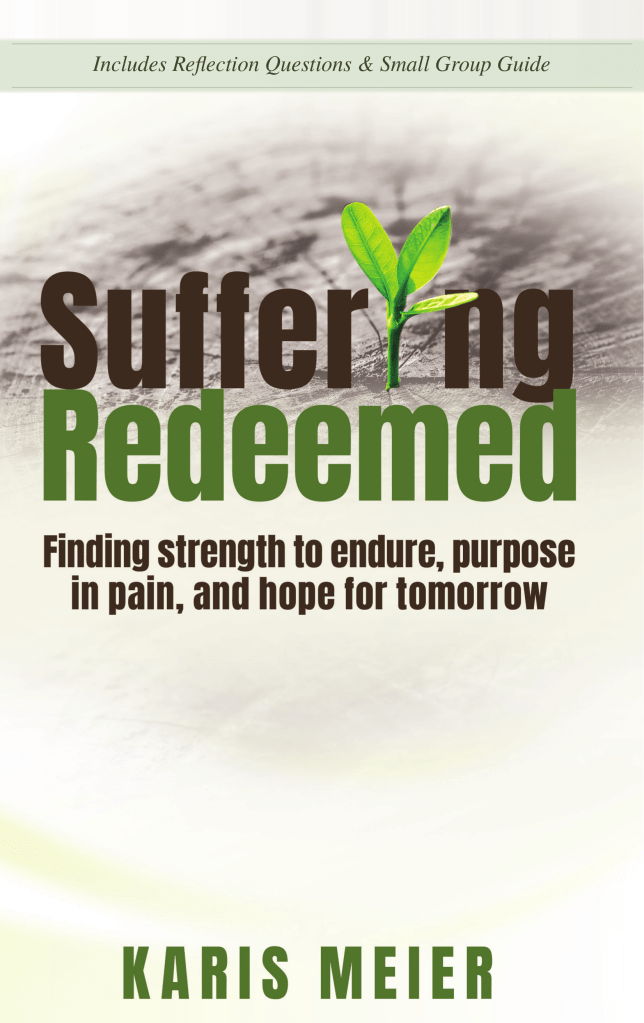
Today, I’m here with a new friend, Karis Meier. Karis and I met through a podcasting group that we are both part of. She is the author of Suffering Redeemed, finding strength to endure purpose and pain and hope for tomorrow. Karis and her husband live in Northern Virginia with their kids. Karis, welcome to the show.
Thank you. Do you want to share a little bit of the brief version of your story to get us started? Sure. I guess I’ll start with my younger years. My parents are missionaries, so we moved around a lot.
I was born in Chicago, but my parents were back and forth from overseas, so we were in Philippines for a while in Singapore. Later on, I lived in Costa Rica for a year, but and then in between was in Minnesota, kind of our home base was Minnesota. Yeah, I just had a lot of different experiences in Singapore. We went to a British school where there was like over 60 different nationalities within the school, which was just amazing. I absolutely loved it as a child.
I just thought that’s how the world was. It was just very accepting atmosphere because everyone was different. That was good. Then moving back to Minnesota where it was quite different was definitely challenging for me in just different ways. But yes, I went to high school and in Minnesota and also college graduated with a degree in Christian education and taught for a year, but realized teaching wasn’t really my thing.
I actually, I really wanted to do counseling, but I thought at the time, I felt like it was too much school, so decided to not do that. But then later on, I ended up pursuing that. So anyways, in my last year of college, I met my husband, now husband, who was a friend of my sister, and he was in the military. So we got married in 2006 and he was stationed in Alaska, so I moved up to Alaska with him. He’s gone from cold to colder, right?
I know. I couldn’t think of it worse than Minnesota, but from the Philippines to Minnesota to Alaska. Oh, goodness. And dark. And the darkness and darkness.
That was probably more challenging than the cold from you. But yeah, it was it was another experience. Shortly after we got married, though, my husband got called to Iraq, and so he was deployed for 15 months. And during that time, I started getting quite ill and couldn’t recover. Didn’t know what was going on for several months.
I lost a lot of weight and just had a lot of different complications symptoms. And yeah, finally figured out that I had picked up some different parasites while I was in Pakistan six months earlier. I visited my sister, who was a missionary there. So yeah, I had to go through several different treatments. It was kind of a rare.
Well, there’s a few different parasites that I had. They’re quite rare and hard to treat. So yeah, so it was it was several months of treatments. And then from that, I just I never really recovered from that. I didn’t.
The doctors were like, well, the parasites aren’t there anymore, but that kind of had can kind of get into your organs and do damage. And so I had had, yeah, from then on, I just I had been very athletic and very active, my soccer track, you know, and so, you know, 25 years old, all of a sudden, being in a body that just did not function while was was really hard. And and then also just having no not really in any answers from the doctors. But, but we just, you know, I had I had a solid relationship with the Lord at that time, which I am so thankful for. Because I really even from the beginning of this journey with chronic illness that I’ve lived, it was it was God that I that I went to.
And not to say there was easy, because I think I struggled a lot with questions and wondering why, but I’m kind of getting ahead of myself. But, but it’s so so from that point, I the doctors said, well, you’re not going to be able to have kids because of some of the things that had won’t go into all the details. But basically, this had you’re not going to be able to kids. So I went and got my masters in counseling. But towards the end of the program, I got pregnant and which was such a blessing because we really want my kids.
And so we had our first son and then ended up going back over to Malaysia to visit some other family and got parasites again. And yeah. And it kind of the cycle got worse and got ended. Anyways, had heart problems, kidney problems, pancreas problems. I just it kind of just went downhill from there, ended up in hospital, feeding tubes in the cardiac unit.
And in between all of this, you know, I had two more kids. So we had three kids now by by miracles by the grace of God. I you know, we both believe that. But it was it was daily left with very challenging. And then and my husband, you know, he was because in the military, he travels a lot, you know, had another deployment.
So just just a lot of, you know, learning how to live in a weak body, take care of kids with a husband who’s gone a lot and learning how to do that, you know, by the strength of God is really is really what my journey has been all about and trusting him with the unknowns and the unanswered prayers and things getting worse instead of better, you know, you know, when you pray for something and then it seems like God is is not not there’s not even listening but that things are getting worse. And I know that’s not the truth that he’s because he he he’s always listening to us. He’s always, you know, he cares about us so much. But when we look at the circumstance of our life, sometimes it appears that way. So in 2000, let’s see, I had my third, 2016, so 2017, I started having kind of a new condition where I my my legs and my arms went completely numb and I couldn’t feel anything.
I couldn’t walk. I couldn’t basically I was really weak. So I had to go back to the hospital. And again, they were trying to figure out what’s causing this. Why, you know, why is it’s happening?
And so they never really figured out and later on I found out that I had Lyme, Lyme disease. But it was just enough, a very very deep and dark place of like it’s kind of where I hit rock bottom in the in that year during that year. And it was then that God really started speaking to me that that I needed to start writing, which was so interesting because I was thinking like I don’t have it. What am I going to write about? Like I felt I felt so depleted at that point.
I didn’t think I had anything to give other people or but I did. I just started, you know, just writing on my computer, like just keeping a journal of what God was teaching me, you know, struggles that I was having questions that I was having. And I mean, I just devoured the word of God because I needed it. You know, it’s like I need to know what God says about this. I need to know, you know, so I just a lot of it was just working through scripture and asking God questions and waiting asking like why, you know, or how or, you know, so and I started, so I started a Facebook group and then I started a blog and then the beginning of this year, I kind of used a lot of the content that I had written over the over the years and put it into a book.
So yeah, that’s kind of parts of the story. Yeah, the summary that brings us to where we are now. Can you help us understand a little bit what life is like with chronic illness? So I think, you know, I think it’s interesting because a lot of people, you know, when when there’s, when somebody is sick or there’s a crisis or even a diagnosis, it seems like people are quick to to want to help, you know, and and and be there and support. But I think with something that’s chronic, it can become tiresome both for the person who has it, but then also for the people are supporting because it’s like, you know, it’s hard.
It’s it’s it’s straining. It’s a very draining and straining circumstance. And so it’s, I think it can be isolating because especially for me, for someone who is very aware of not wanting to be a burden to other people and not wanting to come across as complaining, I especially in the beginning years, like I didn’t I didn’t really talk about it at all. I didn’t want to share with someone because I didn’t I didn’t want them to feel like they like they had to feel sorry for me or you know, that I was complaining because I I would often compare my suffering. I’m like, well, there are people around the world who are suffering so much more than I am, you know, so who am I to complain about this, which I know is not necessarily the right mindset to have, but that’s just kind of how I was raised in kind of the circumstances that we lived in a lot.
I just saw a lot worse things and but yeah, so I think I think it can be isolating. I think it can become something that the person identifies himself at like it become part of their identity. So for me, I’ve really had to struggle with, you know, my identity is not someone who is sick. Like I have illness, but that’s not that’s not who I am. You know, that’s not that doesn’t limit me.
I mean, in some ways it does from what I can do, but not who, you know, the the the core of my being, which I think people who have different diagnosis, you know, it can become a part of a part of them. It’s hard to kind of detach that and live and live certain things because you feel imprisoned by that, which I’ve definitely felt myself. Yeah. Yeah, I think I think it’s just oftentimes I feel like I have so many ideas and things that I want to do and I just feel trapped in my body. I’m like, I just, especially, you know, there’s some days where I just think, oh, I get all these plans, like, oh, I could do this, right?
You know, I just have such a heart, too, for wanting to serve, serve God and even with the counseling and different things, but I’ve had to really scale a lot of things back because my body can’t handle what most people’s can. And so I have to have more rest. I have to I just have to be really careful, you know, about how I sleep, about how I eat, about just so just takes a lot more intentionality. And it’s not just that you wouldn’t have to think about, I think, if you are healthy. Sure.
How does it affect different aspects of your life? I would say it affects every aspect of my life. I, you know, I think the thing that I’ve been most concerned about over the years is how it affects my children. Because, you know, I don’t want them to feel, you know, I, especially my older two who are very sensitive, very in tune with other people. And I’ve seen them anxious.
I’ve seen them worried about me at different times when I’ve been in the hospital or when, you know, things have gotten bad. And so I just, yeah, I worried. And like, or like, what if what if they struggle in their faith because they don’t see God answering prayers, you know, things like that that I just, but on the other hand, I’ve also seen how they have really grown in compassion and loving people and wanting to pray for people who are sick and really aware of other people’s needs where a lot of kids aren’t like that, you know, they’re more self-centered. And so I can see even though there’s a lot of hard things and it’s and and because of my condition, you know, it’s limited what we, what we’ve been able to do with a family. But I think it’s also opened up opportunities that are good.
It impacts so many things like even my relationship with my husband and what we can do, like we used to enjoy going out to for meals, but I have such a limited diet because of what I’ve been through that we can’t really go out to eat anymore. Just a small thing, but but it’s just, you know, sometimes it’s a small thing that that make it hard, you know, and you feel or like if I go out to a Christmas party or something, you know, and it’s amazing how much food is just so much part of a culture, you know, and and so just missing out on things like that, which I don’t feel like it’s not for me, it’s not really like, oh, I can’t, you know, like I miss the food so much is just like the the social kind of normalcy that it brings to be able to celebrate in that way with someone. So that’s part of it and I think I think really just feeling the fatigue and the it’s a constant distraction, I guess, is what I would say, you know, so whereas when I’m doing anything, you know, whether it be making a meal or trying to write a blog or something, you know, I just, I think my body and the things that are going on, you know, it’s just it’s always kind of taking some of the energy, taking some of the concentration that I would want to be pouring into whatever I’m doing fully and at times it’s worse than others, so I’ve had to learn how to, yeah, just how to to give myself grace and not push myself and try to surrender to God and say, okay, God, maybe I’m pushing too hard and I need to surrender this to you. And so yeah, I’ll just share that for now, I guess. Yeah.
So you talked earlier about being able to separate your illness from yourself. Can you tell us a little bit more about what that process looks like or any advice you have for somebody walking through an illness or something different like that? So something that I started doing several years ago when I was really, I think I had a lot of shame. I was carrying a lot of shame and guilt because I was sick and I think is a Christian especially because I know God can heal and I’ve seen him heal other people and, and you know, people out of that probably just trying to help, you know, you know, have asked things like, oh, do you have enough, do you, are you sure you have enough faith or things like that, you know, and so I’ve had a struggle with like just feeling like the condemnation maybe and trying to push that away and and the shame of like, why, why, you know, is God punishment me, which I know again, it’s not the truth, but when you’re living in something, the truth is hard. It gets conflicted with how it was going on internally and how you start to feel when something is chronic like that.
And so a lot of it is just for me was was needing to speak the truth about who God says I am, about you know, and kind of replacing that with being very intentional about when those thoughts start coming up in my mind about, you know, whether guilt or shame or, you know, thinking less of myself because I can’t do this or that or whatever, or comments people make, you know, not not trying to be mean, but just because they don’t understand, basically, you know, so it just a lot of things, but I think a lot of it’s just being intentional about replacing the those thoughts with the truth from God’s word. And for me, it’s been really helpful to write those down and speak them out loud and memorize versus about my identity and who God says I am. And I think it’s just it’s something that has to be repeated constantly because there’s always negative thoughts. There’s always, I mean, there’s always going to be lies that are going to be coming at us, you know, or coming up that we have to fight no matter who you are, you know, different different areas of your life that that become that become hard to to resist when it’s when it’s a cycle. Yeah, for sure.
How has it affected your relationship with God? Yeah, it’s a good it’s a good question. I remember reading back and as I’m someone who have, you know, like enjoys writing, I keep journals and kind of writing out prayers and kind of what God’s teaching me, but I remember looking back at some my journals from before I got sick and just like my early 20s and I had such a it was a very sweet like innocent kind of like relationship with God. I think it was just very easy for me to just I don’t know, I think of it as like kind of like the early romance in a in a relationship like it was just like I was just so sweet, you know, I just enjoyed God’s presence like it was just he was so loving it was just very easy for me to accept all his promises and and but I think, you know, it’s the the struggle that I’ve had to go through in this process has really matured my relationship with God and and I’ve learned a deeper dependence definitely I think I don’t think it’s it’s comfortable because I would like sometimes it feels like the desperation that I have for God and for the word is is to is it’s like out of my control, you know, because I I would like to feel more more in control myself, but I think I think it’s brought me to a level of deeper surrender and letting go and also a humility of really, you know, recognizing that he’s God and that I I don’t I don’t understand there’s so many things that I see, you know, in his word that don’t necessarily match up right now in my life, but that doesn’t mean it’s not true, you know, and and and and so I’m going to keep believing what God says and what his word says even if I haven’t experienced the fullness of that yet and I think that just it takes it takes you know, just that the daily dine to self, you know, to get to to a place where you can say, okay, God, this is really hard, but you’re still good, I’m going to stay I’m going to say you’re still good, even though this does not feel good, and so yeah, it’s just yeah, it’s it’s I would say it’s definitely been good, but it’s also definitely been very challenging. Sure, I can see how it would be really challenging because of what you’re reading and what you’re experiencing are feeling like two different things, and figuring out, okay, God is good, but my circumstances sure aren’t good.
I’m trying to reconcile those together. And then we as Christians as good intentions as we are sometimes things just don’t come across the way that we mean them to. So let’s talk about things that are intended to be supportive and actually aren’t and then we’ll flip it and talk about things that actually are supportive, but there’s kind of a bigger need for them. Yeah, that is such a great question. I’m so glad you asked that.
I and my book actually the last chapter is called for the loved ones because I’ve had a lot of people over the years like ask me, right, write something for people who are trying to support because I often wrote, you know, for people who are suffering, but there’s a lot of people who are like, I want to I want to know how to support someone who is suffering and it’s something my husband has asked me a lot to have struggled with because he’s like, I don’t know how to help you, you know. So, you know, I think what I found is, you know, there’s so many people who really do care and they want to help, but they like, they just for one, they’re uncomfortable. I think a lot of people are uncomfortable suffering. So if if someone asks like, you know, how are you doing and and like, oh, it’s really, really bad, I’m struggling with whatever, you know, whether it be mental health or grief or physical or trauma or whatever, I think a lot of people in my experience too is like they just kind of freeze up and then just try to avoid, you know, like, change a subject or just kind of tiptoe and, you know, don’t know what to do. And I think in that moment, that can be very difficult for that person because they feel like, oh, maybe nobody wants to hear, you know, something they kind of shut down and it feels like they’re just trying to, like other people are just trying to avoid them, which is not necessarily true, that’s just kind of how it comes across.
So yeah, I think, you know, just avoiding the person is probably not a good thing. Right. And then, you know, I don’t know thing I think is just making very simple or trying to, um, offer, like, very easy suggestions or like answers, um, which again, I know, I know in my experience, you know, people, people really want to help and they want solutions, they want to offer solutions. So for me personally, I’ve had so many people offer, you know, this herbal remedy and, and this diet and this and this which is not, I’m not saying it’s bad because sometimes it can really help people and, you know, that’s not a naturally bad thing. But when it’s, I think that’s one that the first go to and then you just kind of like, that’s all you have, then that can feel kind of, I don’t know, it just, it feels like they’re just trying to throw a, throw a solution at you and it doesn’t work and then that’s, that’s too bad.
Um, because, because me personally, I’ve tried so many things, you know, and I’ve prayerfully considered it, but at the same time, it’s hard to know, you know, it’s, because some things do help some people and some things don’t. And, um, and it’s just something that we have to kind of, um, handle with care. Yeah. But, um, and then and just, and I think making judgments to without knowing the full situation, you know, and I’m not saying just like, like, oh, well, you’re, you’re sitting, so you’re sick, but people have said that in different words to me. Um, and, and yeah, I admit I’m a sinner, you know, and, but I know God doesn’t punish us.
I mean, there are consequences to sin, yes, but I don’t, I don’t believe we get punished. Um, it God doesn’t punish us for sins. You know, I think Jesus did that on the cross. Um, and so, but I think the, the, the comments sometimes we can make, um, especially to someone who’s very sensitive and going through something very difficult can be taken, um, as judgment and it can, it can make someone who’s already feeling, um, guilty or shameful, um, just make it worse, you know, and spiral down into depression or whatever. Um, so I think on the flip side is, you know, just trying to, trying to get informed on that, on the person’s situation, whatever it is, asking questions.
I think I don’t think, I mean, unless a person says I don’t want to talk about it, I think trying to ask questions and listening is probably the best place to start. Just simply, you know, just, just asking follow up questions, trying to, trying to put yourself in that person’s shoes to see, you know, what, what it’s like, what, what are they going through, what, um, and in that process, you will find probably figure out what their needs are, you know, maybe they just need someone to be with them, you know, to, to not feel alone. Um, maybe it’s not even talking, maybe it’s just, you know, spending an hour together watching something or whatever, you know, just simple things that, um, I think can make a huge difference when you’re, when you’re, when you’re struggling. Um, and then, and I think even asking specifically, asking the person, you know, well, how, how can I help, you know, it’s not always in me. I mean, I know a lot of people are like, if someone dies, they throw all these meals at them, which again, it’s not a bad thing, but maybe there’s other things that would be more helpful, you know, that, I think when we, ask and genuinely follow through, that can speak so much.
I mean, sometimes it’s just a practical thing that person needs and, um, again, going back to the listening and the, and the providing the, the empathy, the, um, feeling with the person is, is probably the biggest, the biggest thing and not in a way that, that is like, oh, poor you, you know, like showing the pity because that’s not what I don’t think anyone wants to be shown pity, at least for me. Like, that’s why I didn’t tell people because I was like, I don’t want people to feel sorry for me. Um, but in a way that’s, that’s more of a, uh, an arm of support, you know, like, um, I’m going to be here with you, no matter what. Yeah, for sure. For sure.
Thank you for sharing that because I know that it’s hard, right? To be able to be like, I know that somebody’s trying to help, but it’s really not helpful. It’s making it worse. Um, so thank you for, um, being willing to say, hey, this is actually not helpful and then being able to offer some, this would actually be helpful ideas too. Yeah.
So we talked about how like God doesn’t punish us for our sins. Jesus has already paid for that. Um, but yet still there is suffering. Do you think that there’s a purpose in that suffering or that suffering is redeemable? What are your thoughts?
It’s something I have really, really struggled with. Um, I think I, I’ve looked a lot at suffer. I’ve studied suffering a lot, um, in the Bible. And, you know, I used to think, you know, if, if I was suffering for something that was, you know, if I was being persecuted for my faith and suffering because of it, that would be worth it. You know, that would be purposeful.
It would be obvious. It would, I mean, Jesus even says we will be persecuted for our faith. You know, and so, um, but, you know, the more I, more I studied it and the more I was living through it, I do believe that, that God will not waste any of our suffering when we are living, um, when we’re offering it to him and living in a path of obedience to Jesus that, that our lives, he’s, he’s not going to waste any of what we go through. I think I do believe he, he will redeem every aspect of it. Um, and, and again, I don’t know how that’s going to play out and how that’s going to look.
For me personally, I have seen, I’ve definitely seen some of the, the fruit of suffering, both personally and my own sanctification, um, in my family, also in, in the outreach of, of reaching out to other people who are suffering and in being able to share the gospel with other people, just because it comes up, you know, because people ask, um, and then I’m able to share. So, um, yeah, I used to think like, oh, I want, I want a testimony of healing, so I can tell everyone like how Jesus healed me, um, which is great. You know, a lot of people have those testimonies and God uses that, but he also uses testimonies of people who are suffering and continue to follow him when, when we don’t get the healing, um, because a lot of people turn away because God is not who they think you should be in their lives when he doesn’t do what they think, you know, they just can’t, they just can’t, you know, put together the evil in the world with a good God. And so, but I, I do think, yes, I believe that, um, there are purposes and even, even gifts, I have a chapter towards the end of my book about the, the gifts, the unexpected gifts that we can sometimes miss, you know, unless we are looking for them, unless we are, you know, willing to look past, because I think sometimes when we’re suffering, we’re so focused on the one thing or things that we’re missing and that we want, it’s, it’s easy to forget the hugeness of the other blessings that God has given us, you know, not, not just physical, but eternal, which is much hugger than, you know, the physical and long lasting. So, yeah.
So, tell us about your book. I know you studied suffering a lot and now you’ve written a book called suffering redeemed. Tell us a little bit about what prompted you to write it and what’s it about? As I shared a little bit earlier, I, it was actually in the middle of the night one night and I just felt like God was telling me to start writing and, um, after a few weeks, I did and so it was really just kind of, I felt like it was a prompting, um, to, to write and I didn’t, at that point, I didn’t really know what it was going to be. I did use some of the content in Facebook group I started called suffering well and then a blog, um, but a lot of it was just questions that I had, um, working through, um, you know, moments of despair, of, um, questioning my faith even like, you know, just very, very, um, deep things that were going on internally, but a lot of times, God, um, would, would speak very clearly through the word, um, give me, you know, a series of things and I would just, so I would just start writing, you know, just, and a lot too was just, um, things that were going on in my life, like I would see, like situations that I think God was just working through that I was able to write, um, some, some more like personal story, so, uh, a lot of it was just my own personal struggle, struggling and processing, um, and then at the beginning of this year, um, I, yeah, I just was like, well, I had, I had almost a hundred pages that I had written and I was like, you know, I, I could write a book and so just started the process of learning how to do that basically and putting it together and, um, it was, it was, I enjoyed it, it was, it was a lot of work, um, but, yeah, it’s just, so I, so I cover some of it, there’s some personal stories, but a lot of it is just, um, a lot of the, the things, it’s not, it’s not, um, only for, for chronic illness, it’s, it’s kind of a very broad book on suffering and, and so I talk about like the intimacy with God that, that comes through suffering, um, living in this, this, in between the, the already not yet of God’s kingdom, talk some about that, talk about the purposes and suffering, um, learning how to suffer well, like, so how do we, when, when we’re struggling with something for a long term, like, how do we, how do we do that in a way that pleases God and where we can live fully, even when our lives aren’t what we would want them to be?
Um, and so, yeah, there’s just a lot of different things that I cover in it, but, um, that’s, that’s kind of, so I launched, um, at the end of October, end of October, and where can we find it? So it’s on Amazon right now, um, so it’s, yeah, there’s the Kindle is still at 99 cents and I have a paperback, and then, um, my, my website is carousmire.com, and you can also go there, you know, see my blog, there’s information on the book and, um, some other things on there too, so wonderful. We’ll make sure to link to that in the show notes as well. Yeah. What advice do you have for those who are suffering or struggling with hope?
I think one of the biggest things is to remember the bigger picture that we live in for all of us, especially people who are in suffering, it can become a very tunnel vision type thing where it’s, it’s easy to get self-focused and, um, and it takes a lot of needing to look back to God to keep our eyes on Jesus. There’s actually this, um, something I wrote, I read this morning was in Psalm 168, it says, I keep my eyes always on the Lord with him at my right hand, I will not be shaken. And I was just thinking about what a good verse that is, like just, we have to always keep our eyes on the Lord and it’s only by keeping our eyes on him that we won’t be shaken because there’s so many things in this life that’s going to, that are going to shake us. So I think that’s one of the biggest things is to remember God’s, God’s greater plan and purpose and that we are, our stories, each of our stories is going to fit into that in, in his perfect way, but we’re not going to know the wise a lot, we’re not going to know, you know, that his ways are so much higher than ours. And we, we just might not know the answers.
And, um, so that’s, I think that’s part of it. And then, and then also just the importance of, of standing on the promises that God has given us in his word and, and believing them and declaring them even when, like for me, a lot of times, I’m like, I don’t, I don’t feel this, I don’t necessarily see this, but this is what God’s word says. So I’m going to keep saying it, you know, I’m going to keep, and I think it’s, it’s such a life giving thing when we’re able to, to dwell upon those things because whatever we’re thinking about, whatever we’re dwelling on, that’s, that’s what’s kind of what going to come out of us, you know, that’s going to, um, our minds, our brains are such a powerful part of who we are and, and our whole bodies, you know, kind of follow that lead. So I think just learning how to keep, keep the focus of our mind in a place that is, you know, like, like Philippians 4, 8 says, you know, just done all the good, all the good things. Yeah.
Not, not on all the negative things. Yeah. Oh, I wish I were easy. I know, right? We wish that we’re just one of those like, boop, boop done, mastered it.
What have I not asked you that you want to share about? There are times, I think, through my struggle where it has gotten so hard, where I felt like I wanted to turn away from God, you know, and I, um, because I’m like, well, I’ve, you know, I’ve tried it. I’ve got to what you’re not, you’re not answering, you’re not, you’re not there. Um, but I just think about, you know, and John, I think we’re, I think it’s John six, where the disciples, you know, Jesus is asking this disciples, like, well, are you going to turn away? Like, this is a hard teaching about the communion and they’re like, Jesus, where else would we go?
There’s nowhere else to go. And I, I feel like that too, because there really is no other, I mean, God is really the only foundation that is going to be rock solid and that we can always turn to and it was going to be faithful. And I have learned through the songs really how to pour out my heart to God, how to relate to Him in a way that, um, is real, um, and that, that I really have learned how to find intimacy. Um, I think in the beginning of this struggle, I was afraid, so afraid to like dishonor him or to say the wrong thing that I didn’t really share very honestly, even though it sounds funny, because I know God knows everything anyways, but, but it’s, he just, he wants us to pour in our hearts to him. He wants us to come to him first.
He wants us to, to be real with him and, uh, and there’s such beauty in that, um, and so just don’t, don’t lose, don’t miss that opportunity to, to find comfort and God in those moments. That’s good. That’s really good. What do you wish everyone knew? I just, I love, I love the, the verse I forget where it is, but where it says, you know, God is for you, um, because of the Psalms, but anyways, just to remember that God is, is for you, that God is, is for us and in Jesus, like we, we already have the victory and, and, and so, you know, we, there’s always hope.
There’s always, even on the days, you know, I, I have felt hopeless. At the end of the day, I, I remember, you know, and I come back to and like his mercies are new every morning. You know, so just like this, the continual patience and kindness of God that keeps pursuing us, yeah, and that, that were, yeah, just that, that he won’t, he won’t stop, as long as we are willing to keep going back to him. Yeah, that’s so good. Karis, would you be willing to pray for us?
Yes, I would love to. So Father God, we thank you, we thank you that you are a God who is so passionate about loving, loving us as your children and each person who was listening here, God, you know their situation, God, you know every detail of their lives, of their lives, and everything they have been through. And so God, I just, I just pray for each one, God, and God, that you will speak to them in the way that they need to hear from you today. God, I thank you for your word. I thank you, God, that you are so faithful.
God, I thank you that you are so good. And I pray, Lord, that we will continue to see your goodness in the land of the living, Lord, as it says in Psalm 27, Lord, that I believe I will see the goodness of God and the land of the living. So be strong and take heart and believe that God will do it. So God, we just, we, we, I just speak that over each person, God, that you will increase your faith, increase their belief and God that we could see you and keep our eyes fixed on you, who is author and fit, finisher of each of our stories, and do this thing. Amen.
Amen. Thank you so much. I love getting to see people’s intimacy with God when they’re willing to pray out loud. Thank you. Absolutely.
So I’ve got one final question for you. Okay. So here on the show, we are always learning new things. That’s part of hearing somebody else’s perspective is learning something that we didn’t know before. And I would love to hear what something you’ve learned recently.
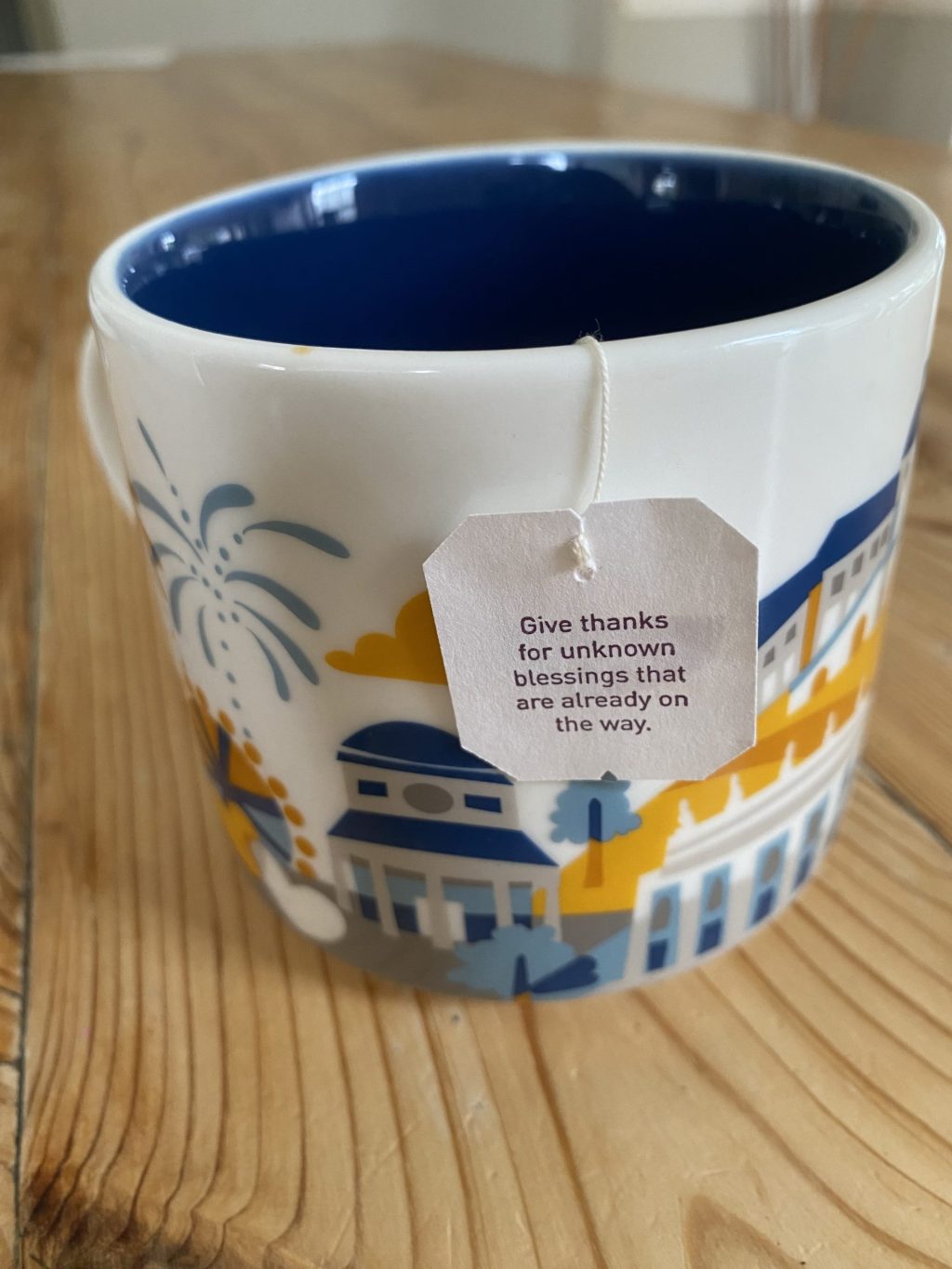
So I have been doing a lot of research on like the brain and neuroscience because there’s just been so much, well, there’s been a lot of studies on on recently. And which I just find fascinating. But there’s, there’s, there’s some, there’s a lot of science that shows, you know, how the brain impacts so many different aspects of our bodies basically. But one of the things that I learned in one of the studies is that anxiety and gratitude or like Thanksgiving cannot coexist in the brain. So the word that I had chose for this past year was gratitude, like just trying to practice gratitude.
And so I think it’s just so cool that that God, you know, he tells us to be thankful always and to pray continually and to not be anxious. But that he created us to have brains that when we are practicing gratitude when we’re giving thanks that we can’t, we can’t be anxious at the same time. And so I don’t know that just gave me more inspiration, I guess, to do it more because it takes care of the anxiety then. Right. Well, I wonder how much of that is the opposite.
Like, I’m hearing this for the first time. So I’m just processing it as I learn it. Like if you are anxious, not that it’s impossible, but like that, it’s really, really hard to be grateful. Which I think just from my own processing is why when people are like, just be grateful and list your way out of it or like, be thankful your way out of whatever mental illness you’re walking through, like, that’s not going to solve it. No, here’s like scientifically not going to solve it.
It may help if you can, but it’s not, it’s not, that’s not the fix. No, yeah. Yeah. Yeah. Awesome.
Well, Kira, thank you so much for your time today for your willingness to share your story and your perspective to educate us on what’s actually helpful and what’s not at all helpful and to help us understand a little bit more about what your life looks like on a daily basis. Yeah. Thank you so much for having me, Katie. Absolutely. As always, a big thanks for listening.
Be sure to connect with carus at carusmeyer.com. I would love to connect with you as well. You can find me at katiaxelson.com. I’ve got some resources for you there and how to have better conversations with people in your everyday world. Use what you’ve learned on the show and learn something new about somebody else you already know.
For another story of strength and hope, check out apple said 78 where Anna Maria Trump shares her story of a dysfunctional upbringing and how she has grown to overcome perfectionism and become an empowerment coach. My friend know that you two are an overcomer. I don’t know what your story has brought you. I mean, maybe I do. Maybe we’ve talked about it, but maybe we haven’t.
And I know that you are an overcomer and that you are stronger than you think you are. You are valued. You are seen. You are known and you are blessed. We’ll see you again soon.
Love you friend. Bye.