Redeeming Suffering — When Healing Doesn’t Come
Host: Raleigh Sadler
Date: Jan 16, 2024
Listen on: MercyCast
Themes: Theology & Scripture · Healing & Hope · Faith & Doubt
Format: Has Transcript
Featured quote
What happens when you aren’t healed and you live with chronic pain? You learn to find joy and beauty amid the suffering.
— Karis Meier, on MercyCast — Episode 60 with Raleigh Sadler
About this episode
- What happens when you aren’t healed and live with chronic pain.
- Finding joy and beauty amid suffering.
- The importance of vulnerability and receiving from God.
- Surrendering to God’s will.
- Embracing the mystery of suffering.
- Focusing on God’s faithfulness and love.
Highlights
When Healing Doesn’t Come
What happens when you aren’t healed and you live with chronic pain? You learn to find joy and beauty amid the suffering.
On Vulnerability
Vulnerability, receiving from God, and surrendering to His will.
What makes this unique
One of the most recent and theologically rich conversations. Explores the ‘mystery of suffering’ — the tension of trusting a good God who doesn’t always heal. Strong content for website quotes.
Full transcript
Read the full transcript
Transcript source: Whisper (large-v3, cleaned).
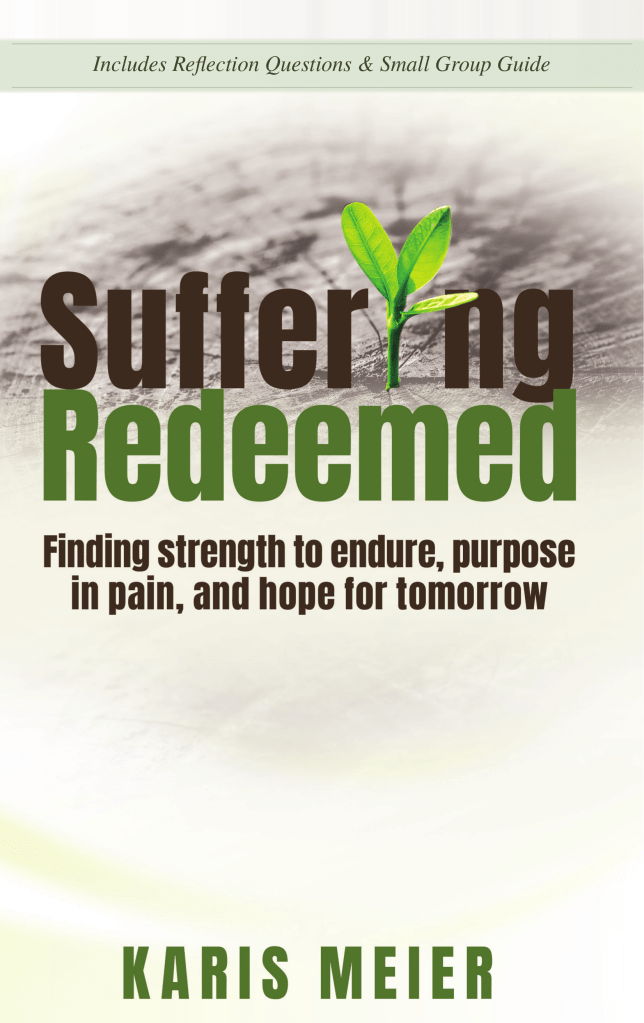
Welcome to the MercyCast, where we’re learning the art of compassion through the adversity of life. I’m your host, Raleigh Sadler. Today, I want to wrestle with the question, what happens when you aren’t healed? When you live with chronic pain or suffering and things just seem to get worse. Is there redemption? Can there be joy? How do we even work through it? Because it makes sense when there’s a good story. It makes sense when it was darkest before the dawn, but sometimes it takes a while for that dawn to break. And what do we do in those moments? As Karis continued brushing her teeth, this picture of a timeline flashed across her mind. And it was as if all the sorrow and pain from these years of suffering that she’d experienced were producing joy. They were producing beauty. And she tried to stay focused on this joy and beauty. She really did. But the painful memories just kept pushing to the forefront of her mind. 18 years and counting of living with illness, of praying and seeking God, of believing, of waiting for him to come through, 18 years of seeing doctors, going through procedures, of trying countless supplements and diets in hopes of finding some relief. It was in this moment for Karis that disappointment seemed to overcome the voice of God. Karis Meier is the author of Suffering Redeemed. She and her husband have four children and they live in Northern Virginia. She has a BA in Christian education and an MA in counseling. Karis has struggled with chronic illness for many years and is passionate about sharing how God has led her and how God can lead others through their suffering journey. Karis, welcome to the MercyCast. Thank you. Thanks for having me. And so I think your story is so important for us because it makes sense when there’s immediate hope at the other end of our suffering or when the reason is clear. you know we can say well there must be a reason in this but when we can’t see the reason we can’t see the purpose it’s really hard and you’re having this moment where you’re brushing your teeth and you get this picture tell me more about this like what was happening as you were doing something as mundane as brushing your teeth it was just about a month ago i think maybe six weeks But so as you shared, I’ve struggled with chronic illness. It started when I got parasites in Pakistan 18 years ago, and it just led to a lot of different organ problems. And then I got Lyme disease. And so just a lot of different issues that stemmed from this infection that I got, which initially I thought, oh, I’ll get back to my normal self. I was 25 at the time. So I was, you know, very healthy and had never really struggled with health problems, but it didn’t go away and it continued to get worse. And so, yeah, so that this about a month ago when this, when God spoke to me, I had been spending this last year really seeking God. I mean, I’ve, I’ve always brought my sorrow and pain and struggle with this illness to the Lord. I feel like it’s been something that’s really caused me to grow in my intimacy with God. But it really caught me off guard when I was just brushing my teeth and God. It was sometimes I have found that God often speaks to us in the most unexpected times. We can spend time waiting on God. I know for me, I’ve really put in a practice of spending time just listening to God. And a lot of times God doesn’t speak, but then it’s in those moments. when it’s sometimes unexpected. And God just really, I think I was just really struggling, feeling kind of just kind of hopeless. I’d taken a break from seeing doctors because I was just so tired of everything. I was so tired of being poked and prodded and- Well, it can be exhausting. It’s exhausting. And it’s the disappointment that happens after seeing a new doctor is hard. So because my husband’s in the military, we move quite regularly. And so I have seen literally hundreds of doctors and inpatient hospital stays. And so, you know, I was like, Lord, I just need, I just need a break. I need to refocus. And it was the end of this year that God just gave me this picture, like you said, of this timeline and really speaking to my heart, like, here’s the fruit that is coming from your life from these 18 years is going to be even better than the physical healing that you long for so much. And it’s not something, it’s not a new concept that God hasn’t spoke to me before because I have seen the fruit and that’s why I wrote the book Suffering Redeemed because I have seen how God redeems suffering when we surrender it to him but at the same time the day-to-day battle of keeping hope of not giving in to just the despair and the struggle is hard it’s real and I know anyone who’s suffering I mean it’s not only physical things. I know there’s mental, there’s emotional, there’s relational things that we all have in our lives that we can grow despairing in. But it was just really a reminder from God to me that he is continuing to work good and that I can entrust him with the memories of the pain and the sorrow and the disappointments and feeling at times like he had failed me. And yet knowing the truth that he has always walked with me and he continues to. And this is not, I would say this is a summary regular thing where God gives me these, you know, just encouragements, whether it be from him or from the word or from someone else or from a song that God is so gracious to continue to speak life into us at those moments when we need to hear it. And so, so many of us, as we’ve gone through things in our lives, it’s probably tempting for our friends or our loved ones to either push off, kind of keep their distance because they don’t want whatever we’re going through to splash on them, or to kind of encourage us with the first thing that comes to mind. And oftentimes it’s like, well, you know, I mean, I know you’re despairing right now and you’re going through it, but, you know, look on the bright side. How is what you’ve described different than just looking on the bright side of life? I think it’s something that we have all experienced in those moments and something that I’ll answer questions and go back to that. I think that the heart for people who are around us when we see someone suffering or when they see us suffering is they want to help. But oftentimes those platitudes, those words, those kind of blanket statements can actually be quite hurtful. But yes, I don’t think it’s just have a positive mindset. You know, I know there’s a lot of like, oh, if you just have think positively, then everything’s going to be great. And it’s not. It’s not that simple. I think there is so I think God is such an a personal individual God each of us are going to be walking differently you know we don’t all have the same stories we don’t all right we’re not all encouraged in the same way we don’t my life is not going to look like somebody else’s life who’s suffering a different way and I think it’s so important to remember that to not compare to not you know sometimes I look at some of the stories in the bible and I’m like I would rather have like that or God, why can’t you speak to me like that? And instead of just, it’s a day by day walk, I would say, first of all, is that we need to, and this is something that I’ve learned from the beginning of this whole ordeal. I really tried to hide and keep my pain all to myself because I didn’t want to be a burden to other people. I didn’t want to come across as complaining. I didn’t want to. And even with my relationship with God, I think I kind of kept a lot of my pain inside. And it was really through the Psalms that I learned how to relate to God in a more honest and really raw way. And so that I was able to also receive from him in that way. And so it was, yeah, I think it’s a journey of learning how to become vulnerable, which is not comfortable for most of us. I think we’d rather feel strong. We’d rather feel competent. And then learning to receive from God, the joy, the hope, you know, all these fruits of the spirit that don’t come naturally when we are suffering, when we are living in a walk in a path that we would rather not. And there’s an aspect of Jesus that we can only know as we follow him when life is hard or when things are disappointing or when we’re experiencing pain, because I just think the suffering that Jesus endured on the cross and the fellowship that we can have with him is just so precious. Like Paul talks about it, I know, in Philippians that, you know, everything we should consider rubbish compared to knowing Jesus. And so I think, sorry, it’s kind of a roundabout way to answer your question, but there’s so much more that we can receive when we feel the need for it. And I think moments or trials or hardships that we’re walking through when we realize like we’re not enough and that we can’t do it on our own. Those are such great opportunities for us to receive what we don’t have in ourselves. And so, yeah, I think it’s such a deep walk. And yet I can’t say like it always looks like this because my journey is going to look different than anybody else’s. But at the same time, I think there’s, I would say for me, I would not be where I was today. I don’t even know if I would be here without the help of God and the hope that he provides. And I think that’s so important because it’s so easy to compare our sufferings to other people and to look at someone else and be like, well, I don’t think I would take it that way. Or, man, if I was suffering like that, it would be a lot easier. And it’s really easy to just minimize what the people around us are experiencing. and just say, well, I mean, come on, you’re being a little dramatic. It’s not that bad. You’re right. It’s a day-to-day thing. And we’re all different and we’re all on different paths and we all have had different experiences and things are going to hit us all differently because of how varied our life experiences are. And that is such a good reminder because it is so easy to minimize the suffering of others. It is so easy to just be like, get over it. I mean, you’ve been dealing with this for five years. Just take a deep breath and focus on something new. Think positively. Just stop being so negative all the time. We’re not helping anyone when we’re doing that. And I think sometimes it’s more about us getting rid of something that makes us uncomfortable and us getting rid of something that reminds us of our own vulnerability than it is actually trying to help the person who’s suffering, the person who their vulnerability is completely exposed and they don’t know how to take a step forward. And so I think it’s really important for us to know. And you talked about this idea of being vulnerable. You talked about this idea of receiving the things that God promises from him. I think that’s so important. How do we receive these things like joy, peace in the midst of our suffering? yeah so i remember i don’t know this is probably about six or seven years ago when i had a new diagnosis and i had been hospitalized and it was i was just i was really on the verge of despair and even feeling like i didn’t want to live anymore and it was just a really really dark time for me and i was meeting with some ladies from my church on a regular basis just to pray together and see God together. And they were just, we were just talking about what it looks like, like the question you asked, to receive from God. And I had this picture in my mind, I feel like God gave it to me that of my, my fists were just closed, you know, and just that I wasn’t, I was not receiving God’s love because I wasn’t opening up myself fully to him to receive. And it really struck me that I didn’t even realize that I was doing that. I didn’t feel like that. But at the same time, I think I had, because of how I was, I was kind of doubting God’s love, I think in some ways, doubting his plan and his goodness because of how things continue to get worse after praying so much for healing. And, but in that time, God really ministered to my heart and I learned how to open up my hands. That’s a figure, you know, figuratively to receive the things that he wanted to give me. And a lot of that was just learning to receive the love and the comfort, like 2 Corinthians 1, 3 says, you know, that the father of compassion and God of all comfort, who comforts us in our troubles so that we can comfort those in any trouble that we ourselves receive from God. So if I can’t receive from God, I’m not going to be able to give to others. And it was really during that time when God just started pouring into my life more and more. And I was able to then start looking past myself and giving out to others. Even though I was in a very hard season, I would say for many reasons. So it’s hard for me to describe what that looks like. But it’s an attitude of the heart, I think, where we recognize in humility our need, you know, in every way and in God’s sovereignty and his goodness and all of who he is, even when life isn’t going the way that we want. And, and so I think, yeah, so I think it’s a, it was a process, but I remember there was a moment that, that kind of specific time when God revealed that to me and led me along this path of learning how to receive more from him. And it takes, I would say it takes, it takes time. It’s not, it, just like our relationship with any other person that we have on earth, we spend time, right? We spend time together. We spend time talking about deep things. There’s a depth that comes only through time spent together. And it’s the same with God. And it’s been, I would say that’s one of the biggest fruits that have come from my pain is that I really have learned how to walk intimately with Jesus and receive only what he can give. When you paint this picture of a God who always wants to give and who’s giving consistently, but our stance matters. And if our fists are clenched, we can’t receive. Robert Farrar Capon has an image that he uses. He was a priest, a chef, used to write for the New York Times, but he would say that we would need to receive with a cold, dead hand, a hand that can’t grab, but allows the blessings to fall on and fall off. And I’ve never really gotten over that image of how the things that God gives us may not be forever. Maybe they’re to be given to other people. Maybe they do stay on the hand for a while, but it doesn’t mean that, like, if you’re anything like me. I feel like sometimes I get something and I can be living in a way that is, I am just risk-taking and doing all this, but then I get to where I want to be. And then I hold on, then I get into management mode. Then I’m like, what do I have to do to not lose this? Whatever it is, it could be a job. It could be a relationship. It could be a friend. It could be anything. And it’s so easy just to get into management mode. And now you’re not living freely. Now you’re walking with Jesus, but you’re like, don’t tell me anything new. Let’s just sit where we’ve been sitting. This is good. I’m comfortable. I don’t want discomfort. But there’s that idea that you’re talking about of when the suffering doesn’t abate, you’re taught to just continually lean on because what else do you have in those moments when the pain is real and you’re leaning on your friend, you’re leaning on Jesus. And you quoted Philippians earlier, but you reminded me of a passage in Philippians chapter 3, that I might know him in the power of his resurrection and the fellowship of his sufferings, being made conformable to his death. Paul’s basically saying that I want to know him in the power of his resurrection, but I also need to know him in the fellowship of his sufferings. And it seems that’s what you’re describing as we are joining in this fellowship of sufferings with God, as we are connecting with Jesus who if anyone knows suffering it’s jesus and so what was it like when you when you figured out that’s what’s happening i’m growing closer to jesus through what i’m suffering because he suffered for me i think it’s a bittersweet it’s interesting so a few weeks ago for our life group which is like our small group for our church we were the questions that we were talking about was like, how do you abide with Jesus during the day? Like, how do you remember Jesus during the day? And for me, it was just, I’m like, how do you, how do I, how do you, how do you not remember Jesus? Because it’s, it, I feel all the time so desperate because some people are like, oh yeah, it’s hard for me to remember to pray throughout the day. Or it’s hard for me to like, remember to have my quiet time or have time in the word of Jesus. And I think my And I know it’s not always that we turn to God in pain. Not everyone does. And I think it’s something I pray for every day. God, help me to keep turning to you. Help me to keep having faith because I know it’s not by my strength, but I just, I feel, so I see the goodness. I see the beauty in how our desperation can really drive us to God. And at the same time, sometimes I’m like, I don’t want to feel this desperation all the time. I don’t want to feel like every moment I’m just, I am like crying to Jesus to like, help me, help me to smile, give me joy right now in this moment to give my children what they need, because I don’t feel like it. I don’t feel like putting a smile on my face. I feel like crawling to my bed, but I need the Holy Spirit to fill me so that I can keep filling others. And so it’s, I would like to say, yeah, it’s great all the time. I feel so thankful that I’m, you know, being driven to have a, you know, have this abiding place with Jesus. But to be honest, it’s, yeah, I don’t know. I still struggle, like, looking at other people and feeling like, oh, I wish I just had a more of a normal life. I wish I had, which I know is not, like you said earlier, it’s a pointless, like, comparison is so pointless in so many ways. But sometimes the immediate relief just is, it feels tempting to pray for versus like the enduring sanctification that God is doing through our suffering and through the hardship that we endure. I had a friend who was recently on the podcast, Gentry Coulson, and she talks about how she experienced Lyme disease and she had lived with the symptoms for five years. Back then, they didn’t really have much of a medical knowledge of Lyme disease. And so by the time they found it, they didn’t really know what to do and she was in a really bad way. And in our conversation, we talked about how God did heal her, took away every symptom like it was never there. But I remember in the middle of that experience, I asked her because there were multiple times where she almost died, like she didn’t know if she would make it through the night. I mean, it was very, very, very difficult. And I remember we were in college and I asked her, I was like, so what are you learning? And she said, you know, I got a new perspective on mountaintop experiences. I’m like, what do you mean? And she’s like, you know, everyone’s always talking about their mountaintop experience. She’s like, I think the whole point of the mountaintop is to look into the valley because that’s where the work happened. That’s where God was faithful. It was those moments when you’re walking through that valley and it just is awful. But then when you get up to the mountain, you can see what happened. And, you know, this is something that happened in her life a long time ago. And so over the years, new challenges happen and perspectives shift. And I reminded her of that mountaintop phrase. And she was like, I don’t remember ever saying that. And I think what’s so important is we’ve got to be reminded of God’s past faithfulness. And even in that episode, we talked about, here’s an example of when you are healed, but what happens when you’re not? That doesn’t mean that God loves any one person more than the other. it’s just that day by day individual walk that you described. And yes, sometimes God does heal and sometimes the healing looks different. Maybe it’s not a healing that people are seeing on the outside, but maybe it’s this long work that he’s doing in our hearts that it’s changing us. That if we stop and say, where was I 10 years ago? And we look at it, we’re like, wow, I’m so much different because I’ve been depending on God for this. Have you had those moments where you were able to just kind of look back and be like, okay, so in the day to day, I don’t feel like I’ve changed, but as I look back, things are a little different. Yeah, I definitely, I definitely see God’s sanctifying work in my, in my heart and my life and also have had other people, you know, just, I think a lot of it is these experiences can push us out of our own agendas for what we think we want for our life. And all of a sudden we’re walking something differently and that’s good. It’s a good, it’s good. There’s a lot of humility that comes with suffering, whatever it looks like. Well, it can be, I guess maybe that’s not always the case, but I feel like for me personally, it’s been a very humbling experience for good and that I’ve had to learn how to live in this kind of… So in one of the chapters of my book, I talk a lot about this tension between surrendering to God and also having faith and expectation for what He can do. So just being fully surrender to his will, but also saying, okay, God, but I also know that you can heal any moment, that you can do miracles, that you can do things beyond my expectation or understanding, but I don’t see the full picture. And so just kind of that story of like Shadrach, Meshach, and Abednego, where they portray faith and surrender so well. And that when they say, We know that God is able and he will deliver us, but even if he doesn’t deliver us, we are still going to praise him. And that’s just something that I really try to, that balance of expecting and trusting God to come through, but also not imposing my will or knowledge or saying like, I think I believe I know more better than God. And so anyways, it’s just that story and that picture of surrender and faith that they give is something that I try to attain to every day. Well, I think it’s so beautiful because, yeah, they are saying God could do this and we’re believing him for this. I think sometimes we submit to a sort of fatalism that, well, this is just the way it’ll be. But faith and fatalism don’t seem to work together very well. And so I love how you talk about this idea of surrender because surrender is scary. Surrender is basically saying, I’m laying my will down and I’m trusting that you know better than me, that you love me better than I love me, that you want the best for me. And so surrendering, I think, can be an act of faith. Well, it is an act of faith because you’re saying, I’m trusting you. but also I know according to your character is sometimes you do heal that sometimes you do deliver and you have a purpose and so I’m just trusting you and I think that example of Shadrach Meshach and Abednego is brilliant because they were a little like almost chippy like they were just like you know what here’s the deal you know they’re looking at the world power of the time the king, you know, and they’re saying, all right, fire up the furnaces. We’re good with it. And we know that he can deliver us. And if he doesn’t, we know he’s still good. And I think that is such a good perspective because I think our faith can shape our expectations. And if our faith doesn’t shape our expectations, those are the moments where we start to compare. Those are the moments where we start to look at what we see and what we see in other people’s lives and say, well why didn’t I get that journey and it’s just like I’ve experienced God heal family members but then not heal other family members and I’m past the point of saying why and it might just it’s probably not a noble thing it’s probably I just got tired but I’m looking at it and I’m just like I’m not asking why anymore it’s more like what next like what are you going to do next God, like, or what could you be doing? Because I know he’s, he’s doing something. A theologian once said, you might be able to track five or six things that God is doing at one given time, but he’s doing millions of things that you don’t know about. He’s always at work. And, and it’s funny because for me, it’s kind of like you, you had that image pop in your mind when you were brushing your teeth. I think that it’s in the mundane things that if we look, we can see the miraculous. It’s in just the very basic, normal things that they don’t look like mountaintops. If anything, they look like molehills. You know, you’re looking at this and you’re like, ah, it’s not that big of a deal, but it’s, God is doing something new and it’s in the common things. And I think having faith, like you talk about, that you’re going to praise him, that you’re going to worship him regardless of what it looks like. I think that’s the gift. And when scripture talks about faith being a gift, imagine if we went through our suffering without faith, then all we have is cynicism. And so tell me, Karis, what led you to write your book and tell us a little bit about Suffering Redeemed. Yeah, so definitely not my idea. It was, I mentioned a little earlier how I was really struggling about six years ago, very low point. And it was also during that time when I was in the middle of the night and I was struggling and sleeping. And God just spoke to me quite clearly that I should start writing. And at the time I was like, what am I going to write about? I am such in a low place right now. And so I didn’t. But then after a few weeks, God just kept prodding my heart. And so I just started writing about what I was going through, what the hardships, what God was speaking to me, a lot of my questions, just processing a lot of what was going on internally. And it ended up being a huge blessing for me just to be able to process. I’m more of a internal processor and writing actually was very, I would say therapeutic for me. And then I just, I started a Facebook group called Suffering Well, and then I started a blog. And at the beginning of 2022, Two, I felt the Lord was calling me to put a lot of what I had written into a book, which I had never intended to share most of what I had written with anyone. It was very, a lot of what I had written was very raw, felt very vulnerable. But I look back now and a lot of people, a lot of the responses I get are just that that is why it is such a blessing to people. Because I wasn’t trying to make it look good. I wasn’t trying to polish it up or pretend that I had it all together. It was written from a very hard place. And so I had no idea how to write a book. I never thought I would. But by God’s grace, you led me through that. And I published it in October 2022. So it’s a book just it’s I would say it’s for me, most of my suffering has been physical, But it’s very broad in the way that whatever suffering you’re going through, I address a lot of different aspects that we struggle with. Anyone that’s going through, you know, big or small, whatever in between suffering. And there’s a lot of scripture in there because that is how I endure is by the word of God and the hope that is provided there. So I talk about intimacy with God and affliction, the purposes in suffering, what does it look like to suffer well, like how do we use our pain to encourage and love others? And so just a variety of topics, but that’s how it came about. No, and I think that’s so important. I think that’s so important that this was born out of something you were experiencing, because I think the books that come out of a really true place can often connect with people. And I mean, it’s obvious. I looked at your Amazon reviews today and you’ve got a 4.9. I mean, out of five, that’s good. It tells me that people are connecting with the content, that you were able to speak from a place of real experience, real lived experience, to a place where people are dealing with something right now. And people went to your book looking for a way to process what they’re experiencing. And I think that’s so important because that’s what we need. We don’t need books or content that basically just tries to get us to focus on the bright side or look away from what we’re experiencing, but how can we stare what we’re experiencing in the face, but have the perspective that can only come from God to ultimately process what’s happening? Because looking away isn’t the answer, and you do not do that with anything that you do. it’s more of okay here’s what’s happening and here’s who God is and here’s what God’s doing in my life even if I can’t see it and so how does that encourage challenge inspire me in my next few steps were there any parts of the book that really spoke to you that you were like man I just wrote that and that’s good like you were there because I had a chapter like that in my book chapter four where I was like, that could, that came out of me. Like that, I wrote that. Like it was just so, I was amazed. Yeah. It’s funny because people will send me quotes or be like, this really spoke to me and, or this, you know, or take a picture of a page and send it to me. And then yeah, God uses it to speak to me. And I was like, wow. Yeah. So I, I, I agree. Like it’s, it’s not like necessarily one particular passage, but it’s like God ministers to me back again. And yeah, I feel the same way. I’m like, I know it was only by the Holy Spirit because it was, even now, I continue writing, but it’s not something where I just can sit down and write. I really feel like it’s a gift and a prompting by the Holy Spirit for me to write. And so it just, yeah, there’ll probably be another book, but it’s kind of, kind of comes in spurts and whenever, you know, I feel led to, so. Well, I’m glad you wrote it because we need that. We need guides because so many of us are just trying to figure out, it’s like we’re blindfolded in a dark room trying to make it to the other side and having people who have been there, people who are still there, people who have learned this art of faith and compassion that comes through their own sufferings and how they’ve experienced God’s faithfulness in the middle of it. I feel like that’s what we need to kind of tether to. We need to listen to those voices, not the voices that pretend that it’s not a big deal, not the voices that minimize suffering, but the voices that say, no, suffering is real, but God is also real. And so what does it look like to have faith in who He is for us? Karis, how would you encourage those of us who are going through suffering right now? So I would say first and foremost is just continue to reach out to God. Like Psalm 46, one says, God is an ever-present help in our time of need. And He really is ever-present. Now, there’s no one else who is always there for us. There’s no one else who will never let us down. There’s no one else who will always be faithful to every word he says, but God will. And also just to really embrace the mystery. I think, like you were saying earlier, you used to ask why questions. I used to ask why questions all the time. God, why me? Like, why this? Why so long? You know, why, Baba? and this is our only chance here on this earth to live in mystery, not understanding and to live by faith. In heaven, when things are revealed to us, we will know and, or maybe we won’t care because we’ll just be with Jesus. But either way, this is our opportunity to live and embrace the mystery and to walk by faith and to just be content with God because he is enough, he is sufficient. And, you know, his love is better than life. And so just all the questions and all the, even like the soul searching and the, you know, because many years I ask questions like, what sin did I commit to deserve all this? What did I do? Because it can feel like that sometimes, like it’s punishment. And yet God is such a gracious and merciful God. He’s always ready to receive us. So, yeah, I think that’s it. It’s focusing on him above what we’re processing, above our circumstance, but just trusting that he is a God that receives us and he is a God that gives even when we’re going through it. Yeah. Karis, thank you so much for being a part of the MercyCast. Thanks for having me.
Listen to the full episode on Website →
{ “@context”: “https://schema.org”, “@type”: “PodcastEpisode”, “name”: “Redeeming Suffering — When Healing Doesn’t Come”, “url”: “https://karismeier.com/mercycast-60/”, “datePublished”: “2024-01-16”, “inLanguage”: “en”, “partOfSeries”: { “@type”: “PodcastSeries”, “name”: “MercyCast” }, “creator”: { “@type”: “Person”, “name”: “Raleigh Sadler” }, “contributor”: { “@type”: “Person”, “name”: “Karis Meier”, “url”: “https://karismeier.com/about/”, “sameAs”: [ “https://www.amazon.com/author/karismeier”, “https://www.instagram.com/authorkarismeier/” ] }, “associatedMedia”: { “@type”: “MediaObject”, “contentUrl”: “https://www.mercycast.com/episodes/060-karis-meier” } }