Marriage, Chronic Illness & Faith in the Military
Host: Officers’ Christian Fellowship
Date: Oct 11, 2021
Listen on: Player.fm
Themes: Marriage & Family · Military Life · Chronic Illness · Testimony & Story
Format: Has Transcript
Featured quote
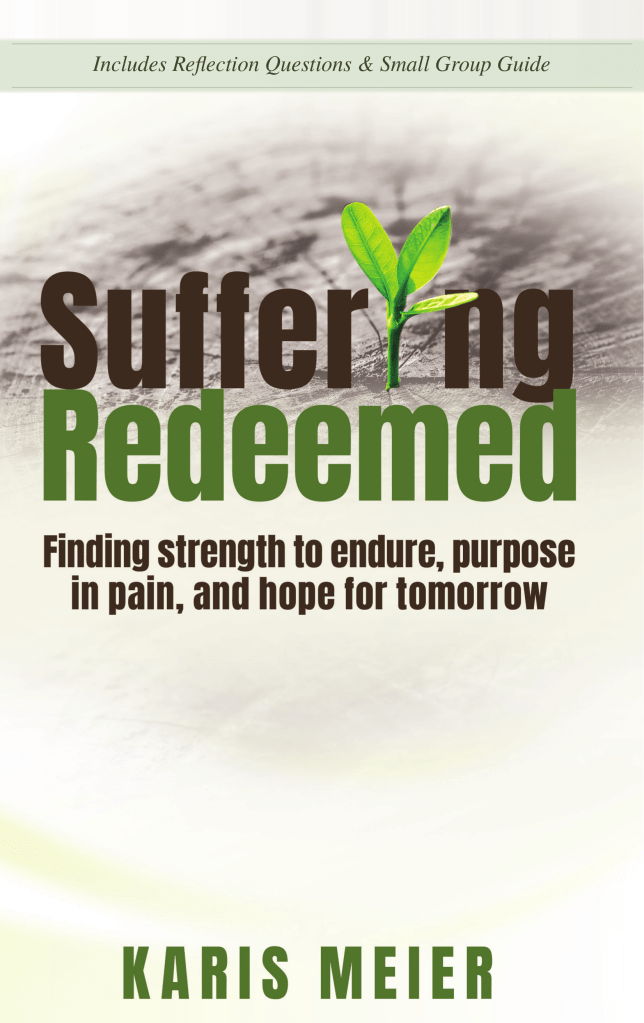
God really opened my heart through what I’ve suffered.
— Karis Meier, on OCF Crosspoint Podcast — Episode 13 with Officers’ Christian Fellowship
About this episode
- Karis and husband LTC Ben Meier discuss their experience with chronic illness during military life.
- Karis speaks on contentment and endurance while daily battling disease and asking God for healing.
- Ben shares how being unable to help Karis physically taught him deeper compassion.
- Discussion of incorporating spiritual disciplines into marriage through hardship.
Highlights
Heart of the Episode
God really opened my heart through what I’ve suffered.
On Compassion Through Suffering
Ben shares that not being able to help Karis with her physical health has taught him to be more compassionate.
What makes this unique
Only podcast featuring both Karis AND her husband Ben together. Offers the unique perspective of a military couple navigating chronic illness within the demands of Army life. Great for showing the relational dimension of suffering.
Full transcript
Read the full transcript
Transcript source: Whisper (large-v3, cleaned).
I have grown in intimacy with Jesus and learned to rely upon him. I mean, some days I literally feel like, I don’t know. I don’t know if I can, I don’t know if I can make it through the day. Everyone has a story to tell. Stories of hardship. Stories of hope. Stories of doubt. Stories of faith. Matter of the story. These diverse experiences of military life can all be found at the intersection of faith, family, and profession. This is OCF Crosspoint. Have you ever been in a situation where it seems like God was using affliction to draw you to him? Or maybe you’re in that situation now. How do you respond in those circumstances? In the face of a chronic illness that seems to have no end, Karis Meier, my guest in this episode, chooses to respond in this way. Give thanks. Karis is joined by her husband, Lieutenant Colonel Ben Meier, United States Army, and throughout my conversation with them, you’ll hear three themes in their story. First, marriage. Both Karis and Ben talk about the difficult aspects of marriage that often come along with the commitment to that marriage. Second, patience and suffering. Karis talks about contentment and endurance as she daily battles a disease and continually asks for healing. And Ben shares how not being able to help Karis with her physical health has taught him to be more compassionate. And third, sustainability. As a couple and as individuals, Karis and Ben talk about practical applications that have helped them on their marriage journey. Let’s jump into my conversation with Karis and Ben Meier as they share their story of military life at the intersection of faith, family, and profession. So, my name is Ben Meier, and I grew up as a military kid, really all over the world. And Karis and I are at Fort Belvoir right now, serving the Lord as parents to four small kids, and as lay leaders in our church, helping lead a small group, a Bible study, helping with discipleship, and also leading morning prayers. I’m Karis Meier. My parents are missionaries, so I also grew up in different parts of the world. I think Minnesota is the longest place we live somewhere, so I kind of claim that as my home state. My main role right now is supporting Ben and caring for our four children. I do lead some women at our church through a counseling, some counseling and Bible study. uh our neighbors we spend a lot of time with our neighbors since our kids are out all the time so we take that opportunity to just reach out to our neighbors and try to love love our neighbors like jesus jesus said um and how many years have you guys been married 15 and a little bit 15 and a little bit okay well i’d like to hear some more about uh your story of military life as a couple. How did you guys meet? So we met through my sister. My sister went to Wheaton College, as did Ben, and she knew him and thought we would be a good match. So she very awkwardly introduced us to each other and things did not take off right away. We needed a little more coaching. You needed a lot of help. Help from other family members. But I was actually at my sister’s wedding, who got married to Ben’s roommate from college. And so we both went to the wedding and had our first dance there. And then he went off to ranger school and through a little help of his dad was encouraged to write me. So yeah, we met through the help of many family members and then went off to Alaska for a duty station. I was in Minnesota. So we did long distance relationship for almost a year. And then we got engaged and got married about a month later because he was going to be deploying soon. So we had actually only been together in the same place for 20 days before we got married. I mean, we had known each other longer, but we did not know each other very well when we got married. And then shortly after we got married, he left for a, well, actually back up on, so on our honeymoon, I started experiencing a lot of different symptoms, just mostly stomach and just stomach related, but just feeling sick a lot. You know, I thought maybe it was nerves, but when we moved up to Alaska, things got worse. I started losing weight. And so went to the doctor and several doctor visits later, finally found out that I had contracted parasites when I’d visited my sister in Pakistan a few months earlier. So a few months before we got married, I had visited my sister and her husband who are missionaries there. So I followed the doctor’s orders, took antibiotics, but they were quite rare parasites, it’s hard to get rid of. And it ended up going on for quite a while where I continue to lose weight and my health continued to decline. So in the midst of this, Ben comes back from training and deploys then to Iraq. So I was alone in Alaska, just kind of really struggling because I was struggling with my health, not really finding any answers to why I wasn’t getting better, even after taking multiple rounds of antibiotics. Just everything to the military was new to me. I had no previous experience in the military or knew anyone in the military, so it was like a new culture. Our communication was quite sparse. We talked maybe every 14 days. yeah um and it was it was pretty intense time for ben and for and for me so but i’ll just share a little bit of the so and then i’ll let i’ll let ben share a little bit but um after losing all that weight and taking all the medication i can um i went from doctor to doctor trying to trying to find out how to get better and it just it wasn’t happening so i just i started to learn to live just kind of not feeling well. I had been healthy most of my life, been a soccer player through college and just healthy. And so it was a new experience for me. And then that just developed into one health problem after the other. Over the years, it started affecting my organs. So my heart kind of shut down. And I was in the cardiac unit for a few weeks and on intravenous feeding, trying to get my body to a place where it could support itself again. A couple of years later, my pancreas failed and I had to go to Mayo Clinic for a while. And then the next major thing was about 2017, my nervous system was attacked somehow and I started developing neuropathy in my legs and arms. And through all of this, you know, it was, you know, we were moving from place to place. And so I had to start over with each doctor every time. And there wasn’t a very, I never got a solid, like, you know, here’s, here’s the answer. Here’s the way forward. It was more kind of like, well, this happened and then this happened. And, you know, it, so it seemed like my body was just getting very tired. And so it was hard. It was, it definitely put a strain on our marriage. And another part of that is the doctors said we would never be able to have kids, which was very sad for us because we both wanted kids. And I won’t get too far ahead of with that story right now, but that’s kind of an overview of kind of, as far as my health concerns. Do you have anything to add to that? Sorry. No, that was quite a bit. I, you know, we struggled with what to say here, but for me, between the 15 month deployment to Iraq and for me as an infantryman, that was a very kinetic and lethal time. It was very hard for me. And especially with as few times as we were communicating to kind of fully grasp what was going on. And, um, and I did not pay as close attention as I probably should have and did not follow up in ways that I probably should have. So I’ll just say I was pretty oblivious. I was not oblivious to the fact that she was sick. I knew that she was sick and she told me, but I didn’t know the extent to which she was sick and I didn’t realize how important it would be for me to be more involved in that process. So, so throughout that deployment, I was very focused on taking care of the people that were with me getting shot at every day, but I, I did not do well in loving Karis in that time. So then, you know, coming back from that and there’s the, the return and the excitement and yeah, we just, we, we struggled as Karis said with communicating. I didn’t communicate well. I didn’t draw her out well. It was hard. It was challenging. Not to get too far ahead, but we do see how the Lord used these as opportunities to really grow our marriage in ways that we might not have had to grow it apart from the sickness, like to force us to learn to communicate in ways that we weren’t doing well at communicating. But it really brought it to a head, right? We have to figure this out. We have to learn how to communicate. And it really brought us to our knees and brought us to each other. So let’s continue talking about that first deployment. Kara, as you mentioned that you didn’t come from a military family, military background. So the entire thing was a new culture, I believe is how you described it a moment ago. So here you are, not just with the illness that you can’t really get solved, but now you’ve got your first deployment that you’re having to go through. You just mentioned that you guys are going every, what, every two weeks or so that you’re able to communicate with each other. So what do you remember? What are some of your memories about that time, about that 15 months? I had to learn how to, how to relate, first of all, like just being in the military and all the different, I remember the first time going to the doctor actually, and the guy in the uniform walks in and I was like, what? Like I had no idea that, that, that doctor, like doctor would be in the military uniform. It was just, you know, just little things like that, or like going to the commissary, you know, and it was just those little things that now for me, I’m like, oh, it’s so that’s just, yeah, it’s just the grocery store. But I was like, what is the commissary? You know? And so just, and I just remember sometimes sitting at, you know, sitting at tables, talking to other military people and they’d be using all these acronyms and I would have no clue. Like it felt like a different language to me. And so just, that’s just some of the, you know, the details and, and just all the different, um, yeah, the FRG and how that works and just the different people that would call me if something was going on. And, you know, so here I am like, you know, just afraid for Ben’s life. And then, so every time somebody calls, you know, I’m like, is this, is this going to be a bad call? And so I was, I slept with my phone. I, you know, every time it rang, I wondered who it was. I was working at a chiropractic office. I just remember, you know, sitting there with my phone next to me. And thankfully, everyone was very gracious about letting me, you know, just leave whenever Ben called. But yeah, I think it was a time where I was stretched more than I had ever been. I remember one afternoon sitting in our apartment looking out the window at the mountains and I was reading my Bible and I was actually reading Psalm 121. I lift my eyes to the mountains, where does my help come from? And I was like, yes, it comes from God. And I, you know, I didn’t know at that time that God would be bringing me on this journey of greater intimacy. But I think, you know, it was through those, you know, and there were long, you know, 16 hour nights there that were just, they were long, they were long and hard. And yet he was so faithful. I just, I see his faithfulness in that time also, even though there was, it seemed like there was too many hard things at once. the not knowing each other very well. And, you know, I mean, we had communicated distance for most of our relationship, but, you know, there was, there wasn’t the depth that, that we have now that was, so that was also made it hard because I didn’t want to put more strain on Ben than he already had. So I, you know, when he called, I was just like, oh, I’m doing fine, you know, and trying to, trying to stay strong, but I didn’t really feel like I could share. And I know he said he didn’t really, he felt like he didn’t take care of me as well, but I wasn’t really also sharing as vulnerable, as vulnerably as I would now, or as a wife probably should with a husband at that time. Yeah. Ben, I know you’ve already touched on that answer just a bit. Is there anything else you wanted to add about that first deployment? We always obviously think what we would do different if we could have gone back. And if I could have gone back, I would have paid more attention to our pre-marriage counselor who actually called almost every single marital issue we’ve had during our pre-marriage counseling. But one of them was just the emphasis on drawing Karis out and really pursuing her through questions. And that’s really it. I wish at that time I would have done a better job at drawing her out. But yeah, I am grieved at that time that we were not able to take care of her in the way that she needed to be taken care of in that time. Yeah. Let’s fast forward just a little bit from that point. I want to dig in a little deeper to the birth of your first child. And you had mentioned a moment ago that that was something that doctors, I guess, medically said, hey, this isn’t likely to happen. I don’t know what sort of prognosis they gave you in terms of like a percentage or whatever, but that it likely wouldn’t happen. And then now here you are, you find yourself pregnant and giving birth to your first child. And what’s going on at this point of your life? I think you’ve been married, what, four years or so at this point? Yeah. So we’ve been married a few years. Karis’s health at this point was, it was not great, but it was stable. So, I mean, she mentioned going to be in a cardiac unit. I mean, so that we weren’t at that point yet, but she had lost enough weight where the doctors had said, you basically are so underweight that you are not able to have kids right now. So yeah, we were told it’s not possible until you’re able to get healthy. And so we’re trying to get healthy and not really finding any successes there. But yeah, so four years later, you know, 2010, we were at Fort Benning. So right before Benaiah was born, very involved in ministry. So we were involved in the Navigators at that time. And so we were being discipled, we were discipling, we were leading a Bible study. And then with Karis’s health being stable, we then moved to Joint Base Lewis-McChord in Washington State, where I was going to be in command. And so there was kind of this movement from a place of stability health-wise and really us being able to work together and grow deeper together through shared ministry experiences and opportunities, and where the Lord is really speaking to us and working through us through mentors and through, again, opportunities just to reach out to others. But then that led to two years of being in command, which was another buildup to deployment. So a lot of time spent away, even when we were at home, we weren’t at home. And long nights as a commander, and then another very intense, lethal deployment to Afghanistan, right after Benaiah was born. And so this was a very challenging time. So now we have an infant in the home. So the deployment dynamics have changed a little bit. The stressors are as intense from the deployment perspective, but the stressors are also greater now being in command. So it was a very, very difficult time. So continuing with that, you had mentioned a moment ago, Ben, that first deployment shortly after you guys were married, how it looked, how looking back you wish you had done things a little bit differently, you know, and how you communicated with Karis and that sort of thing. Was the second deployment here in 2010, did that look any different? So it looked a little different. It wasn’t every two weeks. There were more opportunities by email to be able to talk, but not as many opportunities by phone necessarily to communicate. I would say the difference there was just the stress level from the deployment. So both of them were lethal and kinetic, but as a commander, there was just a different quality to that. like knowing that knowing that they were all my guys and just seeing the injuries and um and that was really hard for me and I was I was very focused every day on trying to just keep my guys alive and do the mission and so again I think that was another fault of mine I don’t want to say fault you know I’m not going to judge my decisions at that point but looking back I was more focused on my job while deployed than I was on Karis and her health at home even though we were able to communicate more for me it was quite a bit different also because i was the frg leader and like ben said it was quite a dangerous time i mean that was an opportunity it was it was definitely challenging but i got really close to all those wives and parents and had a hard job and calling some of them different times but i feel like you know god really used Um, I think that’s where I, I began to really see, wow, God, you, you’ve really opened my heart through what I’ve suffered. And I saw such an opportunity and had such a, just so much compassion. And it had such a heart to reach out to those, you know, spouses now, families who are suffering. So I think around that time is when I really began to just open myself up more to what God was going to do through the, the suffering, you know, physical suffering that I had, I was experiencing, you know, so. Karis, I was reviewing an article that you have submitted for Command Magazine, and you made this statement in that article, I thank God for using affliction to draw me unto himself. Talk more about that. How can you make that statement? Not lightly, that’s for sure. You know, I think our human tendency, my tendency is to rely upon myself and to find satisfaction in things other than God. It’s easier, right? And brokenness definitely brings a desperation. I think what we do with that desperation is what’s important, you know, because there’s a lot of desperate people, but where are they turning? And I, so I think I can say, I thank God because in His grace, in His mercy, He has drawn me to Himself. He has turned me towards Him in my affliction instead of away. I can say without a doubt, I have grown in intimacy with Jesus and learned to rely upon Him. I mean, some days I literally feel like, I don’t know. I don’t know if I can, I don’t know if I can make it through the day. So it’s like, I don’t have a choice. It’s like the disciples, Jesus, where else can we go? Like, we don’t have, I don’t have any other options. Jesus, you’re, I mean, you are the best option, but you’re the only option. So a key passage for us as a couple and individually, I think, is 2 Corinthians 1, 8 to 9, where it says we were so utterly burdened beyond our strength that we despaired of life itself. Indeed, we felt that we had received the sentence of death, but that was to make us rely not on ourselves, but on God who raises the dead. And I think both Ben and I are the type of people who are like, oh, we can do it, you know. I’m fine. I got it, you know. I’ll be okay. Just brush it off and, you know, but it’s, you know, there’s God, God knows how to get us to rely upon him. And he’s so gentle. He’s so good about it. But I just see that I see that in our marriage, you know, through, through a lot of difficult things, you know, we’ve, we’ve had to learn how to rely upon him. I see that on my own day to day, you know, life. So yeah, I think it’s just every day, you know, just learning, learning how to walk more with Jesus in that day. You know, I need to call upon God throughout the day. I need to worship Him when I’m discouraged. I need to worship Him. I need it, and I need hope from the promises. So it’s just so many things that I may not be so hungry for, so thirsty for, if I was well, which we continue to pray every day that I’m well. I know one day I will be well. I just don’t know when. I hope before I reach heaven, but I know God’s using this for now. And so I praise him now. So is that the outlook then that what you have going on is sort of a chronic thing that right now there’s just no way to treat it or I guess treat it, but maybe heal you from that or what? Yeah, the doctors, you know, I’ve had several doctors just scratch their heads, literally scratch their heads and look at me like, I don’t know this because I have a, you know, there’s a few different, I see a neurologist and a GI doctor and a couple different specialists regarding different parts. And yeah, there’s not, nothing has really been helpful up to this point. And there’s not an answer right now. So yeah, right now it’s just day by day, just by God’s grace. And it’s not even that there’s no answer on how to get better. There’s not even an answer on what’s causing it right now. And so the doctors are literally befuddled. Every doctor we meet, and even now, we feel like we’re in a place where there are some great doctors that are really pursuing this, but they are even at the point where they’re like, we have no idea what is causing this. I mean, everything that would normally be causing this is not the case, and so we don’t know. This is just unheard of. So in terms of the long term, we don’t know. We don’t know if we’ll find out what is causing it, and we don’t know if through human means, there is a way of addressing it. Well, I really appreciate you guys going into detail about your story and Kara specifically, the illness that you’re dealing with and the ongoing health issues. I want to jump from your story into maybe some broader, more application type of questions. And it sounds like from day one of the marriage, there have been health issues, there have been stresses of some kind with the deployments and the different things that you guys have talked about, what has sustained your marriage and your family over the years? And you can’t give the Sunday school answer of Jesus. No. I guess you’ll have to answer that, honey. That was our answer. So- Well, you can give the answer of Jesus. That just can’t be your only word. Well, no, no, no. You’re right. There’s a little more to it than that. But in terms of what has sustained us, I think maybe a better way to say it is instead of just saying Jesus, it’s God’s word, both written and spoken. So time and time again, I mean, God has shown that he still speaks. We have received through these years, so many words of encouragement from the body of Christ, either a timely verse that came to someone’s mind or someone calling us literally from the other side of the world saying, you came to mind and I prayed for you by name. And some, sometimes people who don’t even speak English, like just would call and it was really interesting conversation. But yeah, through words of encouragement from the body of Christ. And there’ve been so many times that there are just timely verses through our devotions or through our quiet times that God has revealed direction. He has provided encouragement and even given promises. In the case of a couple of the kids, especially the first, like God actually spoke through a promise to Karis a year before Benaiah was born. And this was at the height of us trying to have kids and being told that wasn’t going to happen. So just the word of God has been really something that has sustained us, but more on a practical level, like how, how does that look then for us as, as a couple? And I think being able to, being able to pray and worship together has been incredibly vital, uh, just in terms of our dependence on the Lord and crying out to him, together, seeking the Lord together. And Karis mentioned kind of that desperation, that place of brokenness. And for me, over the years, the Lord has really grown me in terms of compassion and not just in my head understanding what Karis is going through. But part of that is being able to ask Karis how she’s doing and realize that it’s really, really been a hard day. And then being able to go together before the Lord in brokenness, you know, for me, recognizing as a leader, as an army leader, as an army officer being told, hey, you can figure this out. You can come up with a plan. You can create a solution. You can bypass any obstacle. And I’ve realized there is nothing I can do. I am completely powerless when it comes to how I can help my wife. The only thing I can do is go with her together to the Lord in prayer and in worship. And so that has been vital in sustaining our marriage, and especially in times of miscommunication or just any of the normal marital challenges that are exacerbated by all the other challenges we highlighted. I mean, that has just been absolutely vital for us is going together in prayer and worship before the Lord and seeking Him together. Yeah, I think I would just add some of those, you know, some of the spiritual disciplines that are just individually, but also as a family. You know, we try to pray together every night and do devotions or have some kind of scripture that we’re going through with the children. And then something that Ben and I had started shortly after Benaiah was maybe it was around one but we started doing couch time so where every night after work when he got home we would sit on the couch for about 10 minutes but just a time to connect and I’m so thankful that we began that early on because now we got four kids and you know everyone wants daddy when he gets home but we sit down and they know the kids know not to disturb us and we get a chance to just to connect to communicate for a few minutes before life goes on and I think that’s really really been key and just keeping us close you know through everything you know because there’s been we’ve had a lot we’ve probably spent I don’t know several years apart in our marriage between the TDYs and deployments and everything so that that time is just a precious time for us yeah and it’s and it’s actually hard it really is hard training the kids to realize when we say couch time that literally means you cannot talk to us you cannot bother us uh but you but we’ve actually had them sit in the room and watch us they can watch quietly but they can’t bother us and so it’s been really cool to see the kids like come in the room sometimes a couple of them just sit there and listen to us as we connect with each other and they they know that that’s our time. But obviously, each new kid, we have to do a little bit of training with. But it is a lot of work. It is a lot of work to set that time aside and to make it happen. But as Kara said, it has also been vital to our marriage. One of the themes that seems to appear in these podcasts from time to time is this idea of having a support network or building a community or that sort of thing. How important have those things been for you guys through all of this, or have they? Yes, very important. It has been, I’m not going to say as vital as other things, but it has been vital. Having friends, having mentors, having people who are discipling us, having our family, having a community of faith to walk with has been crucial. If nothing else, just in those times when Karis has been so sick that she just can’t, literally can’t even do anything, is being able to call someone from the church for prayer or call someone and have them come over and help. But yeah, it has been absolutely vital. You know, being able to pray together, worship together, confess our sins together, encourage each other, and build each other up inside that community is, yeah, very, very, very important. Yeah, I just agree. I think, you know, thinking back of the, what, eight different places we’ve been, maybe, you know just such sweet memories of neighbors or of small groups or yeah I know Ben mentioned mentors but we had you know mentors that helped us through some hard times and just to have people to go to and ask and the hard questions um was yeah especially when you’re moving around all the time. You need people that are close. And we lived next to Ben’s parents for a short time, but other than that, we’ve never lived near family. So our family became the body of Christ and people around us. So yes, I agree. Very important. And in fact, it was so important. It was a key consideration in where we lived when we moved. And it became an essential part of our planning process when we did move, which was, you know, calling ahead, trying to find churches, you know, looking at the chapel, reaching out to OCF, is doing that ahead of time so that when we hit the ground, we are able to immediately jump in to fellowship. So it did, it was very intentional, a part of our planning process. You know, normally the planning process includes making sure your packers go to the right place and, you know, your school and so forth. But for us, that was almost one of the major considerations. And even something that we prayed consistently about is, Lord, as soon as we move here, please help us to very quickly find a mentor, find a close friend, find a fellowship in the body of Christ, find a place where we can plug in. And then also a commitment to each other as well to say, wherever we do end up, let’s get plugged in right away. Because not only are those communities life-giving to participate in, they’re most life-giving when you’re contributing. And so really committing to that ahead of time and saying, we are going to get involved. We are going to commit our time to serve in whatever capacity, even if it’s starting out as an usher or a greeter by the door, investing in that community to make sure that you’re connecting quickly with it. How are things going today? What are some of the difficulties that you both continue to face? And then maybe just continue by telling me where else have you seen God’s faithfulness throughout your marriage or during deployments and that sort of thing? So today, I think we are still, I mean, what we described is not a success story. There’s obviously some successes and the ultimate success obviously is the Lord drawing us to himself and us growing in our intimacy with him. But this is not, it’s not over, right? We have not seen a marked increase in Karis’s health. In fact, we’re continuing to see her health get worse and we still don’t have any answers on what’s causing it or what the root causes are. So there’s still, it’s still a process of daily seeking the Lord for answers and asking for the miraculous, asking for healing. So we’re still in that place. Like what we just described is not just the past. That’s still where we are right now. But in terms of what we continue to face, I think, as always, just the challenge of communication is how does communication change, not only as we grow older, but as our kids grow older, as jobs change, as ministry opportunities change, as energy levels change. I mean, there’s so many things that change on a continual basis. We can’t rest in a single place. We have to continue to engage with each other and with the Lord. But I would say communication is probably still an ongoing challenge and how that changes over time? I think for me, I have a huge heart to want to do so much. And I feel like God’s just given me a lot of passion to do things. And I have limitations of what I can do physically and also with four kids. A lot of my time is at home. And one of the things that Ben always reminds me about is, you know, our children are our disciples. They are the ones that we are pouring into primarily right now. They, I mean, they have a lot of needs for one thing, but also they’re, you know, they’re the ones that we are, we are, we have the most influence and time with. And, and that’s just, it’s a good reminder for me, you know, cause I have a master’s in counseling and I would like to be counseling, but for now, this is where God has called me and taking care of kids, little kids when I’m not feeling well, it’s not easy, But I have so many opportunities to just be sharing with my kids how God is using this, how God is, you know, how God is working. And I don’t devalue that. You know, I know God is, I know God will use it. We did struggle for some years just not, miscommunication about how God was calling us in the military or getting out of the military or what, you know, just what it looked like. And I feel like he’s really brought us to a more unified place. But what the future looks like and what happens, you know, next is still up in the air. And so I think we’re just being challenged with those decisions right now. Lord, what do you have next? And just wanting to honor him and follow him in that whatever direction he brings us. All right. Final question for both of you. if listeners were going to take away only one thing from your story as a couple or your stories as individuals, what would you hope that would be? So Karis kind of talked about it already in one way or another, but I would say just this idea of completely submitting to Jesus. It’s really only in that place of submission, that place of obedience to everything, that place of complete dependence upon Jesus, does most of the scriptures make sense. But for me, like when I hear my grace is sufficient for you. My power is made perfect in weakness. Therefore, I will boast all the more gladly about my weakness so that the power of Christ may rest on me. I mean, that’s 2 Corinthians 12, 9. But that doesn’t make any sense if you’re not living completely submitted to Jesus. And, you know, the army teaches us to be strong, to make sure that our bodies are strong and our minds are strong and we’re resilient. And, you know, everything is about our strength. And our churches often make it seem like, you know, healthy, wealthy, perfection is where we can best see Jesus. And we’re also taught how to, you know, tough it out and make it better. But it’s often, well, at least what we’ve seen, and that’s just our experiences in our constant brokenness before Jesus, in our submission to him, that’s helped us to better see his beauty, to better see his strength and his love and his provision, and really to long for him in a way that I don’t know we would have apart from our circumstances. So, you know, I personally wish we would have started in that place of submission and God would have looked at us and said, oh, you don’t need this broken nest to be in a place of submission. But that place of submission is the best place to be. And I know Karis has kind of already talked about that. So my encouragement, I guess, to sum that all up again would be to say, don’t wait for circumstances to drive you to that place of submission. Start there. Start in that place of submission. Yeah, it’s a hard one, but I think just the steadfastness of God’s love as sufficient for us. You know, I think of how Jesus says, as the Father has loved me, so have I love you. Now remain in my love. And God’s love for us is so great. And I don’t, you know, I mean, I know Paul just is always praying that we would know the depth of God’s love, you know, but His love, God’s love is better than life. Like, just like Psalm 63 says, you know, I think we can doubt God’s love when life gets too hard. I know I have, or we can ignore it when life is too good. You know, we can choose other loves, but staying in God’s love, receiving God’s love, it’s better. It’s better than life itself. And it’s, I mean, God freely pours it out, but we also have to position ourselves to receive it and to experience it and to live it out, you know, so that it’s overflowing for others also. And actually, one final item for you, Karis. I know from some previous communication that we’ve had that you have a blog. So tell me more about your blog and how people can find you online. Yeah. So, quick story. About four years ago, I woke up in the middle of the night and just sensed the Lord calling me to start writing, just writing about the journey I’ve been on. And I never considered myself to be a writer, but after a few weeks, I started just writing. I started a Facebook group called Suffering Well, and invited several different people, just starting sharing, you know, sharing God’s testimonies. of faithfulness in my own life. And then a couple of years ago, I started, I started a blog, which then opened the door for me to write a few articles and also consider putting, putting a book together at some point. I don’t know. I don’t know what God has for the future, but yeah, you can find my blog. It’s at Karis Meier. So my, my name, K-A-R-I-S-M-E-I-E-R dot wordpress dot com