
One More Day: Tribute to Recovery Month and World Suicide Day
Host: Robert Colon
Date: Sep 17, 2023
Themes: Mental & Emotional Health · Healing & Hope · Testimony & Story
Format: Has Video · Has Transcript
Featured quote
One more day — a tribute to choosing hope when everything says give up.
— Karis Meier, on Revive Ministries Podcast — One More Day with Robert Colon
About this episode
- Tied to Recovery Month and World Suicide Prevention Day.
- ‘One More Day’ — choosing to keep going.
- Mental health, emotional well-being, and faith.
- Karis’s message of hope to those considering giving up.
Highlights
One More Day
One more day — a tribute to choosing hope when everything says give up.
What makes this unique
YouTube video available. Tied to Recovery Month and World Suicide Prevention Day (September). The most serious and potentially life-saving framing of Karis’s message — ideal for outreach content about hope and perseverance.
Full transcript
Read the full transcript
Transcript source: Whisper (large-v3, cleaned).
Welcome to Rhyme is the podcast is the month of September and September. There’s World Suicide Day and Recovery Month. Some statistics real quick. The United States has increased the rate of suicide since 2000 2018 by 37%. However, that number fluctuates, but the number, you know, it’s very monomotor. It doesn’t, but it hasn’t consistently decreased. Some of the countries that are having the hardest time with high suicide rates include South Korea, and I’m actually half South Korean, so this number is concerning. But as we pay tribute and we’re thinking about the idea of one day more, we’re remembering that each life matters. It’s not just a number. So in that context, I always like to bring in new insight, bring in new guests, and I have a new guest today. her name is Karis I just want to say thank you for coming on sharing your insights sharing um just you know being part of the conversation thank you for coming on yeah thanks for having me just a short disclaimer if you are in the states 988 is the suicide crisis lifeline but wherever you are in the world I do encourage you find what resources work I don’t like reinventing the wheel so if there’s a group there’s people that you are comfortable with the biggest thing i always say working in the mental health field is if you can’t say i need help then try to find an environment where you can say that ask that question so thank you i always segue why having um bringing up quotes this month i think about robin williams you know obviously he passed several years ago but he had this quote he says i used to think the worst thing in life was to end up alone it’s not the worst thing in life is to end up with people who make me make me feel make you feel alone what comes to mind when you hear this quote yeah so it’s it’s it’s interesting because i was just having a conversation with a friend a couple days ago and she told me that um when she feels most alone is when she’s in like larger groups you know where just kind of feeling a lot of loneliness and not only groups where she doesn’t know people but groups where she does know people and so i was just kind of thinking about that and you know i think that that probably is a common experience for a lot of people um just feeling like unknown in those circumstances because i think a lot of it is we just um we want that intimate connection and if that doesn’t happen a lot in large groups even sometimes in smaller groups when we don’t feel like we can be vulnerable or be ourselves and the other thing that came to mind when i when i read or when i heard that quote is um a song that came out a couple years ago which says truth is called truth be told and it just talks about how you know a lot of times we say we’re fine um when people ask even though we’re really not you know because that’s what we expect you know people want to hear right they don’t want to hear my problems they don’t hear my troubles like how are you i’m good i’m good you know even though inside you know there’s probably a lot of hard things going on at which even kind of um makes that that gap i think larger and more of a feelings of isolation and like i have to put up this face to say i’m okay even though i’m not and i think we’ve all been there um so yeah you know i that brings up um the idea is it more important to appear that you’re doing well or actually doing well a lot of times when i’m working with clients it’s it’s a difficult one because we’re we don’t you know we are very much superficial in our conversations we could be around a lot of people like how’s the weather oh it’s great it’s great everything’s great too many greats you know nothing’s never really substance you say a lot but not really say anything at all you probably have those conversations um there’s this barrier you know i don’t want to tell either because i don’t want to be a burden to the other person or maybe i don’t trust there’s there’s a there’s something there um and i do feel that robin wounds touches upon it because i don’t think proximity is always the thing you can be around a lot of people and feel worse you know yep and i feel sometimes uh just verbiage wise it’s not always bad to be alone you know sometimes it’s good to kind of have those times by yourself to reflect but there’s something about loneliness that can be can be insidious of how we view our value how we view ourselves and how we you know how we proceed forward i think it’s just a verbiage thing but word wise um some people are introverts i know i’m kind of mixed i don’t know about you for me i find that i can be a social butterfly but i get exhausted very quickly mixed baggage um um but oh in that sense i think environment plays a huge part especially when we’re thinking about this month paying tribute to those who are struggling the families attached to those who are struggling those who who have lost someone through um someone completing suicide i know myself being touched by that i just what are your thoughts when you think about environment what comes to mind to you and what do you think has worked or have you seen yourself personally or what you’ve seen around you that has been helpful in gaining stability in the environment yeah that’s a great question. So I think a huge thing, like you said, is, is trust and safety, right? I think in order to be vulnerable, you have to feel like you’re in a relationship that where there’s honesty and trust and, um, and you’re in a, you know, in, in safety also. Um, and, and then also So being in a place where you can really be who you are, right? I think there’s a lot of times for me, you know, I think I’ve been in seasons where I’ve felt so broken. It’s almost like I don’t want to admit it to myself. You know, it’s hard because when the words come out of your mouth and it just becomes more real. And so being in a place where that can feel like you’re sharing that with someone else, and they’re taking some of that, right? So when you share something that’s really hard, the person who’s on the receiving end, in a way, is going to take some of that burden, right? It’s going to share that burden. And so I think that’s huge, right? How, how that is handled the first couple of times when you become really vulnerable is going to kind of set a tone for how you can expect in the, in the future. And so, but, but I think also like, um, if, if you’re with the wrong person, cause I think there’s, there’s people who may not be the right, right people to share your pain with. and then you have to realize okay this is not this is not me i can i can still open up but maybe choose someone else maybe choose a different environment choose a different group choose a different individual and also just knowing yourself like you said some people are more extroverted maybe group settings are better for them some people more introverted more um um and also in my life i have really learned how to i’m a christian so i relate to god i pour out my heart to him the psalms are a great tool i think of expressing um hardship and difficulty when you don’t always have the words and so um yeah that’s those are some of my thoughts yeah And, you know, I’m glad that you mentioned, you know, even though revival ministry doesn’t proselytize, I do encourage, you know, me, myself, I’m a Christian, but I think when it comes to, for me, I wasn’t always a Christian. And what really brought to me, it was that everything changes, whether you like it or not. And the one thing I liked about, you know, faith and something bigger than myself, it doesn’t change. It’s kind of reassuring, especially when you’re, you’re in the valley versus, and you’re just like just just one more day as opposed to like like this um this month is suggesting because sometimes a one just just surviving one day can do a lot and that’s basically um you know things peak at times i do also like what you also mentioned that um of you know when you’re when you’re you know it’s different you know when you think about environment but i think the hardest thing that i had to realize personally this is my own context is not everyone’s going to understand so expectation levels has to be there so um when i have a friend and i’m sharing with a friend or i’m sharing with my wife even my wife or even people are very close to me i know they won’t completely understand what i’m going through and that’s okay um i think the environment is not for them to really at least for me to completely understand but just to be there so i could be like hey i’m not doing well you’re not going to understand why i’m not doing well in some ways it’ll annoy me if you think you know how i’m doing or how well or not well i’m doing but i know that you’re there you’re gonna be there if i if um some things some of the tangible like things we don’t think about like a lot of things that happens when you’re grieving or you’re struggling is you forget yourself you forget everything else so you’re your friend being like i don’t know what to deal or what to do but here’s some food go like or something very tangible very easy or hey you’re not having a good day i’m not i’m not an expert i’m not very familiar especially our parents you know generation above us then they had to have to deal with a lot of this stuff or was familiar so having a little grace to them i try to do because uh it’s kind of my mom’s south korean like i mentioned and my dad’s spanish so it’s like two cultures from different parts of the world being understanding your context i say this to myself and my those who i work with and help sometimes is personalize your care who what’s going on with you but don’t let external things personalize you so like a lot of times things happen dmvs you go try to get care or whatever it doesn’t work out nurses and call you back it’s not inherently that they’re out to get you it’s you know it’s it’s so i’ve learned at least for me navigating through that is not to take those things externally personal but your care if it’s not working if the medicine’s not working if the treatment’s not working take that personal and find something a little bit better and the environment can provide that an african proverb and i like a lot and i think a lot of people at least nowadays should read this as if you want to go quickly go alone if you want to go far go together we’re not islands this kind of promotes the idea that we kind of want to race through um but what are your thoughts when you hear this proverb african proverb and anything else that you want to share yeah so it’s interesting they brought up culture because i think in the united states at least um we are very um individualistic like we were very we kind of like to do our own thing and have control and um be very private in our lives and keep everything to ourselves versus doing things more as a community or a neighborhood or like extended family you know i think a lot of other cultures are much more like that where they are they more see it as a group or a family or a tribe or you know just so there’s more of a a feeling of belonging that can come with other cultures i’ve lived overseas some and i’ve experienced that and think that’s very powerful and i think that’s something that um living in the united states is it can it can be hard in some ways because we don’t naturally have that unless you try to create it which in my experience i have found a lot of resistance because people like their privacy they like to be in their own house they like to you know they don’t like people they don’t like people and shooting on them even like when we we try to have all of our neighbors over for dinner and like you know just kind of and sometimes they’re like why do you want us have over you know why do you want to have us over for dinner I’m like well because we’re trying to you know build community we’re trying to be each other’s lives and um so I just yeah I think there’s so much value in having because we all go through difficult times different difficult things even if it’s not the same thing there’s so much value in having, um, this, the stability of being a part of something and, and having different gifts, different talents, different, you know, we all are so different the way that we are built and made our personalities, our gifts. And so being able to kind of draw on each other’s strengths and like help each other out and our weaknesses is just so beautiful. And it’s something I think we miss out on if we um are just just keep it everything to ourselves i totally agree i feel it’s a missed opportunity because you know it’s easy to agree with the people who think like you speak like you talk like you agree with you um a lot of times we don’t want to be around the people too much who don’t think or speak but you learn a lot you know community you what i learned especially of being a church leader is that it’s very complicated when it comes to people in general doesn’t even the church looks um um very close and you have someone maybe struggling with cancer family member who’s just beat cancer or is in remission as a leader i also remember the other person who just lost a person with cancer in the same congregation we’re saying hallelujah amen all this stuff and another person’s on the side if no one talks to them or anything it does feel that good news someone’s good news seem maybe someone’s bad news so like navigating through that not you know people like oh that’s a lot well it is a lot communication is hard if you really think about it when someone’s born deaf or can’t speak or have these limitations and uh what’s one of the first things they kind of address how do they communicate we have braille we have all these things that we do to kind of mitigate so that that person has still ways to communicate with their parents with the world around them so i find it kind of you know as we have sensory overload with our computers and tablets and uh we kind of it’s kind of comical but almost a little bit depressing in some ways that we just have a lax approach about it you know we can’t afford to um put ourself out there it’s going to be uncomfortable but i think because it’s uncomfortable sometimes that’s okay it’s it’s probably going to be expected that some conversations won’t be super comfortable um i do believe with covid it kind of pushed pause on everything and a lot of people were kind of got used to the you know delivery person used to knock at the door and you open it and you get it now I’ll admit it I’m like contactless just leave it out there I’m like wow but at the same time I was thinking of the idea of you know what this African proverb says my wife has this untranslatable words book I love it it’s from one of them is probably apologize to south africans listen to me but it says i find my worth in you and you find my worth in me you know you don’t have to you can value someone who doesn’t agree with you can value someone who may not see eye to eye you just understand that we are all in this human condition that we do we’re constantly changing we don’t have all the answers we’re not awesome sauce that sometimes we’re uh but i think that kind of balanced has um has a lot of potential to kind of communicate and build these more stable environments around you because the expectation levels are a little bit more clearer i don’t know what are your thoughts on all this yeah communication is just to just to touch on that i think it’s it’s so important and i think we have really lost the art of being able to have different opinions and yet still relate and be okay with that you know i think i’ve seen so much division especially in the last probably like five years you know just um political or you know just a lot of different issues you know that just all of a sudden drive a wedge and then they can’t even people can’t even relate anymore because that becomes too important versus just saying, okay, well, it’s okay for us to have different, like you said, it’s okay to have different perspectives, different opinions. Like that’s fine. Right. We’re not going to all think alike. Um, and then there is, yeah, there’s just, there’s so much value in, um, you know, God created us to be relational beings, to be um in community and i think you know being able when we’re able to look outside of our at least what i found in my experience like when i’m able to if you if even if you’re like struggling with whatever it is you know and it can become very um absorbed you can become so absorbed or focused on that issue when somebody else steps in it there’s such a freedom and of joy to be able to focus on someone else and to bring, to bring them into your issue or whatever, but then also to realize that you also have something to offer. You know, you, we all have, I’m just amazed sometimes, like just for example, like when I go to the grocery store, there’s some like people who, you know, are checking out who are like the cash register person is just so full of life, full of joy, you know, just like makes comments and like changes your whole day you’re like i don’t know that person you know but they’re just you can just tell they’re just like life-giving people and so every single one of our interactions with our fellow human beings whether we know them well or not it’s amazing that we have the power within us to like do something to their day right is that going to be good or bad you know we have the choice but it’s just yeah we all affect each other and yeah um it’s it’s just something to be so good to be aware of yeah and you bring up a good point because a lot of times you know people are busy you know we’re always so busy you know how are you doing the solar okay oh i’m busy and i’m not minimizing that but some people are like well i want to help well you just mentioned being kind words matter like if you go out and you’re just kind to someone you don’t know how much that will impact them because you don’t know what they’re doing you get to say hey how are you doing or you could you could just hold the door open you just be there you know a lot of times um we’re just you know we never have enough time time is a kind of subjective thing we either have too much of it or not enough of it and it’s it’s we’re never really um satisfied and you know when we’re looking at um life i kind of i like the idea that we’re always kind of incomplete and that sounds weird to say but it’s a constant if we’re okay with that then the fact that we’ll have issues or we have problems that we can work through is not surprising you know this enoughness this uh can be i guess kind of crippling for those like only if i get this only if i get this job this title um i you know you mentioned that cash register who was just full of life you know it reminds me of martin luther king saying whatever you do your sweeper be the best sweeper and like just do you like and i feel a lot of times um we being honest it’s scary out there the world is scary when it comes to the uncertainty um but you know i long same quote from martin luther king you don’t have to see the full staircase to take the first step so really sometimes it’s just one day at a time one thing at a time whatever that is if your best day is you know i have not gone out of the house i’ve been feeling miserable i lost a family member you know a lot of people have lost people during covid or just through illness through whatever that may be um a lot of times the hardest time is after the funeral after everything gets back to normal because then everything gets back to normal maybe you’re just the biggest thing you do is go out for a walk a lot i’ve seen one or you know go out the room um maybe have a friend over maybe your friend brings you food or something or whatever um you know that may be your success for that day because success i feel is very subjective um we kind of look at what society says what success is but success is um i think we meet we may have met the most successful people because their success is subjected to what they feel is success so i feel that for me um has helped in the idea when it comes to when we this urgency you’re only on your own time when it comes to this stuff you know life is way too short especially when you see how quickly it could be gone you know we talk about you know briefly you know thinking about world suicide day um you know people would argue i don’t want to talk about it well some of the most difficult topics are the ones we need to talk about and not directly but just to recognize that i know that everyone has a level of experience a level of comfort but at least paying tribute to those who are lost who are not here anymore when it comes to world suicide day because it impacts everyone on the other side those who are struggling with recovery substance use dual diagnosis understand that if you know it’s nice to get that chip for those i know working with them like i haven’t been sober for five years that’s great but you’re still you so if you do slip i want you to be able to say i need help and we’ll get back on it because it’s never about these muscles are nice to remember but you know you you and understand but Lao Tzu says life can only be understood backwards but it has to be lived forward. So you’re kind of looking at how life eventually has to progress forward. I want to pause and give you an opportunity to kind of share, you know, you’re new to the podcast. And I want to ask if you want to share anything about yourself, Sarah, what brought you to what you’re doing today? Anything you want to share with the listeners that you’re comfortable sure so i um to go back a little bit i started um back almost 18 years ago i developed some chronic health conditions and continue to happen to this day um so i’ve had several different diagnosis and um so i’m not going to go into all the details of that but it’s basically been in and out of the hospital, a lot of different organ problems, heart problems. I have Lyme disease. It’s one of the things. So I have neuropathy and a lot of, um, uh, their stomach issues. So there’s just, I just, I’ve lived a long, um, you know, I’d always been healthy before that. And it was kind of a surprise, um, to all of a sudden be in a body, um, where things were not functioning well. And so it took me a few years to kind of realize, wow, this is not just going to go away. I need to learn how to live in a kind of in a new way, right? I need to learn how to live with a body that is in pain a lot, where I have limitations, where I can’t do the things I used to do. I can’t eat the things I used to eat. And it was really, um, you know, I, I, I hit a point about six years ago now where it was a very low point, very, um, so I, I never really, I would say I was to the point where I just, I felt like I didn’t want to live anymore. You know, I’m like, this is just, there’s too much pain. There’s, there’s too much, like my body is just, I was like, if I could just step outside of my body and leave it behind, that would be great. But obviously we can’t do that. But I just, you know, I was just, I was a very low point. And God really just spoke to me during that time and, and said, Karis, I want you to start writing. And I, at that point I was like, what am I going to write about? I, I feel at loss for any hope or words or anything to say. But, um, after a few weeks, I, I just started processing, you know, how, how a lot of questions I was having, um, and struggles and, and it was actually very good for me personally, because I’m more of a, I process well through writing. So I would say it was very therapeutic. Uh, and then I started a Facebook, Facebook group called, uh, suffering well and a blog and just realizing that there are so many people out there who just needed words of hope and encouragement. And, and it was really my relationship with God and the hope that came from his word on a daily basis that gave me what I needed to keep going each day. Um, and then last year I ended up taking a lot of what I had written and, and wrote a book, which is called Suffering Redeemed, Finding Strength to Endure Purpose in Pain and Hope for Tomorrow. And it was, it was hard because a lot of what I had written, I, I didn’t intend to share it publicly, but at the same time, I think it was, it was really, it’s really valuable because, because I was, it was so raw, right? It was so, um, it was, it was something that I probably wouldn’t have shared in that way had I known I was writing a book. So God, God really used that. Um, and so I feel like, you know, someone told me once, you know, your, your misery becomes your ministry. And I’ve seen that in my life. Like God has really opened this up for me as a way to give hope, to share my faith, to share, even to bring me joy, because in reaching out to others, I have just found so many doors opening to connect with people who are really struggling. And I’m still, I mean, every day is still hard for me in a lot of ways, but I think I’ve also found, um, you know, just like I’ve, I’ve learned how to take, I mean, I love the, I love the theme one more day, right? That’s just, that’s, that’s what we have to do. It’s like, okay. Yeah. Um, but there’s, there’s a, there’s a passage that I just wanted to share that has really, that I’ve gone back to time and time again. And I think it’s very relevant for the topic today so it’s second corinthians 1 8 to 10 where paul is talking the corinthian church and he says uh for we do not want you to be unaware brothers of the affliction we experienced in asia for we were so utterly burdened beyond our strength that we despaired of life itself indeed we felt that we had received the sentence of death but that was to make us rely not on ourselves but on god who raises the dead he delivered us from such a deadly peril and he will continue to deliver us on him we have set our hope that he will deliver us again so i just i think that speaks so clearly to my own testimony and also just the relevance of the topic today that you know oftentimes in this life we’re going to feel utterly burdened beyond our strength you know, that we despair of life. And I’ve, I’ve, I’ve felt that many days, whether it be, you know, whatever you’re going through addiction or trauma or loss, grief, illness, financial trouble, there’s so many different issues in our lives that, that can make us feel despairing, right? And our, our feelings can go up and down based on our circumstances, but the, that desperation can bring us to, um, a reliance upon God that I have found personally to be so beneficial, so, um, fulfilling, you know, he, I’ve just found God to be so faithful walking through every, every hardship that I’ve gone through. Um, and that really is the hope that gets me out of bed every day is knowing that, um, whatever the day will hold, I, I can trust that he’ll be, he’ll be there. And, you know, the, the deliverance that we want in our lives, you know, whether it be healed, like for me, it’s healing. Like I just, I, I long and I pray to be healed. Um, and yet, you know, I have to, I do what I can to be healthy, but then ultimately there’s some things that are not in our control. And then I have to give that over to God and say, okay god i’m gonna i’m gonna trust you with the outcome of this um and keep my eyes on you so that’s that’s kind of where i am today thank you for sharing um um those who are listening i guess we’ll put i’ll put um the notes to for them to get and they’ll find your book and find more information on that and below so when those who are listening you just scroll down to the notes you’ll be able to click the link or find your way to if you want to find out more about um charis’s book i think it’s wonderful what you’re doing i think when it comes to um like i say um because i treat this podcast as purely like an outreach ministry the goal is that we continue to talk that we don’t throw this under the rug that we provide hope and the idea that you know you’re not alone those who are suffering those who have stories but at the same time i myself my background is christian being christian and my listen to your story i just remember coming to um coming to you know things didn’t work out come to live with my father at first and um just you know he went he said how you want to go to the prayer meeting i’m like that sounds horrible and i did and i went to prayer and then the thing that was funny and this is what i’m telling those who are listening whether you’re just um you know even though you’re agnostic or atheist or you’re not you’re not really into that but one thing that i felt was helpful was the constant the consistency i and one thing when i was in high school i did sound so i did music stuff and uh they needed a sound guy so i became the sound person so i wouldn’t even listen to the sermons or anything but i said to myself at first i’m like let me at least make them sound good So I tried to work on the volume and all that stuff. So I focused on that, that thing that I could control. And then later on, like life happens, similar probably to your story in some ways, that wasn’t it for me, and I just got more and more and more involved. Because when I first went to my father’s, I wasn’t doing well. And I remember my recovery was, I guess my serving others became my recovery. my helping others became my healing that kind of and um i just dived into i realized um i think four years right now or so when i started reviving ministry it wasn’t a podcast at first actually near locally i just had events for like suicide and mental health month i had people come and speakers i had people who said uh did music and all this stuff it was just something to bring the community together and then when it was kind of weird foreshadowing because in 2019 i didn’t even know about covid it didn’t happen yet it was like in fall when i started this podcast uh starting and i you know it’s you know i was hesitant at first but i’m i just remember remember being you know um just diving in so you’re not going to know every single angle or quarter but i do commend you for doing that because it was out of my comfort zone i didn’t want to have initially like i thought you know podcasting like who would why would i do this but it’s honestly now i’m like why would i ever stop so i do appreciate appreciate every guest that come on and share more i want to uh just as um you know segue you know as we wrap up um our episode i just want to ask you what would you think a society can understand from navigating like from your opinion and i know your story is different but what do you think society can understand as we navigate forward regarding recovery regarding anything we talked about and what have you seen or experienced that has worked you mentioned your own personal journey and testimony but what have you seen even those around you maybe struggling that has worked when it comes to kind of navigating whether it’s medical issues that your chronic pain because pain is no joke as you’re constant or anything else that you’ve experienced or yeah the thing that comes to mind first is that it’s a process right we like we like quick fixes and i think more and more as modern technology advances we don’t like to wait for things we want things now you know and we don’t like process but i think in our lives especially when things are ongoing and our bodies are so complicated and interwoven right so our mental health affects our physical health and our you know emotional health and our relationships and in our environment and just so there’s just so many factors um and it’s not something that we can just rush through and like take pop a pill right we i think you know the doctors like when i go to the doctor i’ve learned this through many, many doctor’s appointments, is that oftentimes they just like to mask the symptoms. They’re like, oh, you’re having this issue? Okay, we’ll take this and it’ll go away. Well, no, it doesn’t really go away. It kind of masks the symptom. And I still have the root problem. And now it’s causing other problems. And then they just give more medication. So I just see it so much in society that that’s what we do, not just medically, but in other areas. We have a trauma from our, from our childhood, whether it be big or small, like it’s still affecting us somehow. And then we’re, we’re numbing it through whatever, you know, it could be drugs or it could be something like, you know, binge watching TV, you know, just trying to like escape instead of saying, okay, I need to take time to face this. It’s okay. It’s okay to face the pain and the weakness. It’s okay to, you know, to, to just drive away all the stigma that’s involved with, um, with having issues, you know, whatever, whatever it is, right. We all have some people hide them better. Some people, you know, but, but we’re all human. We all understand that we don’t have it together. And that’s not something, not, not something to be ashamed of. It’s not something that we should try to hide. And for me, my experience, I, for years, for the first several years, I just tried to be strong enough. I didn’t, I didn’t share how much pain I was in. I didn’t share how much fear I had every day, like with what was going on with me physically. I just thought I was giving people, you know, a break. I didn’t want to be a burden to people, right? I didn’t want to um come across as complaining or whatever and so i just kind of kept everything inside i mean i didn’t even i didn’t even share with my husband really what was going on because he was deployed he had a lot going on um but you know it came to a point where i was like i actually can’t do this anymore you know i and maybe out of pride you know i was thinking i can handle it i don’t need to you know so just there’s a humility i think come that comes with struggles that we have to realize no i actually do need help and it’s amazing how much support i received and how much love and comfort and whatever when i actually opened up and asked people and said actually i this is really really hard you know um and you’re giving people a gift in some ways, I think by, by sharing with them, you know, cause it’s, that’s, that’s what we’re created to do. Just like you were saying, a part of your recovery was, was helping other people. Right. And so that’s just, that’s something that I think we, that, that gives fulfillment when we’re able to reach out and help someone else who’s struggling. And, um, so yeah, that’s just those are some of the things that come to mind yeah and you know you mentioned time um i think a lot of times i you know when is there ever time for so-and-so you know like you’re like you know oh i’m doing this and there’s always something you know and there’s sometimes the barriers themselves the person themselves is like well uh this doesn’t show up and it’s not really related to what they’re going through sometimes it’s just time is you know and we’re talking about you know as you mentioned how society understands when it comes to how we respond to recovery we need to talk about masking and uh some of the symptoms but you know when we value um i mentioned before when we personalize our care when we value our time when we value oh i want to be better i don’t want to just seem better i don’t want to be okay better that people don’t feel like um a burden um like you said you were surprised at the amount of support when you actually did open up and like granted it’s going to be different for everyone in listening i’m not saying um there’s going to be a level of adjustment when you are and you know barriers and boundaries are going to be appropriate you know at the same time you’re going to have to have your own space sometimes the hardest battles are the ones inside that you have to kind of sort out uh well you know it’s kind of on it’s kind of on it’s it’s kind of overwhelming to kind of expect everyone to understand every single thing that i’m going through but hey they’ve been there you know they helped me with this getting me here and there and you know having that kind of talk in inner reflection that you know um we sometimes just look at the negative forget the positives that are happening around you um so i like you know and in regards to um what um you know i think i think it’s it’s it’s important to um remind ourselves that uh we aren’t uh getting a second opinion treating things uh your own care as a priority is not a bad thing i think the hardest thing to see is people oh the medication’s not working let’s say mental health provider i work with them in the field and i’m like well did you tell the provider no i don’t want them to feel bad and it sounds funny for those who are outside but understand some of these situations they have no one talking to them they don’t feel heard at all but the person is not understanding that they don’t tell the person that it’s not working then they’re not even they’re not helping the person who is trying to help them help them so um personalized personal personalized your care but at the same time i want to ask you as we wrap up how would you like people to remember this month recovery month world suicide day 2023 edition i guess you know it’s gonna be different each year and i feel that’s important um it’s good that we remember but uh just what are your what are your thoughts what would you like people to remember this year so i think you know it comes down to individuals and if this could be a day or a month or a year of somebody turning a corner um either the individual or somebody who’s helping someone else or supporting them like what a great what a great way to remember it like 2023 was the was the time when I blank, you know, and, and turned a corner in my life, you know, decided to, to change, decided to become sober, decided to get help, decided to start seeing a counselor, whatever, whatever, you know, they need. I think there’s, there’s a, there’s a turning point where someone has to come in and have the motivation like, okay, I actually need to change. I actually, something needs to happen and, and then get that accountability and kind of do a 180 you know and i think that that is probably um yeah such a huge thing when that when that decision decision happens yeah and i think for forgiving ourselves and the ones around us sometimes forgiveness is overlooked in this process um we are our own worst critics you know a lot of times you know we may not have the insight we that we do now and that’s a part of the journey and part of the growth and i do think even if it’s small you know today this year 2023 i told someone that i’m really struggling i don’t know where it’s going after that but um each day is kind of up and down but at least i told someone because i didn’t want to tell that’s you know i’d like people to remember that you know one of our fundamental blessings i would say is that we can communicate well you know like i said before you know we strive and we see the importance even though we don’t recognize it Those who are unable to speak or to even see or however, we find ways for them to communicate. There’s so many different languages, assigned languages. There’s so many different ways to communicate. Let us not just put it aside recklessly. Let us be intentional with our communication. You may not have all the answers. I don’t have all the answers. but at the same time you know we’re going through this step by step one day at a time so that’s what like at the same time when i think of 2023 i think that is that you know these problems probably span 10 years or more that those who are struggling um you know don’t worry about what other people may think start worrying and looking inward and what will help you in the long run and with that said and we’re gonna i’m gonna ask your final thoughts but you mentioned this before but what does one more day mean to you this the theme of this month so sometimes one more day even feels like too much so for me sometimes i think like make it through the next hour right or make it through the next minute or um but it’s you know there’s two things that come to mind um one is where another bible verse where jesus says you know do not worry about tomorrow for tomorrow will worry about itself yeah and just how like we we often worry yeah worry about what are we gonna do tomorrow what is what is gonna happen tomorrow or next year or whatever instead of just taking it a day at a time and um trying to just focus on okay what can i do today to for myself or for someone else to get through and then um so like i said before we got on yesterday was a was a very hard day for me physically so some days i just i have a lot more pain and than others and i just all day i was just like oh i just cannot wait until i can go to bed and like have the day be over um and this morning I read, um, Psalm 30, 30 verse five, which says weeping may endure for the night, but joy comes in the morning and, you know, weeping or sorrow or whatever. I think there is just something about a new day, each new sunrise. That is such a mercy that we have a fresh start to think like, okay, tomorrow’s another day and we can forget what happened yesterday we can we don’t have to live we don’t have to live in bondage to how we lived or felt or maybe you know in the past i think it’s just each new day i see it as a gift that um we are given you know you brought up some um one of my favorite verses i’ll just share this since you shared a few it’s in second corinthians chapter 12 verse 9 and 10 it says but he said to me my grace is sufficient for you for my power is made perfect in witness therefore i will boast all the more gladly about my weakness so that christ’s power may rest on me that that is why for christ’s sake i delight in weakness and insult and hardship and persecution and difficulties for when i am weak then i am strong it’s one of those you know pivotal ones i do like um those who when it comes to you know when we process pain when we think about you know if today is the only day you know remember that one song uh when we have that urgency oh tonight’s night it has to happen tonight it doesn’t really give us much room or doesn’t really give us grace for ourselves recovery takes time um surround yourself with positive people one more day maybe one more you know i remember when you know when you’re working out in the gym and the person’s like you’re doing like i don’t know whatever you’re doing maybe bench like one more you’re like no and they’re like they’re like three more you already did three and they’re like one more i’m like no but you know at the end of you’re like but you know the person is just trying to push you and sometimes you know having a good environment can be that can help you say hey i’m not doing well you know you may not have all the answers your friend your family those people around you but um surround yourself like i said in the beginning with people that you can actually say i need help if you don’t if you can’t say that um find somewhere you can i need help um final thoughts as we wrap up so just i think hope is such a, an important thing to, to keep in mind, um, to have hope, to keep going and to not lose hope because it’s something I’ve been, I’ve been reading a lot of, um, like autobiographies of people who went through the concentration camps and just, um, some of the most extreme suffering in the world. And yet the main difference from, from those who made it and didn’t was, was their, their mental like losing hope right so when they thought oh i don’t have any reason to live i don’t have a purpose i don’t there’s there’s no reason to live then they didn’t they couldn’t survive but those who had a hope those who had a purpose who had something to live for no matter they were the ones that were able they’ve done so many studies on this it’s just so interesting that our minds are so powerful and how our bodies react and so just yeah just take um don’t like we have to be careful of what our thoughts are and what we’re dwelling upon and um it makes a huge difference in our lives yeah and you know you know i read um you know victor frankel obviously one notable and uh just remember you know it’s not the blind optimism that people like yeah if those you know you could be like oh yeah next next february will be great you know it’s just too much pressure you know sometimes that’s what kind of kind of uh led me to this title the theme was one more day you can only control what you can control that’s it the people did well had purpose had hope but some days all they can control is i’m gonna i’m gonna just you know whether you know you’re let’s say you’re struggling with alcoholism i’m gonna try to not drink today i’m gonna try puts around myself maybe i’ll go to church group maybe i’ll go maybe i go out to the gym maybe i just call my friend call my sponsor i just need to take care of today i’ll worry about tomorrow tomorrow i’ll take care of today and you know and understanding all don’t the should-haves like they need to be out the window because those really don’t get you anywhere i should be somewhere else well you’re here you’re here and you’re you and you know you’re not defined by your diagnosis you’re not defined by anything like that diagnosis help with the treatment it doesn’t change that you’re still susan sarah josh whoever you are you’re still that person you know and remember that your identity whether you’re suffering does not change you’re still who you are i don’t want to say thank you so much for joining us and just being part of the conversation um caris is it’s it’s nice to just you know just have time takes time apart on our busy schedules let’s say hey you know this is important you know one more day is important uh you know i never really get bogged down by the statistics when it comes to suicide because it fluctuates but it always is increases you know it may go down one year but one life is too much we really think about it so like it’s i don’t want us to be a numbers game but it’s important to kind of see that um it’s something that you know we’re reminded and to pay tribute that um those who are around those who are suffering if you’re overwhelmed and you’re just trying to help someone just get help find a resource you know you don’t have to do it yourself you’re not you know you’re not superman you’re not superwoman you just need to find help. And if you need help, ask it. Remember to stay updated with Revival Ministries through various platforms. RevivalMinistriesDFL.com is our website. This is goodbye from Revival Ministries. Leaving with the last quote from Juliette Lewis. She said, The bravest thing I ever did was continue my life when I wanted to die.
Listen to the full episode on YouTube →
{ “@context”: “https://schema.org”, “@type”: “PodcastEpisode”, “name”: “One More Day: Tribute to Recovery Month and World Suicide Day”, “url”: “https://karismeier.com/revive-ministries-one-more-day/”, “datePublished”: “2023-09-17”, “inLanguage”: “en”, “partOfSeries”: { “@type”: “PodcastSeries”, “name”: “Revive Ministries Podcast” }, “creator”: { “@type”: “Person”, “name”: “Robert Colon” }, “contributor”: { “@type”: “Person”, “name”: “Karis Meier”, “url”: “https://karismeier.com/about/”, “sameAs”: [ “https://www.amazon.com/author/karismeier”, “https://www.instagram.com/authorkarismeier/” ] }, “associatedMedia”: { “@type”: “MediaObject”, “contentUrl”: “https://youtu.be/rOE0KiFjvUM” } }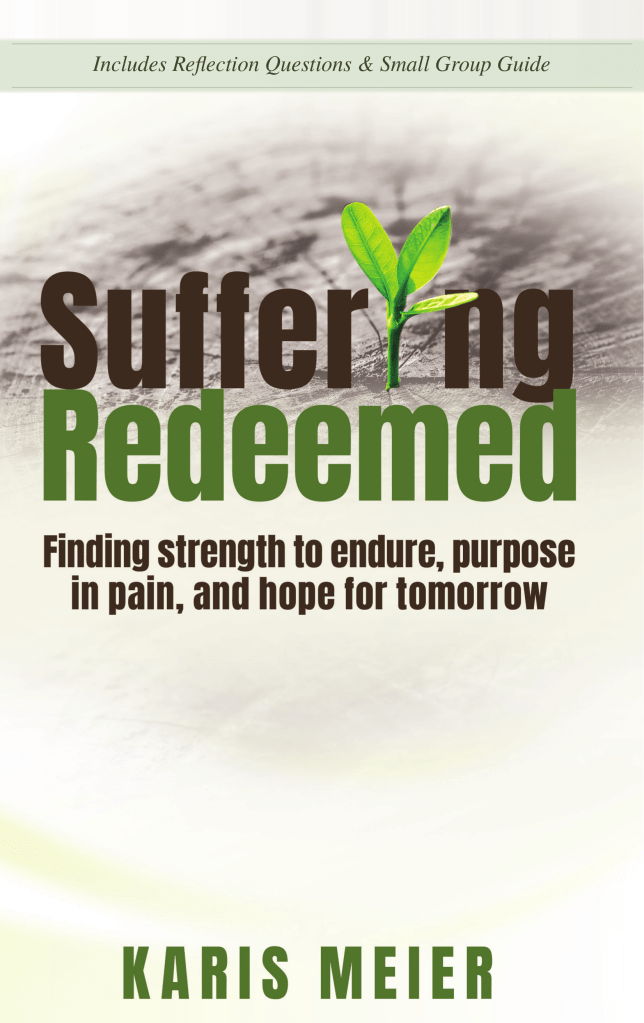

 Suffering Redeemed