Suffering Redeemed — Book Discussion
Host: Jean-Luc
Date: Oct 11, 2022
Listen on: Spotify
Themes: Testimony & Story · Chronic Illness · Faith & Doubt
Format: Has Transcript
Featured quote
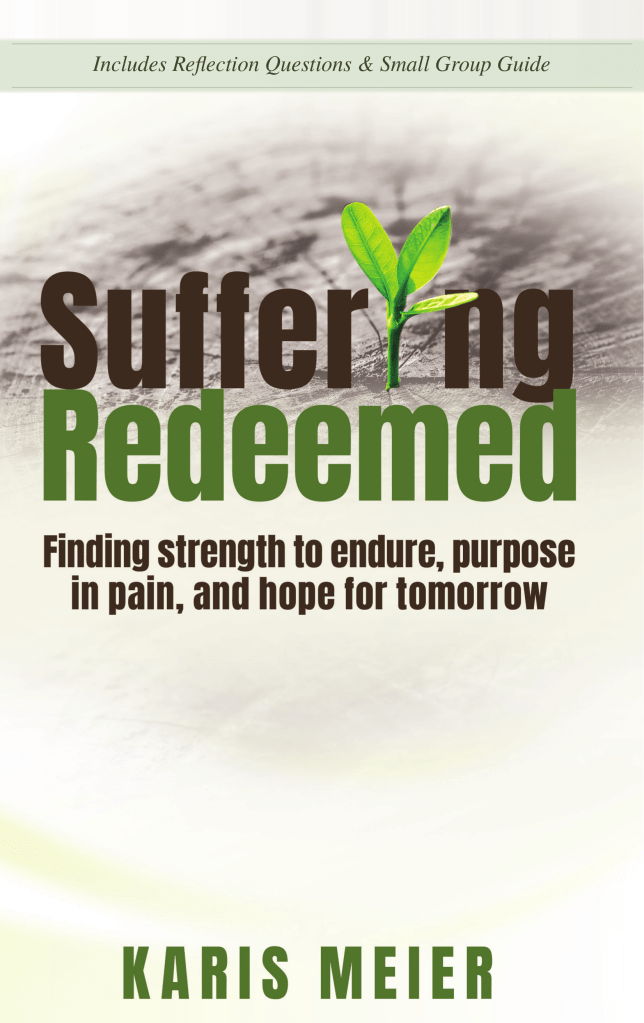
Finding strength to endure, purpose in pain, and hope for tomorrow.
— Karis Meier, on Social Confoes with Jean-Luc
About this episode
- Discussion of Karis’s book Suffering Redeemed and her journey with chronic illness.
- How faith intersects with daily suffering.
- Finding purpose and meaning through pain.
Highlights
Core Message
Finding strength to endure, purpose in pain, and hope for tomorrow.
What makes this unique
One of the earliest podcast appearances during the Suffering Redeemed book launch tour in Fall 2022.
Full transcript
Read the full transcript
Transcript source: Whisper (large-v3, cleaned).
I think the most valuable thing is having one-on-one times with your kids. Good afternoon, good morning, good evening, wherever you are in the world. Welcome back to Social Convost. I’m your host, Diego, together with my co-host, Sean Luke. Sean Luke, how is it going today? Well, this has been a difficult day. I just said to our guest for today that we had a nationwide blackout for the internet because the internet wasn’t working properly. But luckily, it’s good enough to do a social convo. So we’re excited to be back. And I think we’re going to have a streak of really interesting guests. And our guest for today gets to kick it off. And yeah, let’s get straight into it. Sure. So who are we having today? And what’s the topic of the day? Okay. So today we’re having as a guest, Karis Meier. Karis is an awesome woman. She’s a wife and mother of four. she has a lot of interests including of course her family like i just mentioned but also the church is very important to her but also writing counseling and soccer i definitely want to talk a little bit about soccer during the end of today’s show but what we’re really going to talk about is how to deal with chronic illness and how to find find strength and karis is going to share with us how she found her strength and hopefully it helps us as well not just people listening in are tuning in, but that we can help spread the work. So without further ado, let’s introduce our guest. Karis, welcome. Thank you. It’s good to be here. We’re glad to have you. We’re glad to have you. And I was hoping that Diego could tell us a little bit more about the Northern Virginia experience since he was just very, well, not near, but near your state. But of course, we’re interested in knowing, like, you’ve lived in different places. So tell us a little bit about, not necessarily how you ended up in Northern Virginia, but tell us a little bit more about living in Northern Virginia and also compared to other parts of the States. Yeah, so we have moved around a lot. We’ve moved, I think, 13 times in 16 years. So a lot of moves. Been everywhere from Alaska to Georgia. Seen a lot of different states. But I think for both my husband and I, Northern Virginia has been probably our top place to live. And it’s, I think one of the main things is a diversity here. There is just people from everywhere, everywhere you could ever imagine. And they’re our neighbors, they’re in our church, in our children’s school. It’s a huge blessing. I grew up living overseas some, like in the Philippines and Singapore and Costa Rica. And so I have a, I have a heart for just lots of different people, international. And so to be living among lots of different nationalities and cultures and diversities is just a huge blessing to be a part of that. And everything is just so close. We, so we came from last, we were in Washington state, which is of course on the far West coast and everything there is very spread out, but here everything is very close. So we can just drive. I mean, Maryland is like, what, 20 miles from us. So we can go to Maryland or, you know, D.C. There’s, of course, every museum you would ever want to go to or not want to go to. And yeah, the coast is nearby. Just a lot of fun things to do. So we love it here. You mentioned something interesting because everything is nearby. And I think in Singapore, it’s even more dense, isn’t it? yeah so for people like living in the u.s or europe like what’s what’s what’s singapore like compared to living in the u.s oh singapore is amazing you touched a very that’s just those years living there were the best years of my life but it’s yeah i mean everything there is very it’s just built up on top of each other so there’s lots of high rises it’s extremely clean it’s very well run but it’s also very diverse i mean i went to a school growing up i went to a school with like 65 different nationalities and so again a lot of diversity a lot of just culture so but it was it was is there something that you fondly remember is it like a food or something that you’re saying like hey this is what i used to have when i was younger which i would definitely recommend to others yes so there’s an indian pan that they would make it’s called like mortaba or something but it’s it’s kind of a very thin pancake that they can well they i say pancake but they can put meat inside of it or um savory or make it sweet and then dipping sauce with like curry sauce that was definitely our favorite go-to yeah turns a lot like what we call roti what we call roti yes yeah it’s similar to that yeah awesome that’s really cool okay so we moved all over the world but there’s of course a a very important topic that we wanted to discuss today and create some more awareness about which is which is chronic illness and there are different perceptions on what chronic illness is and also living in all those different countries how is how has that affected your life or where did this your chronic illness become an issue for you yeah so i was actually visiting some family in pakistan almost well yeah about 17 years ago now and picked up some different parasites over there and because of the situation I was in living in Alaska. And at the time, it just took a long time to figure out what’s going on with me. And so by that time, I had just, they had done a lot of internal damage. And so from that point on, and that was the same year I actually got married to my husband. But from that point on, I just had one thing after the other go wrong, a lot of organ failures, just a lot of chronic stomach and intestinal stuff. So for the last, it’s been 17 years that there’s just been a lot of, a lot of different things with my health that has just been really difficult. I can’t, I can’t imagine. Well, I can’t, of course, fill the full scope of what you’re, what you’re dealing with, I only have one experience once and internal bleeding, and for me it was well basically changing some parts of your life and i’m quickly gonna introduce it and then you can also share with us like what are things that people often regret or take for granted what are things people take for granted that people are not aware of that have issues that don’t have issues with these kind of illnesses so many things i mean growing up i was very athletic and played. Well, soccer was my favorite sport, but played a lot of different sports. And after I got sick, my body was a lot weaker. And so I couldn’t play. I couldn’t play soccer like I used to. Couldn’t run. I mean, I was I was a runner. And so that’s one thing is just not having energy to do extracurricular things. And I think just the feeling of well-being, the feeling of not being distracted by your body. I think, you know, after I became sick and even to this day, you know, I have different things. I have a nerve condition called neuropathy where I have nerve pain and numbness and tingling. And so it’s like distraction. Like I’m constantly distracted by my body. Whereas when you’re healthy, you know, you don’t have to really think about it. You get hungry and you eat, you know, you have to use bathroom, use a bathroom, but you’re not, you’re not constantly like, I mean, if you ever had like a really bad headache or something, you can understand, like you’re, it’s hard to, it’s hard to be focused when your body is streaming at you with something else. So that’s another thing for my personal issues with health. A lot of it is I have a lot of food restrictions. And so most times, you know, when I go out to eat or we’re it’s social events, I can’t eat what everyone else is eating. And you don’t realize how much food is such a big part of life. Like so many things revolve around food. And so before I got sick, you know, I would just eat whatever I wanted to and think about it. And I can’t do that anymore. So I don’t know. Those are the, a couple of things that come to mind. Yeah. So what, what food, what food restriction threw you off the most? What food restriction was like, really, do i have to let go of that well for a time i had to give up coffee and that was horrible i can drink coffee now but gluten is what has was probably the hardest i haven’t been able to eat gluten for many years so there are a lot of gluten-free foods but it’s not the same okay let’s let’s go i quickly before diego asks a question i want to dive into that one because i need your experience the next couple of weeks actually i have a speaker coming over international speaker for arts conference. And I have to also make sure that it’s gluten-free. So what is the secret to good gluten-free food? Read the label that first of all, there are a lot of gluten-free foods now that they make, you know, like gluten-free breads, gluten-free pasta, you know, pizza. And so for people who need gluten-free, especially like have a very strict gluten sensitivity or allergy i would just say read the label obviously there’s some foods that are naturally gluten-free like vegetables and fruits and meats and but even they even put it in like sauces and cheeses and different things so you just have to be careful could you briefly explain what gluten-free means because i’ve heard it’s popped up the last few years more right but yeah it’s kind of gluten is a protein it’s gluten is a protein in the in the wheat that needs to be so gluten-free means you have to extract that from whatever the food is so anything that’s made with like flour like or oats or barley there’s several different grains that have wheat in it wheat gluten in it does that make sense yeah so it’s a specific protein within like that’s naturally in the grain and grains specifically got it yes okay yeah that makes some more sense i missed the first part but i’ll let shanlu pick it up and i’m gonna keep listening and try to interject yeah so so because i like i explained i had an illness once i had an internal bleeding and i had to let go of caffeine or if i’m still allowed to use caffeine but i’m only allowed to use caffeine on a full stomach. If it’s on an empty stomach, it directly starts damaging. So for me, that’s hard because I drink a lot of cola. And I don’t drink coffee, but the cola part has been really hard on me. But I’m actually now on a 30-day water-only drinks diet, which is really good on so many levels. But for me, it hasn’t been chronic. And a lot of people suffer with situations that it’s it’s part of their life forever how why at what point did you find the solution or find the energy to overcome the struggles of having to bear with certain pains that you would have every day at what point did i overcome it you ask yeah or what helped the most to overcome it yes i wouldn’t say i have overcome it i think it’s a daily it’s a it’s a daily battle but it’s a daily choice to, you know, I, I think with, with something that becomes chronic and for me, you know, I kept thinking, oh, I’m going to get better soon. I’m going to get better. You know, this doctor will help me figure out what’s going on. This doctor will help me, this doctor, this medication, you know, and when it’s something that, that it’s so system systemic, you know, kind of some people, one thing affects the other and then, you know, our bodies are just so complicated. And so if you treat one thing as something else, you know, it’s just interesting to see how. So for me personally, it was a process of like accepting, wow, this is not going away. This is something I need to learn how to not just pretend that I’m okay. Because in the beginning, I think I just did a very, I’m more of an internal processor and I don’t share my pain very, you know, I, I, I tend to hide, like, I don’t stuff things a lot, but I, I don’t share openly like, oh, this is so hard. I would, I would generally just keep it all in. But then I think after several years of that, I realized I really can’t do this alone. I do need help and I need to share with people how difficult this is. And so I was about five years ago that I really started to, even with my husband, just sharing with him how difficult things were on a daily basis. And I think that was part of the healing process was being able to let in other people, let other people into the pain that I was experiencing and, and receive comfort from others, receive help. I think too, you know, some people when there’s a, you know, when somebody says, oh, they have cancer or they have a diagnosis, you know, people are so willing to help and so willing to join in. But when, when things keep going on and on and on and the illness doesn’t go away, then you start to lose people, right? They get kind of like, I don’t know what else to do with you, which is normal. You know, I’m not saying it, I’m not saying anyone did anything wrong, but that’s just kind of lose interest. And so I think for, for people with chronic illnesses, it can be very lonely because you realize pretty soon, like, oh, nobody wants to hear that I’m having a bad day again, you know, except for, but you have to figure out who those people are, right? You have to figure out who the people are, who can handle it and who want to hear. Because, because, I mean, I have, I have a list of people that I call on the days where I really need help. I really need prayer. I really need someone to encourage me. And I’m so thankful for those people. So that’s, that’s, that’s kind of, and of course in that too, I mean, I know I shared with you earlier just about my, so my faith, my, I, I believe in Jesus and, and that he is my best friend. He is always with me and without having the hope of, you know, a resurrected body of going to heaven and, you know, this living in this body and this earth would be difficult if I didn’t have an eternal perspective, you know, thinking this is not, this is not where it ends. There’s more to come. And that’s, that’s really the hope that I live by every day. I understand that internal processing podcast I’m kind of similar like you kind of bought a little before you start sharing so I’m curious to know like when you started sharing you know how did you start sharing but what can I imagine like an interaction look like especially with someone that you know maybe you’re not used to yeah your husband is someone you can you know lean into but say someone how do you find others or identify others like what you could share on a longer timeline as you said yeah so I think it’s it was definitely a process for me for me I kind of hit a very very low point you know I had so many different things going on in my health I ended up in the hospital for several days and I was on a feeding tube and different things. And I think I just realized how much I was trying to hold it together. And I don’t know if it was for myself or for my family, because at that point I had a couple of kids and I was very aware of how my illness affected my kids or affected my husband. But I hit a point where I just realized, wow this is this is too much for me to handle alone and I was pretty good at putting on a smile and just you know saying I’m fine I’m fine I’m fine and really not being fine and so I think in the beginning you know it was kind of more of a gush like I just I started I would say I had a breakdown but I had like a a release like I had to I had to kind of get some of the baggaged emotions out. And that started with my husband and with my sisters. My sisters are probably my closest friends and they are. And so it started there with people that I was really comfortable with, you know, and then, and then I started, you know, just with, with people at church or others who asked me, how are you doing? And I would say, not very well, which I had never said in my life. I would, I would always say, oh, I’m good. You know, things are fine. And what was the response like? was the response what kind of a response did you expect then like when yeah so I think I I think I expected like people to be let down or something or but I think I received the opposite I really felt a lot of love and compassion and acceptance you know I saw people like, like have sorrow, you know, and sadness for me. And, but also just a lot of encouragement, you know, I, I kind of felt like, oh, it’s okay. I don’t have to, I don’t have to hold it all together. I don’t have to be, you know, I obviously I’m not perfect. No one is, but I think I felt like I had to be, that’s kind of my personality, I guess. But, but yeah, it was a much better response than I, than I thought. And at that point, and even looking back now, I kind of regret the years where I kept it in more when I shouldn’t have. I mean, I’m not saying that we should just be like, ah, to everyone, but there’s a balance, right? That we all need to live in. I think it’s also a process. And I feel like we underestimate, and that’s why one of the reasons why we’re excited to talk about this topic is because we often underestimate how many people actually, not the same kind of chronic illnesses, but how many people deal with it and how many people are afraid to talk about it. And you mentioned that it’s hard to find people to talk with, you don’t know, you don’t want to be a burden. I think that’s something that you haven’t said directly, but that’s something that first comes to mind, like, hey, I don’t want to push my problems towards others, but finding different people is hard. And you also mentioned faith and how faith plays a role into it. So did you grow up religiously and did it change? Or is there something that made you realize how much you could rely on faith to make it easier to talk with others, but also with yourself a lot? Yeah, so I did grow up in a Christian home. And my parents are missionaries, so they are both strong Christians. But it wasn’t until my after my freshman year of college where I kind of made it my own. You know, I think growing up, I was more just I mean, I always believed in God, but it was more I felt like it was more following rules than a life giving relationship that I began to develop in my early 20s in college. And, and then thereafter, it just continued to grow. And then, and I’m so thankful for that because it was shortly after that where I, where I, I got sick and, and I was already in, you know, I already had a strong relationship with the Lord. And so, and so I did, I do, I do remember in those early years, like he, God, he was the one that I always turned to first and he still is. But I think i’ve learned how to you know include other people in that group of people that i can rely on and turn to and trust you know with hard things so before we go to like no i wouldn’t say overcoming because you’re very clear on that it’s it’s you’re working with it every day but we do have some questions actually one of the questions is from somebody tuning in And then Shamila is asking, when cooking has some water, do you have to cook separately for you and your family? Or have they kind of included themselves into your diet? No, they haven’t. Sometimes I’ll make things that we all can eat, but most nights, yes. That’s an excellent question. And it is very hard because I try to, I try to cook healthy and, you know, good for my, for my family, but then also have to cook for myself. And so, yes, it, it, it does take a lot of, a little extra work, a little extra effort. So, but, but my children are very, you know, my, that’s, I think that, that leads me to a point where, you know, for our kids who watch us, for people who are struggling with something. I think throughout this whole thing, the hardest thing for me was, is, I guess still is, is how my kids are going to be affected, you know, because some days it’s really hard, you know, and they, they have to watch me struggle. They have, they try to watch me go in and out of the hospital. I’ve, I’ve seen them many nights crying because they’re anxious for me. They’re concerned, you know, is mommy going to be okay? You know, but they, they are some of the most compassionate kids because they, they see pain and they know how to respond. They know how they’re aware of people’s needs. You know, they, when my kids see someone who’s sick, they say, can we go pray for them? You know? So I, yeah. So they, I think sometimes we’re afraid of how our kids are going to be affected by a negative thing, but, but if we, if we guard them in the right way and help them through it they can also grow a lot through it so anyway just wanted to share that oh that that’s awesome i mean like my kids always want to when they’re in church they want to or visit the church outside they also always want to light a candle like for somebody they know that recently passed away but that’s already kind of after the person passed away so having your children say that they want to pray for somebody who’s feeling ill or has a certain pain that’s that’s just such an awesome gesture and thanks for sharing because that was actually one of my questions are there like things that routines or things that your children did pick up so not the eating because probably they like different foods as well but are there other things where they kind of have become infested more with with you because of the illness yeah i think they so my about five years ago is when i really felt called to start right i hadn’t done much writing before that and it was actually my son so my 12 year old now he was like mom you should write a book you should you should make this in the book and i was like no i’m not gonna write a book and but over the years he just he just he’s just kept at it you know you’re gonna write a book mom you’re gonna write a book you’re gonna write a book and so he’s kind of been my biggest fan and then I did write a book so they I think they have yeah they really journeyed and been an encouragement to some days I think I’m so thankful for my kids because the joy that kids bring and that and the motivations for me some days is my kids. You know, I feel, oh, I’m too, I’m too tired. I’m too sick. I don’t want to get out of bed, but my kids need me. Right. So I’m like, okay, I’m going to do this for the kids, you know? And, and oftentimes we, I share with them, you know, I share with them, honestly, I’m having a hard day, but it’s okay because God helps us, you know? So, so I, I have tried to be, especially in the last few years and as they’re getting a little bit older, you know, to be honest with them and to show them how to walk through something that’s hard because we’re all going to go through hard things in life and they are too and sometimes we try to guard our kids from everything and that’s not bad because we don’t want them to be exposed to things they shouldn’t too early but also the reality of our world is that there are going to be hard things and so i don’t know if i answered the question you asked but yeah definitely definitely because basically your oldest oldest one was kind of also your biggest fan and motivations to do so to actually produce the book so before we dive really into to the book itself like you mentioned your writing journey started like five years ago so tell us a little bit how it started do you remember your very first piece of content that you wrote down what it was but before i go into that one i’m sorry to interrupt but i am curious when your kid prompted you to write that book like what was it that like what did he say or like why a book why in that format why did the why a store a book or a story on a youtube video why not yeah like what was so attractive or enticing about word the words for them well i am not sure about that i will tell you that i’ll just tell you the honest story of how it happened so i it was about five years ago and i woke up in the middle of night and i i felt like the lord that god was i mean it wasn’t like an audible voice but i I felt like I was saying, just start writing, start writing about your journey, about, you know, what I’m teaching you through this and the struggle. And at the time I didn’t want to. And so for a couple of weeks, but it was, it was very clear. You know, I felt very clear and it just kept pressing on my heart. Like, this is what you’re supposed to do. This is what you’re supposed to do. So I think it was about two or three weeks after that, I finally sat down at the computer and just started writing. And I actually started writing about how obedience is not always easy. You know, when we are called to do something, it’s often very difficult and it’s not always clear what it is. Because for me at that point, it was, that was about that time when things were going really, really bad. It was probably the hardest and difficult, most difficult portion of our lives, both with jobs and marriage and my health and different things. And so I, you know, I was thinking, what do I have to write about? Like, I have nothing good to write about right now. But I think it was because I was able to start then. And so I just started writing, I just started writing, whatever, whatever was on my heart that day. And I just kept a journal on my computer. And then a couple years later, and Diego, I’m getting to your question. A couple of years later, it’s, I started a blog and, you know, and then a Facebook group for people who were suffering in different ways. So my kids knew I was writing, right. They was, I would sit down at the computer and they’d be like, mom, what are you doing? You know, cause I wasn’t on the computer a lot. I wasn’t, I’m not very, I just didn’t do that a lot. And so they would ask me and I, so I would tell them I was, what I was writing. And sometimes my son would read when I was writing, oh, are you writing about me today? And I’m like, yeah, cause he’d see my And you see his name on there. So then he was like, well, you’re going to write a book. And so it was by him, like, seeing me writing, you know, writing on the computer. And honestly, at that point, I laughed. I was like, no, there’s no way. This is not going to be a book. This is probably just for my own sake, you know, like my own therapy writing. So anyway, so over the years, you know, he just, he kept saying that. And I kept thinking, no, it’s not going to happen. But then at the beginning of the year, I, you know, it just, it just kind of hit me like, yeah, I, I have a lot of content. And I, you know, several people from the blogs, you know, told me how much it was blessing them. And I was like, well, this, this, this could be a book. And so that’s how it started. It’s funny how you mentioned it saying like, listen, this is going to be, it’s for me. And I think we often underestimate as people that when we’re working on ourselves and we’re doing something for ourselves, others get inspired by it. I think that’s one of the things that we take for granted that when we’re working on ourselves and finding solutions for ourselves, there are other people with similar struggles that are just like, hey, this is so beautiful that you’re talking about this. And we can relate and we’re grateful that somebody is willing to share the experience because we all keep it kind of kind of bottled up. What I was really interested in is you mentioned the time frame a couple of times already. So I was wondering if that period around where you started was somewhat related to the birth of your third child. Like, was it right before or right after? Yeah. So it was, it was shortly after she was born and my husband was traveling for work. He was gone more than he was home. And so I had three kids and, and that’s when I, I started having a lot of nerve problems also. So, so it was, there was a lot of different things going on at the same time. And she also, my, my third child was, she cried for the, pretty much the first year of her life. So I was under a lot of stress with, with her also. So yeah, there was just a lot of different life stuff going on. That was very, a lot of pressure. Yeah, no, because you mentioned it, I was like, yeah, I can’t like with my wife, with the, we have two always, so I can’t imagine three being even, even, even harder, but we also mentioned a change complete change in dynamics like it’s like an extra person in your family and for me especially being an only child like it’s like every time there’s like a piece of your life that’s kind of being taken from you and what you get in return is so much more but you do have to find a new way to structure your life so i find that really interesting And we talked about the food part, but also from a perspective from a mother with four children, a wife and mother of four children. Do you have tips for first-time parents and tips that you would like to share? What are some tips and tricks which are definitely useful when you’re getting children? Yes. Oh, I could talk about this all day. But one, I think the most valuable thing is having one-on-one times with your kids. So having four kids, it’s definitely more challenging and I can’t do it every day. But even sitting down with one child, you know, doing what they want to do for like 15, 30 minutes is invaluable. I’ve noticed, I noticed such a difference in the children when I spend that quality time with them, giving them my undivided attention. They, they’re completely different children. You know, they, they, they feel valued, loved. So that’s something I’ve been doing with them since they were, you know, infants. And still, I mean, I can’t do it with them every day now with older ones when they’re in school, but we’ll try to do a couple of times a week where I’ll just play a game with them or ask them, what do you want to do? You know, what do you want to do for one-on-one time? And they have lists of things that they choose from, but that’s, that’s definitely probably one of the top things that that i would say is you know yeah let’s see what else oh i think you know reading with kids is reading like valuable i mean stuff that that that you can talk about and grow grow together with is also i mean a lot of times we read devotions at you know after a meal and then we’ll talk about it or we’ll read about something that’s going on in the world and pray together as a family we have a map up on our wall and often you know talk about different countries and what’s going on in the world because i think for kids especially kids who are maybe more raised in a in an environment where it’s more sheltered it’s so good for them to be exposed to you know what’s going on in the world and realize how blessed you know how blessed they are and so that’s i guess that’s something else now that you mentioned that actually what before we die for me this is the last question maybe diego has another one before we dive into the book but now i do want to know what’s your favorite book oh man either children or adults you can split it up if you want to you know oh my goodness that’s a that’s a great question besides the bible because i would say the bible is my favorite book of course but i you know i loved i love the chronicles of narnia by c.s lewis i just i love all those books that are you familiar with that yeah i mean we know i know okay i’ve never read them i have to be honest I know the movies. I’m familiar. Oh, the books. The books are so good. They’re good for kids. And they’re so deep that they’re so good for adults. I mean, I’ve read them. Are they better than the movies? Oh, yeah. Yeah? Definitely. Definitely. And we do have to do the follow-up question. What’s your favorite Bible story? Well, I’ll just say the first one that came to mind was Shadrach, Meshach, and Abednego. because that’s the one where, you know, the king tells him to bow down to the statue and they say no. And they said, you know, we’re going to, the king says, I’m going to throw you into the fiery furnace. And they said, you know, no, it doesn’t matter. Like we, God, God can deliver us. He will deliver us. And even if he doesn’t deliver us, we’re not going to bow down. You know, and of of course, God rescues them in the fire. But I just love that statement that they believed God could, that he would, but even if he didn’t, they wouldn’t stop believing. And I think that’s, that is such, you know, a thing that we need to, to, to learn that just once, because somebody, you know, sometimes we treat God like a vending machine. We’re like, we pray and we’re like, you know, give me this or do the good works and give me this. And then when he doesn’t give it to us then we stop believing but that’s not how that’s not who God is that’s not how God works so I just love I love their statement of faith and you know doesn’t matter doesn’t matter even if he doesn’t we’ll we’ll still do this so awesome I just want to go to the book now because it’s been a process it’s been a process of five years and your son said you’re gonna write a book and now it’s actually there so how did the actual process start how did you decide like i’m going to do this and i’m gonna share share my story so it so yeah i think it was i’m gonna say february i just it was kind of a just a very strong i don’t know it just became a very strong desire out of nowhere. I felt like I was like, I need to write a book. And so I just started looking. I had no, I had no experience. Like I, I didn’t know the first thing about publishing. So I just started looking up online, like what, how to publish a book, how to write a book, how to start writing a book, you know, and just to try to collect all the hours on Google. And that’s where I came across, you know, the self-publishing school and like, oh, this looks like something you know something good like I could somebody to help me get through the process of it and so listen to some different talks and some different podcasts and that’s where I started and so then I just I signed up with them and started with my mind map started creating all the different ideas and because I had written so much over the years I mean I probably had almost a hundred pages you know full pages on the computer written out so I just started I just read through that made the outlines started cutting and pasting and then and it was it’s hard because I don’t I mean I stay home with the kids so I just would have to write 30 minutes here you know 10 minutes here 20 minutes here my husband’s like how did you do anything because he can’t do anything when he’s with the kids he’s only can keep them alive so he’s like I don’t know how you wrote a book I always say whenever I’m with them they’re completely happy when their mother comes home they’re completely happy but it’s it’s I can only focus on this nothing else that gets done so I completely understand that like okay but from the yeah go ahead no no so that’s just that’s just that was just it I just had to I just tried to make every moment that I could and put in some more time you know write some more words put it together and it took it was so it was about a process of about eight months I guess on that process so you’ve been writing before you started the book you’ve been writing blog posts already and creating content online. How has that experience of writing something online where you have, it’s kind of a different type of writing, right? Or a different type of audience, I would imagine. How did that translate into writing for a book? And did you take any content you’ve written online and converted it into content for the book, for example? Yes, I did take content from what I’d written already online. And I think, you know, one of the things was it, it, it boosted my confidence because I never, I never considered myself a writer. I wouldn’t consider my, I don’t, I mean, I can, I think I can write okay, but I never really thought, oh, I’m, I’m a writer, I’m an author or whatever. So, but getting feedback from people. And I think one of the main things that I heard from people was it is so nice to have somebody who is writing in the middle of something that is difficult because it’s so easy to write for something after it’s done right when we’ve when we’ve gotten the victory when we had the healing when we’ve got whatever you know the big aha whatever it is and for me I hadn’t I would I’m it’s a very vulnerable place of writing because I’m still going through it. You don’t know what’s going to happen. My writing was just, yeah, I don’t know what’s going to happen. So I think just having people encourage me and say, thank you for writing from this place, it gave me confidence to say, okay, well, even if this isn’t necessarily comfortable for me, it’s a good thing to do. And I was enjoying it too. I did enjoy. i’m i’m more of a processor in my writing like writing than talking so for me writing was was helpful for me even to understand myself and what’s going on i’m here how would you describe good writing because as you said you don’t consider yourself really a writer but from your perspective going through that process how would you or what would you consider good writing how would you describe that well I am a very very picky reader so I often start books and by like probably the like third or fourth paragraph I can tell you if it’s good or not because I just I’m I’m very I enjoy rich language which is why I enjoy older books more because there’s a lot the vocabulary is much better the writing’s better and so I think I have a I have a high standard for writing personally and so I was like I don’t I don’t know if I measure up to that but for me my writing came it felt like it came from more of a place of inspiration for me it was more like I felt at times kind of like compelled like I need to write this I need to get this out it was so it when I when I wrote it wasn’t like I’m gonna write down and just think about what I’m going to write today. It was more like, this is happening. I need to get this down on paper. So that was more my writing experience. Whereas some people, you know, they can sit down and they can like formulate in their mind, like, you know, or like people who come up with fiction books that that’s incredible. I can’t even fathom that, but it’s just interesting how different people have different experiences in writing. And mine, mine wasn’t, I don’t think it’s the traditional type of writing I guess so feel free to elaborate a little bit on that because what was your approach did you look back at things you have written like over the past years or were there certain parts in the book like where you were like wait I wrote about that already I’m gonna go back into my steps to see what I wrote and how I can I can like recycle that content or was it completely newly written or completely new written sometimes honestly i would go back and be like how did i write that i it was it was kind of surprising to me that i i wrote it and i’ve had several people tell me you know that that they felt like god speaking to them through the words that I was writing, you know, and I do use a lot of scripture in my writing. I do use a lot of stories and different things. So I don’t know. Does that answer your question? Maybe I didn’t understand your question very well. Yeah. So did you include like old blocks that you wrote in the book or portions of old blocks that you wrote in the book? Yes. Yes, I did. I did. I, I, portions of them, I, I didn’t put the whole thing in usually, but maybe a certain story, maybe a certain illustration, some things like that. Diego, are you ready for some overrated, underrated? before we go into that okay go ahead tying this back in your journey and you know having a chronic illness and especially getting this pen down or like typed down in word format like how far do you plan ahead or because i can imagine it’s a daily struggle so how far can you plan ahead for yourself like what’s that like for you when you like with a book for example like this do you want oh with a book but in general i just try to narrow it down to get a sense of how planning is for you i think for me i really try to take things a day at a time sometimes just an hour at a time honestly i it’s hard for me to think a lot like far into the future of course for planning purposes like for the kids and for more logistical things that’s fine and I try to I try to set goals even with the book I would set goals you know trying to have this completed by this date but I think also just having a lot of grace having creating creating space for days where I’m not able to get it done and, and realizing that that’s okay. You know, it’s not a failure. It’s not, I think I, I tend to, I don’t like to fail at things. And so for me getting over, okay, that’s okay. It wasn’t to get everything I needed to done, but that’s okay. You know, it’s, it’s, it’s tomorrow’s another day. And, but yeah, I think I, my, I really try to live one day at a time and not, not worry too much about tomorrow. No, I guess that makes some sense because you don’t know what’s going to happen, right? So you need to make the best possible with every day. Chandu, whenever you’re ready. Yeah. So, Karth, we want to close it off a little bit on the light side. So, we’re going to do something fun. It’s going to be overrated, underrated. We’re just going to drop the topic for you and you get to decide whether you feel it’s underrated or overrated. And the best part is if you want to elaborate on it, you’re allowed to elaborate on it if you feel like i just want to say overrated or underrated or properly rated it’s it’s totally fine as well since i’m the one instigating this today i will be the first one to start off so i wanted to ask you costa rica as a travel destination is it underrated or overrated underrated underrated i it is it is amazingly beautiful there amazingly and you have everything so close you got the beaches you got the mountains the rainforests and everything is pretty cheap and it’s pretty easy to travel so I would it’s we’ve been trying I’ve been trying to get my husband to go there for years and hopefully someday soon we’ll be able to go because I’ve been telling him about it for so long and he’s he’s always like oh man I can’t wait to get there because you talk about it so much so yeah oh so you i’m a big fan of you went there without him i live oh i live there for yeah i live yeah yeah got it all right for me learning about history underrated or overrated oh i want to say underrated again i think we can learn so much from history and if we actually learned from it we probably wouldn’t make as many mistakes as we are now so i would say i’m underrated that’s smart yeah that’s true okay so before i ask my next overrated underrated how heavily involved are you still in watching and following soccer in the u.s i wish my son was here he’s just he my 12 year old is a soccer fanatic he probably knows every team and every player you know out there of course messy is his favorite we still watch a lot of soccer in our home we follow you know mostly we follow the european teams but also the mls is yeah so let’s keep it easy the mls is the mls overrated or underrated compared to the rest of the world probably overrated because let’s just face it most other countries play soccer a lot better than in america and in the united states i mean but it’s it’s up and coming it’s up and coming is there any is there any point that men’s soccer will equal the quality of women’s soccer in the u.s no not as long as the american football and baseball and the other boring sports are around okay i learned to play i learned to play soccer in costa rica well i learned to but i I got really into it there I loved it that was it was definitely a highlight well that’s Latin America yeah it is okay Harry Potter overrated or underrated I’m gonna say overrated I watched the movies and read some of the books but I don’t I think I yeah I wasn’t too impressed it’s fine it’s fine we’ve got it too overrated and too underrated so it’s perfectly balanced right now we’re closing down on the hour mark so caris we have to ask yourself i ask you what’s next for caris what are the next steps are you planning to write another book or is there something specific that you would love to share i do think there’s another book coming i don’t know when or how it’s what it’s going to be yet but i do i do feel that kind of that intuition that that that’s probably coming for now so the book is launched october 25th two weeks and yeah so i’m just going to see where that takes me i don’t i honestly don’t know what is next but god does so i guess we’ll go well next is the book launch i got a little bit ahead of myself sorry but i think next is the book launch so if people are interested they want to they want to know more about your book they want to order your book they want to be on the on the mailing list how can they reach out to you or where can they pre-order their copy and a little bit more i saw about the book and what it’s called and kind of synopsis as well sure so the book is called Suffering Redeemed, Finding Strength to Endure, Purpose in Pain, and Hope for Tomorrow. And it’s really, so I share some parts of my story in it and stories throughout, but also it’s a guide for walking through suffering and for finding how to keep going really when life feels too hard. I have a lot of scripture in there, but also a lot of just practical tools for day-to-day living, how to take care of ourselves holistically. You know, I think spirit and our soul and our mind, our emotions, body, there’s so many parts of us that we need to care for. And so part of a couple of chapters about that. And then also how we can, the redeemed part is how God can use it in our lives and in the lives of others too, for good. Really, I think there’s a lot of good that can come out of suffering. Many people, and myself included, I think we just try to avoid suffering at all costs and that’s natural. but there’s also a lot of a lot of gifts that we can be given in suffering and wisdom that comes growth that comes you know a lot of inner work that that can be done if we are willing to do that and also just opening up our eyes to see other people and what they’re struggling with And I think through my journey, you know, I have, I’m also a counselor and I, I think if I haven’t suffered so much myself, I probably wouldn’t be as compassionate and really open to hearing other people’s pain because it really, yeah, it just creates a lot of empathy when, when you have gone through something really hard and just makes you want to love other people more. so that’s a little bit about the book my you can find it so my website is karismeier.com so it’s just my name k-a-r-i-s-m-e-i-e-r.com and the book like i said comes out august or october 25th and it’ll be on amazon at the beginning and then it will go out to bookstores, libraries, after that. So we quickly popped up the website, karismeier.com. I think if you go to the website, you can actually subscribe to a newsletter. Is that correct? Yeah. So if you want to get more information, you can get that as well. And on October 25th, your book will be live on Amazon. Are you excited? I’m excited. Yeah, I’m excited. I think I’ve been so like tunnel vision trying to get it done. but the other day I was like oh my gosh I just wrote a book so I am excited yeah I’ve seen that a lot actually like when writers or when people bring out a book like they’re so tunnel vision that when it’s time to publish they’re not they don’t even realize like oh it’s there like the yeah it’s kind of very strange to see but interesting nonetheless us so we will be looking forward to that and appreciate you coming on sharing your story here with us and also about the book so yeah we wish you all the best with that with the book launch especially thank you thank you both before i get caught up again yeah i would i’m really happy that we get to talk a little bit as well because it was kind of eye-opening for us as well or for me as well to look at it from a different perspective. I hope the book also finds, reaches people that are struggling, that do believe and say that like scriptures as well. I think for people that like scriptures in general, it will definitely be a book that they want to have in their collection as well. And we also quickly from our viewers want to thank you for joining in and wish you and your family’s strength and love. So thank you so much for being part of Social Confluence. Good luck with the book launch. We look forward to October 25th. And we were excited to have you. So thanks again. Thank you. You’re welcome. And for those who are listening in or listening on streaming platforms, thank you for listening as well. Thank you for watching Social Confluence. We’ll be back here next week and actually also same time. Bye-bye.