
Losing Faith — Wrestling with Doubt in Suffering
Host: Keyari Page
Date: Nov 9, 2022
Listen on: Audioboom
Themes: Faith & Doubt · Mental & Emotional Health · Testimony & Story
Format: Has Transcript
Featured quote
An exploration of what it means to lose — and find — faith in the midst of suffering.
— Karis Meier, on Spirit Bound — Losing Faith with Keyari Page
About this episode
- The experience of losing faith or wrestling with doubt during chronic illness.
- How to navigate spiritual darkness while suffering.
- Empowerment through spirituality and shared experiences.
Highlights
Honest Struggle
An exploration of what it means to lose — and find — faith in the midst of suffering.
What makes this unique
Episode title ‘Losing Faith’ suggests a raw, vulnerable conversation about doubt — a topic Karis doesn’t always lead with. Great for reaching people who are struggling with their faith.
Full transcript
Read the full transcript
Transcript source: Whisper (large-v3, cleaned).
in this episode we speak about chronic illness and the effects chronic illness can have on mental health, please be advised. Sometimes we all need to walk away from what we know into leaping into a greater path of faith, religious practice, and or spirituality. This is exactly why I am excited to introduce Karis Meier, a wife, mother, counselor, author, and a devoted Christian who has suffered with chronic illness for many years. Throughout her years of life, she has learned so much about her faith and now shares her passion with walking with God. We begin the conversation with me quoting Luke chapter 8, verse 13. And the ones on the rock are those who, when they hear the word, receive it with joy. But those have no root. They bleed for a while, and in time of testing, fell away. Thank you for having me. It’s great to be here. My name is Karis Meier, and I currently live in Northern Virginia with my husband and four kids. I’ve been here for about three years. My husband is military, so we move around quite a bit. I’ve seen lots of different places, but I enjoy being here right now. So just a little history. I grew up as a missionary kid. My parents were missionaries overseas in Asia and lived overseas some and then went to college and lived in Minnesota for a while. I got my Christian or my degree in Christian education, taught preschool for a year and realized that wasn’t really for me. And so went on later on to get a master’s in counseling, but have taken quite a long break while I’m raising my kids and recently have been doing a lot of writing. Yeah, that’s kind of a short history. I wasn’t sure how much you wanted, but start with that. No worries. I’m sure we’ll get into more about you as we go along in this episode, which is about losing faith and like going through this stage of what I call like converting yourself and back to whatever fits better with you. And while we kick off, I am going to read a Bible verse that actually spoke to me when I was thinking about this episode and how this episode means a lot about challenges and when you lose your faith, but also when you can regain your faith as well. So I am starting with Luke chapter 8 verse 13 and it says and the ones on the rock are the ones who when they hear the word receive it with joy but these have no root they believe for a while and in time of testing fall away and I think that bible verse is very powerful because for me growing up I always hear it I was practicing it I grew up in a religious home my great-grandmother was an evangelist and just hearing those words, you know, I practiced it. But then when I was on my own and moved away from that, then I started to fall, I started to crack and my foundation was tested. And it was up to me to really rebuild my faith and where I am standing today. And so I just want your thoughts on that Bible verse. Thanks for sharing that. I think it is so true that we need a firm foundation and sometimes it takes a while, I think, and some storms, right? We have to go through some storms to realize that maybe we’re not on a firm foundation. And like the falling away part, I think sometimes we can really be surprised at what life brings us. I don’t think when we’re kids, we think about the struggles that we may endure and that we might have to go through. You know, for me personally, I never imagined I would have to go through what I have gone through. So, yeah, I think it’s it’s something that in this world, you know, like Jesus said, in this world, we’re going to have trouble. It comes with being human and being in a world that is not perfect. And are we going to be able to stay strong when the winds blow, when the storms come and we’re tested because we will be tested? how were you tested during your time of being faithful but also not being as faithful as you are today so like i mentioned i grew up in a christian home and really you know i believed god i never i never doubted that god was real i never doubted that the bible was real but for me my faith was quite contingent on my parents I kind of just did what they told me and it was more of a you know the rules and religion versus a relationship with God and so I had years in high school where I kind of rebelled kind of tried to find out for myself you know is this really true like I want to I want to experience life you know how I want to so it wasn’t until my freshman year in college where I just you know I remember laying laying in bed one night and feeling like like I was wasting my life like it just didn’t feel I felt very empty and realized you know I need to figure out what I’m doing I need to really own my own life, my own faith, have purpose. And so I went to a Bible school in Costa Rica for a year. And that’s where I really came into a deep personal relationship with God and learned how to walk in just more of a life-giving way instead of feeling, you know, I think a lot of times religion can feel like rules. And I think the beautiful thing about Christianity is that it’s a relationship with God. And so I’m getting to your question, but so I think that’s kind of how I grew. And then shortly after I got married about 17 years ago, I started getting really sick and lost a lot of weight, you know, couldn’t figure out what’s wrong with me for several months until the doctors finally figured out that I had some very rare parasites that I had picked up when I was visiting my sister in Pakistan. And by that time, I had had a lot of internal damage and different organs were affected. And so that led me on a very long journey of chronic health problems that I’m still experiencing today. And it’s just kind of one thing after the other. But, you know, I never, I was a very strong, very athletic, never had really had any major health problems. And so to have, when I was 25 to all of a sudden being a body that was not working right, where I could no longer do the things I wanted to do, it was, it was really hard. And I, I think for a couple of years, I thought to myself, well, I’ll get out of it soon. I’ll start feeling better. The doctors will figure it out. I’ll get on the right medication, but it was just one thing after the other. And so I think that’s where my faith really started getting tested. Like, God, if you’re good, why are you allowing this? You know, God, if you can heal, which I know you can heal, why, why aren’t you healing me when I’m praying to you, when I’m trying to serve you? And so it’s been a journey and I think I’ve really come to a point where, you know, I know the truth and I believe God is good and that he is faithful, but I also struggle with and can understand why people would, would turn away, why they would lose faith, especially when life is really, really hard. Yes. I, life is hard in general. And I think the important message that I want people out here today to get is that you know it is your choice of whether you decide to be on this faithful journey and whatever you decide to believe in because a lot of times people tie religions like you said to rules or they have to and it’s a must and it’s a little bit forced and I like that you shared your story of how you know you try to rebel and you were you’re finding like you had to find yourself again and then also your story and experience with chronic illness because i think a lot of times when people look at christians a lot they see like this image of perfection you know they’re perfect they don’t go through everything so for you to just be vulnerable thank you for that but that also goes into my next question why do you think that people like convert faiths when it comes to like different religions or even just convert from walking away, essentially. When you think about faith, I think it can mean different things to different people. Essentially, it’s having a complete trust or confidence in something or someone. And tied to a religion, it’s a strong belief in God or in the doctrines of that religion. And oftentimes, that is based on spiritual apprehension. It’s not based on proof. You can’t see it. It’s something that you believe without seeing. And so Hebrews 11.1 says that faith is the confidence in what we hope for and assurance about what we do not see. And so I think when people lose the faith, they lose that confidence. Either God or the person they’re trusting in or the thing they’re trusting in, you know, fell through, like it didn’t meet their expectations to what they were believing. Or it’s too hard, like the physical reality is too hard too much in their face and they can’t they can’t grasp the spiritual they can’t grasp the they can’t believe in what is not seen which is what faith is all about right is um belief when we can’t see and so i think uh sometimes you know we can take what we believe and try to mold it into our own lives. You know, like, like sometimes I think we treat God like a vending machine, you know, like we’re, we’re like, God, I’m going to put in these prayers, put in these good works. And I expect to get this, or I’m going to follow this, you know, list of things to do. And I want the result. And when we don’t get the result, then we start blaming whoever, you know, or whatever and sometimes that’s that’s god or whatever you know deity that that you’re believing in but i think you know there’s built in us a spiritual desire you know i think that’s that’s part of who we are as human beings we have a spiritual side we have a spirit and we want to make sense of things and so i think especially as people you know meet challenges or meet tragedies or realize as they get older, this life is not going to last forever. They want purpose. We want something that is beyond the here and now. And so I think that’s part of conversion or of seeking out meaning and purpose beyond this life, which is short. I mean, even for the people that live the longest it’s it does go by fast and what’s next right i mean we all we all ask that question what’s next and why in your journey of going back onto your faithful journey how did you decide that christianity was for you because there’s a lot of things that life has to offer when it comes to just being faithful you know you could just be a spiritualist you can go to judaism you know there’s so many options out there so what was it about christianity that made you say yes this is what i believe in good question i think for me it was going back to that personal relationship i have had some experiences in my life and as i get to know god more i really have experienced the the personal the comfort the companionship and a very real sense of his of God’s love in my life and so it’s I don’t know I haven’t really for me it wasn’t I wasn’t I didn’t really explore other religions for me it was more like I was just kind of doing my own thing I guess you could say you know sometimes we can make our ourselves our own God you know and just doing what we want, thinking what we want. I experienced that God is faithful. I experienced that the words in the Bible that I read are true. So what I experienced was lining up with reality. And even though my personal experience of life was very difficult and I did question a lot, you know, the whys or how long is this going to last God or, you know, not understanding why God does the things he does. Sometimes God’s character and the base of, of who he is, is greater than my questions, you know? So I know, and I’ve experienced that he is the only, only one that I can a hundred percent depend on and count to always be faithful, to always be there you know people people will always let us down in some way and um that’s kind of what i have to say thank you and i would say for nowadays with social media with just reality tv you see a lot of variations of christianity and some things are not always as pretty let’s put it this way and it’s a lot of negativity around christianity so what do you say to those negative comments or people that’s like well how can you believe in God and you know you live this type of lifestyle or you’re experiencing like so much hardship and people are saying like how can you believe that God is real and you’re experiencing so much hardship so much struggle and you still have this faith yeah I think it’s really hard I think there’s a lot of negative views and a lot of a lot of bad examples as christianity you know like in the name of christianity i know a lot of people who have experienced um just really bad i guess experiences in church and find it hypocritical or find christians very judgmental which is really sad because it’s, you know, I think Jesus said, you know, when the Pharisees who were like the leaders, you know, who thought they had it all together and had all the answers and had the quote unquote perfect lives, Jesus was like, you know, cause Jesus always hung out with like the sinners and the people who recognize they needed him, recognize the sin in their lives. and the pharisees were like why are you hanging out them and he was like the it’s the sick people that need a doctor not the healthy ones not the quote-unquote people who think that they’re everything’s good and so we as christians i think it’s so important to recognize like we are sinful like everyone else right i mean it’s only it’s only jesus and his grace and love and mercy and death on the cross that has given us life and forgiveness. And so I think that the humility that comes with recognizing I’m not perfect and, and that’s okay because Jesus is perfect. So I think that’s part of it is just having an, being the, being examples of not not condemning, not being judgmental, not saying, Oh, you’re, you’re, you know, you’re so horrible. You’re you’re, you don’t live a good life, whatever. Cause sin is sin. It doesn’t matter what it is. It’s all the same. And sometimes our sin is internal. People can’t see it. And sometimes it’s external where it’s more obvious. So I think that’s, that’s just something that’s something so, so close to my heart is that we be people that are gracious, like God is gracious and we should extend that grace to each other also. But then also, as far as what you mentioned about turning away when life is so hard, at times I have experienced that kind of feeling like a hardening in my heart, like this is too hard, God. I don’t want it. It’s too hard for me to take and kind of like pushing God away, which I have heard from a lot of people when they experience like someone in their family dies or a loved one. And they’re like, God, this is, I’ve been praying for this person and you took them away. So I’m not going to believe in you anymore. But for me personally, I, when I, when I experienced that kind of hardening, like turning away from God, I immediately recognize it. And I don’t have anywhere else to turn. Like there’s no other option really for me that is going to be lasting. Like that is going to last as far as help. You know, I mean, people turn to alcohol or people turn to TV or, you know, things that kind of numb the pain maybe for a while, but eventually those things aren’t going to, they’re not going to cure the pain. They’re not going to bring life, sustaining life that we’re, that we’re really looking for. And I have found that God does. So when life is hard, I think, you know, there’s two paths we can either turn away and turn towards things or towards ourself or whatever it is, or we can turn towards God. We can turn towards faith. We can turn towards what is eternal. What are some best practices to be able to return to God or just return to faith in general? I think being in the word of God, so reading the Bible, for me, that means getting up early before my kids are awake and having time to read. I think God’s word is so life-giving and so encouraging. So I think that’s a big thing. And then prayer, of course, being in prayer throughout the day and fellowship. I think it’s important to have a community around you that is encouraging you, that is building you up, that you can be living life together, sharing each other’s burdens and wherever that is. But I think finding that community and being able to be a part of it is so important when you’re in any walk in life, but especially when you’re going through things that are difficult. And so just knowing that you’re not alone. That is a great answer. And it leads me to you have written a book and you talk about your experiences. So can you maybe give us examples of what you speak about and to even help my listeners even get a further understanding of your choice in Christianity and how you have rebuilt your belief system? About five years ago, I really felt a calling on my life to start writing. And at the time, I didn’t know why. I’d never really been a writer necessarily. But I just started writing about my experiences with chronic illness and also how God was speaking to me. A lot of times it was in very dark moments where I was really struggling with a will to even survive and having a lot of questions, you know, like, why is this happening to me? You know, where am I going to turn when, when everything else is failing, you know, and even questions like, what does it look like to suffer? Well, Like when, when pain does not go away, how do we suffer in a way that is, I don’t say good, but like, how, how do we do it in a sustaining way where we can continue to, to still experience joy and Thanksgiving and life, even when it’s, when it sometimes it feels like it’s too hard. And so I just had a lot of questions. And so I started writing whenever I had opportunities to. And the beginning of this year felt like, wow, I have a lot of content and decided to put it into a book. And so, yeah, I’ve spent the last like nine months just compiling that and going through the writing process, learning how to publish and, you know, do all the all the parts that was that were all new to me. Yeah, my book is, there’s a lot of processing and some stories, some personal stories, but I touch on a lot of different aspects of suffering, you know, including like learning to experience intimacy with God in affliction, living in the already of God’s kingdom, but not yet, meaning that, you know, we’re still living in a broken world that is very challenging. And so how do we do that? How do we live surrendered to our lives and to what God has, but also living fully expectant with hope and faith, just that kind of that tension. And I talked some about the purposes of suffering, how it can be refining, how it can make us into very compassionate people. um and then even like unexpected gifts that we get in pain you know some sometimes we miss those because we’re so focused on trying to get out of pain but there are gifts that come to us because we are in places that are that are very challenging and then like i mentioned like learning learning how to suffer well and what does that look like sometimes it means learning how to lament, learning how to process pain in a way that is healthy. And what does it mean to take care of our bodies and souls and spirits, you know, just the holistic self-care that we need to, to focus on when, when we’re suffering. So anyways, that’s, that’s a little bit about it. The book is out on Amazon. It’s on Kindle and paperback. I don’t think I mentioned the name of it actually it’s called um suffering redeemed finding strength to endure purpose in pain and hope for tomorrow thank you for sharing that and i want to touch on a comment that i came across recently and there’s people that are commenting and saying that you mentioned like you talk about god’s kingdom how to live in god’s kingdom when it’s hardships and a lot of people say like god is not returning jesus jesus christ is not returning back and you know in the bible it does mention that he will return back to us when the time comes so how do you explain that through your book of living in god’s kingdom even though there’s a lot of people that say i’m like well jesus christ is not actually coming back yeah there’s so many things that come to mind when you say that. I think one is that God’s timing is so different than ours. God says, you know, in the verses say that a thousand years are like a day to God and a day are like a thousand years. And so his timing is very different than ours. And when Jesus came to earth, was born and lived, you know, he was bringing the kingdom of God and he, you know, there’s so many stories of the miracles that he did. And he said, the kingdom of God is within us. So as we become believers and Christians, the Holy Spirit is in us. And it’s not something we can necessarily touch or see, but we see the effects of it. So the chapter that I have in my book is called Already Not Yet, meaning that we are already in God’s kingdom because Jesus did come, but we are still waiting for the fulfillment of that kingdom. And the not yet is we don’t experience the fullness of it because there’s still sickness. There’s still sin. There’s still brokenness. There’s a lot of things that are not in alignment with God’s kingdom, which is why Jesus taught us to pray that we would pray that things are on earth as they are in, in God’s kingdom. And that’s going to be freedom from, from pain, freedom from sickness, freedom from sin. And so as we await that, you know, we pray, we pray that prayer. We pray that Jesus, what Jesus taught us, but we also have to wait expectantly. I think that’s where faith comes in because I think we are such a, and especially in today’s society, we, you know, we want things quickly. We, we, we don’t want to wait and waiting is hard. It, it, it challenges our faith. And, you know, I, for me personally, I, I’ve been praying for healing for 17 years and I, I, I’m still sick, but I’m not going to give up praying. I’m going to keep praying until God heals me or Jesus returns or I’m in heaven and then I will be healed. So are we going to keep the faith even when we don’t understand and even when the waiting feels too long because honestly it does feel too long sometimes and for people who have experienced hardship like it’s so much hardship only one person can take and not being able to see god or to touch god or just to touch jesus you know that’s also very hard and then when they go through a lot of trials and tribulations because no person is the same you know they turn away and it’s that turning point of making them basically be pushed over the edge to be like you know what god hasn’t been there for me because i’ve suffered way too much how do you heal from that that’s a hard question i don’t i don’t think there’s one personally i don’t think there’s one answer necessarily about how we heal from that. I do believe God in his grace and mercy can bring us back and can bring healing, but I think there has to be a vulnerability and also a desire to receive. We have to have open hearts and a humility that says, okay, God, I don’t understand and this is too hard, but I’m going to trust you. A lot of times it just comes down to trust. And are we going to surrender our ideas of what life should be or how God hasn’t come through and trust that he is good still, and that he can be trustworthy. And so I think we need to have a place of just that open communication. And there’s the book of Psalms in the Bible is just a beautiful book that is very full of emotion and communications that a lot of Psalmists are praying to God. And I’ve used the Psalms a lot in my relationship on those days that are just too hard because the Psalms just put words to it and words to the emotions that sometimes we can’t even express. And so I think God can handle our questions. He can handle our pain and the emotions that are going through us because he created us. He knows anyways. And so I think it just takes turning back, turning back to God. And, um, he is, he’s so forgiving, you know, he’s so patient with us. With patience and trust, you have mentioned that with hardships, there are things that we can learn or there’s things that we’ve gained from those hard times in our life. So what are some things that you’ve gained through your hardships? Yeah. So I think one of the, one of the things is just dependence, which may sound like a negative thing and it can feel uncomfortable, but I have really learned how to depend upon God in a way where I probably wouldn’t if I wasn’t going through this hard years of hardship and also learning how to depend upon other people. I think in the beginning, it was very hard for me. And for several years, I kept I kept my pain to myself and didn’t want to be a burden to other people. So I would just put a smile on and say, it’s okay, I’m fine. But eventually, I was, you know, at such a low point where I kind of was forced to depend upon other people and to open up myself to a place where I expressed, you know, my need more, which actually ended up being a real gift because I learned in a healthy way of learning how to receive from others and also being able to give to others, which kind of ties into the next thing, which it really opened up my eyes and my heart of, of really feeling compassion for other people. So I am a trained counselor. But I think, you know, the most beneficial part that I’ve, of who I am now as a counselor is, is my experience of being in some very difficult situations and having the empathy to relate to people who are going through really difficult things, whatever it may be, being in places myself where I felt like life was too hard, I can understand where people are at. And I really feel, I really have a deep compassion for other people who are suffering, for other people who are in pain and struggling. So that is a gift. I think that is a gift to, to be able to, to love other people and to be able to meet other people in their pain. And then I think another thing is, is learning to experience and enjoy life for, for what we have and not taking things for granted when everything is good and things are going well. I think it’s easy to just take things for granted and say, oh, this is, you know, life is always going to be great. But when we lose things, like during COVID, I had COVID and I lost my sense of smell for a while. And it was really hard. And when I got it back, I was like, oh my goodness, I love smelling things. That’s just an example. But I think we can really enjoy so many things in life if we recognize the gifts that we do have. And when things are taken from us, yes, it’s easy to focus on that and to complain about what we don’t have, about what we can’t enjoy. So for me, I have a very limited diet. I can’t eat a lot of the foods that I wish I could eat, which is hard, but I still can eat. And so I can be thankful for the good food that I can eat and just practicing gratitude, practicing the joys of life that we can experience and not taking things for granted, little things or big things. But every day is a gift. And we can either, you know, we can either live it to its fullest, or we could waste it. So. And how can one practice gratitude? For every year, I kind of, our family, a tradition that our family has is, is that kind of picking a word or something for that year. And for me, it was gratitude this year. So I’ve done a lot of study, I guess, on gratitude and memorizing different verses on gratitude. But one of the things I learned, one of the beautiful things I learned about gratitude is that it is, they’ve done a lot of studies about gratitude and like, like the neuroscience of the brain. And one of the things is that gratitude and anxiety cannot coexist in your brain at the same time. So we’re all anxious about different things. But when we are practicing gratitude, practicing being thankful for things, we can’t be anxious, which I think is just so cool. So some of the things that I have done is, I mean, it’s simple things like throughout your day, just listing off things you’re thankful for, thanking people for things too, you know, like simple things that maybe we don’t think of thanking people for. I mean, every morning I wake up and I’m like, thank you, God, for a new day. You know, thank you that the sun rises every morning. I mean, that’s not to be taken for granted. And a lot of it is our mental focus, because what we’re thinking about is eventually going to come out in our words, it’s going to come out in our behavior, it’s going to come out in our attitude. And so if I am focused on the negative parts of life of, you know, what I’m not getting of what this person is doing to me that I don’t appreciate, then that’s what’s going to be reflected in my in my life. That’s what’s going to be coming out of my mouth. And instead of thinking about things that are true and pure and lovely and excellent, all the things that are beautiful and good. So I think our brains and our minds are so powerful and have a very powerful effect on our entire being and relationships and perspective in life. And so I also really enjoy listening to music that is uplifting, worship music and other music that is focused on giving thanks. And so those are just some of the things that I do. Thank you for sharing. And is it okay for people to lose faith, not just once, but a couple of times or even a few times in their life and keep coming back? Is there like a draw line of being like, actually, this is not going to work? I’m not God, so I don’t have the, I can’t say for sure. But there’s a lot of stories in the Bible, I think, where people kind of had a lot of doubts, you know, and even for myself personally, I wouldn’t say I lost faith, but I definitely had many days of doubting, many days of questioning. And God says that he wishes that all people would be saved, would come into salvation to Jesus. So, you know, I think it’s clear that God’s desire is that everyone come to him, that everyone be saved and that he is such a merciful God. He’s so forgiving. When we turn to him, he’s not going to, he’s not going to turn his back on us. And, you know, even the, the thief on the cross next to Jesus that, you know, had lived a horrible life and was up there for who knows what, I think murdering someone or something, but, you know, his last breath, he was asking Jesus for forgiveness. And Jesus said, Yes, I’ll see you in paradise today. And so we just see there that God’s nature is to receive us to bring us towards him not to turn us away. And so, yeah, I would say, no, I think I think it’s, that’s the gift that God has is that he is gracious. He’s a gracious God and is always willing to welcome us back home. Thank you. And just one final question before we wrap up this interview. What are your thoughts about for your overall journey? Let me reword this. For your overall journey, what is one word that you would describe for your journey? And also, what can listeners take back to start building their faith or decide if this path is right for them? I’m going to answer your second question first while I mull over the first one. I think it’s important to have time for self-reflection, to make time for really digging deep. I think we live in a world that is very noisy where we have a lot of distractions there’s a lot of busyness you know we can we can get we can fill our schedules so full that we don’t have time to really look inside of ourselves and take time to figure out the foundation coming bringing us back to the first you know what we’re talking about first like the foundation of what is it that I do believe? What is the purpose of my life? And what do I want to look back when I’m on my death bed? When this life is done, can I look back and say, yes, I lived it in a way that is good, that I can be proud of, that is fulfilling. And so it’s a journey of getting to know yourself and pouring into not just the here and now of this moment, but looking at life from a bigger perspective and then also thinking eternally, not thinking only of the here and now. So my encouragement, I guess, would be to not give up and to not lose heart, to not think that whatever has happened in the past is, you know, that, that, that would define your future because every day is a new day and every day is an opportunity to make new choices and you have the rest of your life to live, you know, which is, which is just amazing. So, yeah, as far as a word, you know, I think the word grace comes to me, it’s actually what my name means. So charis is the Greek word for grace, and it’s always been a hard concept for me, which is why I’m so thankful it’s my name, because I think I have a hard time receiving grace. I have a hard time letting go of this feeling like I need to measure up, like I need to put in so much in order to receive, which is not the system that God has for us in Jesus. It’s all about receiving and it’s about recognizing that I am not enough, that I don’t have it all together, but that’s okay because the gift of God is enough. And so that’s just a beautiful reminder to me of, um, of recognizing my own weakness, especially with my chronic illness, you know, is a lot of times just feeling like, Oh, I don’t like to feel weak. I don’t like to feel like I have lack, but, but that that’s okay because God is enough and his grace is sufficient in my weakness. Alrighty. Well, thank you so much for joining me on spirit bound today. It’s been lovely speaking to you and about your experiences and just being a full-fledged Christian. I see it. I could see your passion while speaking with you today. So I truly appreciate your time with us. Thank you. Thank you so much, Karis, for joining me and sharing her faithful journey with us all. She definitely has found comfort in knowing that God is her safe haven. I hope that you all have learned that a faithful purpose can help us through any pain. In next week’s episode, we’re going to still explore faith because with any religion and or spirituality, a person has to believe in their own path. But there are paths that are formed for us and can cause trauma. I have a special guest, Tafari Yasharal from My Sister’s Keeper radio show, and we will explore traumas from organizations to our very own traumas we form throughout times of trying to find ourselves. Thanks for listening to the episode of Spirit Bound. I cannot wait to continue this journey with you all as we dig deeper into spiritual exploration. To stay updated with the latest Spirit Bound episode that will be released next Thursday or to learn more, please follow Spirit Bound Podcast on Instagram and Spirit Bound Podcast on Facebook. Spirit Bound is produced and presented by Chiari Page, supported by Transmission Roundhouse. A special thanks to TR leaders Tom and Marnie and to all my supporters near and far.
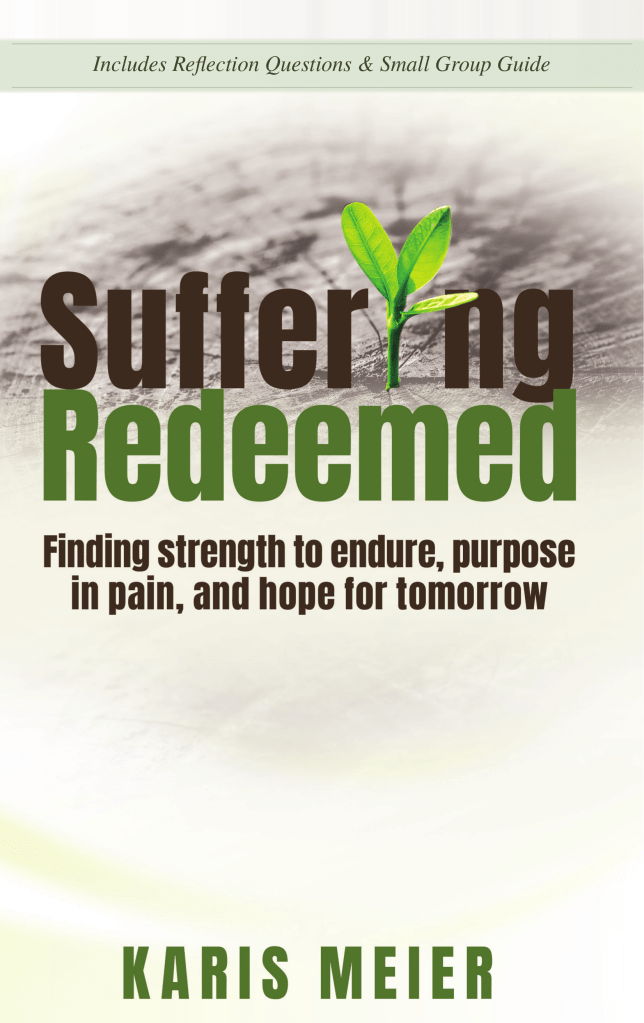


 Suffering Redeemed