
Sitting in Suffering — Accepting Grace
Host: Paul Granger
Date: Jan 17, 2023
Listen on: Anchor
Themes: Theology & Scripture · Healing & Hope · Testimony & Story
Format: Has Transcript
Featured quote
Sometimes the most faithful thing we can do is simply sit in the suffering and accept grace.
— Karis Meier, on Where Did You See God? Podcast with Paul Granger
About this episode
- Sitting with suffering rather than running from it.
- Accepting grace in the midst of pain.
- Seeing God in unexpected and counter-intuitive places.
- Where Karis has seen God through her illness.
Highlights
Sitting in Suffering
Sometimes the most faithful thing we can do is simply sit in the suffering and accept grace.
What makes this unique
Episode title ‘Sitting in Suffering — Accepting Grace’ suggests a contemplative, slower-paced conversation about presence with God in pain. The podcast’s core question — ‘Where did you see God?’ — draws out a unique angle from Karis.
Full transcript
Read the full transcript
Transcript source: Whisper (large-v3, cleaned).
Britannica defines grace in part as the spontaneous unmerited gift of divine favor or divine influence operating in individuals. In other words, grace is unexpected and unwarranted and yet powerful. Yet in the midst of suffering, we can feel like grace is the farthest thing from us. After all, we’re aware of all the times we longed for grace, all the times we prayed for something to happen and didn’t see it. So when grace is before us, it can be easy to miss. I really appreciate this conversation with Karis because it presses us into this idea of how we can accept God’s grace. For Karis, she had to accept that God could work and was working around her. Even more, her name means grace. And she realized God was inviting her to accept who he had made her to be and what he was inviting her to. God is full of grace. And if he is in the midst of our situations, that means grace is as well. The question is, are we willing to accept it? You’re listening to episode 153 of the Where Did You See God podcast. Father God, I just want to thank you that you are God and you are good. And I just thank you for the ways that you can orchestrate things. I thank you for the way that you orchestrated this connection between Karis and I. That was just clearly you. And we’re just both confident that that is because there’s something you want to do, whether in this space or even beyond this space. And so we want to give it to you. We want to give you our words and our thoughts. We pray that you would guide our conversation. We invite the spirit to lead as the spirit wants to lead. And in all this, we pray that you are glorified and honored. So we thank you in advance for how we believe you will work. In Jesus’ name, amen. Well, Karis, I am excited about our conversation because as we talked about, I reached out to you because I was going to be on a podcast that when I was looking into it, you had previously been a guest on. And I thought, wow, we could have a really great conversation around this topic of suffering. But little did I know that you had reached out to me the day before because of Darcy Steiner, and it had gone to my spam folder. I just happened to look at the spam folder, see it on there. It’s like, oh, she responded back to me. But I was like, no, she didn’t respond back to me. She actually reached out to me independently. So you and I reached out to each other independently within the same 24 hours. So I’m confident this is going to be just a fun conversation. but before we jump in, for those that are listening, what would you want them to know about who you are? That’s a great question. First and foremost, I am a child of God. I think I struggled for most of my life with identity issues. And it’s something that I try to press into every day more is to know who I am as a child of God and daughter of King Jesus. And that’s something that I right now really focusing on with my children too. So I’m also a wife and a mother of four children. I recently have been doing a lot more writing. I’ve formerly been a counselor, have a lot of different interests, including soccer and music, playing the violin. Those are little highlights. Yeah. And you wrote a book called Suffering Redeemed, Finding Strength to Endure. And I just want to mention that title because I already mentioned that you and I could have a lot of conversations around this idea of suffering, but you’ve actually written a book that hits on this. So this topic is one that you’ve processed, that you’ve thought about. So I feel like just starting there, that’s not a topic that people necessarily want to focus on because it can be so hard. So what brought you to a place where God was prompting you to spend a lot of time processing suffering? Well, it was through suffering. I contracted some parasites while visiting my sister in Pakistan almost 20 years ago, right before I got married. And because of the type of parasites and the length of time that I had them before they figured out what was going on with me, there was quite a bit of internal damage that took place and started affecting different organs. I had been healthy, very healthy, very athletic. And then all of a sudden I was in a body that was not working and it completely changed my life. Yeah. For the first few years, I kept thinking, well, this will get back to normal and I can just get through this and endure, but it didn’t go away. And months turned into years. About five years ago, there was a point where I had some pretty serious new condition, neuropathy that kind of made me unable to walk or even really do much of anything. I’ve been very weak, was in the hospital for a while trying to figure out what’s going on. It was during that time that I already felt very broken. I felt like things could not get worse, not only physically, but it was starting to affect me mentally, spiritually. I really believed and believe that God can heal and he does heal and I’ve seen him heal, but that wasn’t happening for me. And not only that, but things were getting progressively worse through the years. I was at a very, very low point. And then this happened along with some other circumstantial things in life. I think it was really through being completely, utterly broken before the Lord, where He just revealed to me His grace in a new way, where it wasn’t about me trying to hold it together myself anymore. I realized there was some pride and some wanting to be able to hold it together myself. And I think it was through that that God really got to some of the inner parts of me that only he can do in our lives in a way that is very difficult, but also very freeing to be able to let go and say, okay, God, I am completely out of control and I don’t have anything to offer you except to receive your love. And also just learning how to let myself not be okay. I think even as a child, I was always someone who wanted to be good and to do good and was devastated when I couldn’t live up to my parents or my teachers or my coaches’ expectation. And so all of a sudden, I’m in a place where I can’t do anything to perform. I felt like I had nothing to offer. It was during that time where I felt like God was calling me to start writing. And I was like, what am I going to write about? I don’t have anything good right now. It’s completely dark. I felt like I was in this pit. But it was really through that where I just started struggling and wrestling with a lot of the questions that I had had over the years about suffering, about struggling, about who God says he is, what the Bible says. So many promises and truths that I know are true, but I wasn’t experiencing in my own life and in this tension of faith and surrender. And so I just started kind of more of a personal way to process. I started keeping a log on my computer and just writing things as a Lord, put things on my heart, and then started a blog a couple years ago. But it was the beginning of this year where, you know, the Lord was kind of prompting me to put it into a book, you know, and it was hard because a lot of what I had written, I had never expected to share with anyone. It was more of just a personal processing and also relating to the Lord. You know, probably the most difficult times was when I was writing, you know, like, I’m really doubting, I’m really struggling, and I’m barely holding on. But it was often those moments when God would speak to me when God would revive me, when he’d give me a word to get me through the day. And so all that to say, I kind of went through everything. And about eight months later in October, I launched the book. So that’s what happened. Yeah. Well, it’s interesting. You talked about how God gave you this prompting to write and your initial response was, well, what am I going to write about? Because the only things I know and I’m experiencing are bad. There’s nothing good. There’s nothing redemptive. You are absolutely convinced of that because it made logical sense. Suffering is bad and unredemptive in our minds. And yet, meanwhile, God’s like, no, no, no, no, no. There’s actually something really valuable here for you and for others. And that’s something that I’ve experienced even in this sitting in suffering series is when God prompted the idea, my gut response was, that’s a depressing season. How is that going to be enjoyable? No one’s going to want to sit and listen to that. And yet it has been incredibly valuable to see what God has brought about. And this is something really cool about how God works is he’s keenly aware that we have our own understanding and yet he sees something way bigger. One of the first things that you said that stood out to me was you kept hitting these points that you thought things would get better and then they didn’t. But the thought in your mind was things can’t get any worse. And then they would. And even our lines that we draw, I’m good insofar as this is the lowest I go. And now you’re at this place where you’ve experienced going lower and lower and lower. And yet, here you are. I’ve seen you smile. You’ve experienced God doing things. So tell me a little bit about that, like coming to learn that our line for this is the worst that things can be, how that’s actually not real. And God could actually do something beautiful where we thought he never could. Yeah. You know, I think it’s something where we try to imagine in our heads, you know, how we’re going to handle a situation. There’s different scenarios that we have where we think, you know, if this happens, then I’m going to try to be prepared, you know, by doing this. And like borrowing grace from tomorrow that we’re not even experiencing yet. God’s grace is sufficient for each minute. But if we are already living in tomorrow and worrying about it, we’re not there yet. And God’s grace will be sufficient then. So I think part of it is just our desire to control and just the natural human tendency to take care of it and to protect ourselves. And part of that is having these scenarios where we think, okay, this is horrible. if one more thing happens, then I’m just going to fall apart without recognizing the power and the strength that God has and that he really is the one who sustains us minute by minute, hour by hour. And believing that all the scriptures that we have memorized and know so well, like his grace is sufficient and his power is made perfect in our weakness and they sound good, but then when they’re actually coming true in our lives, are we going to be able to keep speaking that and believing it even when, you know, you’re in the darkest place. And what I found is God, you know, He is the God of all comfort. And we’re only comforted when we’re in affliction. If we’re doing great, we don’t experience that comfort. And I would like to say that I would be as close to and as intimate with God right now if I had not experienced the suffering, you know, that I have for the last 18 years. But I honestly don’t know. I don’t know where I would be. I don’t know where I would be turning to. And I think there is a special grace in suffering, a special place where God brings us if we turn to him. I think there’s always temptation. And I know a lot of people turn away from God because it’s too hard. They can’t handle it. They can’t reconcile this good God with the life that they’re living or the life that they lost and a loved one or whatever it may be. And then they turn away from God and then they can’t receive from God. And I’m not saying that God pursues us, like he will continue to pursue us in his goodness, but we also need to make an intentional turn towards him and open arms to receive. I have felt over the years, different times when my heart has been hardening, I can actually just sense it and it scares me because I’m like, oh my goodness, I need to turn back. I need to really like get on my knees and turn back to God. And it reminds me of something one of my pastors said when I was a kid, you know, he said, I pray every day that I will keep trusting Jesus and I’ll keep having faith every day. I pray that. And I was like, why? Like, I’m going to always trust Jesus. You know, I believe he’s, you know, who he is and I’ll always believe it. But I understand now why he does, because there is some temptation to turn away and to turn to other things or turn to other people or whatever. Instead of turning to God first and continuing to believe in his goodness. Yeah. Well, and that’s one of the unique opportunities that suffering brings is it shows us these spaces in which we have to decide to follow God. So when everything’s going well, it might be easy for us to be like, oh yeah, I’m going to follow God because God’s good and he’s taking care of me. But when stuff’s not going well, when you get to that point where like things can’t get any worse and then God lets it get worse, now you have to decide, do I still want to follow this God? do I still want to love this God? You’re making a decision to follow someone even though it may not benefit you or it may be costing you. And that’s a different and deeper level of love or obedience. I mean, the closest I feel like I can compare it to is with kids. My kids, I am at a place where no matter what they do, I’m going to love them, right? But as a parent, you get tested in that when certain things happen, when certain rules aren’t followed. But there is this level of love that many parents have where it’s like, even when you get to that juncture and you know in your humanity, you don’t have the strength or the capacity, there’s something that keeps you going, something that keeps you loving. And God’s constantly demonstrating that to us. He is constantly loving us no matter how much we don’t do it. But because we’re made in his image, we’re invited to the same thing. And it sounds like that’s part of what you experienced that you kept hitting these points where it’s like, this can’t get any worse. I don’t want it to get any worse. I want to be able to keep myself together, but I keep on not being able to, like, I don’t want to release this and just see what God, I don’t. And yet you kept staying at the table with God. You didn’t have this point where you said, I’m done. And that’s it, period. You may have moments where you’re like, God, I’m furious with you, but something kept you going. And I think it’s that innate power of love that isn’t defined by conditions or circumstances. I think definitely I learned through time the power of God’s love. And I mean, it’s beyond, of course, beyond our understanding or comprehension. But I think of when Jesus gave that hard teaching in John 6, and Jesus is like, you know, are you going to turn away too? And they say, you know, well, where would we go? Where else would we turn? And I think I’ve tasted enough of the world in different ways to know that there is no other place. I mean, God is, he is the only one who will be faithful. He is the only rock upon which we can stand. And even when we feel like we’re sinking, he is still there. And learning to let go of our idea of how God is going to work in situations and in our life is really hard, but it’s vital as we learn, you know, to depend not on our own understanding because there were several times, especially about eight years in where I was given a gift of faith and a lot of words that God was bringing to me from other people and through the word that God was going to heal me. And I really had a lot of faith that he would. And one of the stories that God often spoke to me through was the woman with the issue of blood. And I imagined myself in that scenario so many times, like reaching out to Jesus and just believing in faith that he would heal me. And so around the 12-year mark, I was like, Jesus, this would be a perfect opportunity. This would fit in so well. And I just felt like, I kind of felt like, this is it. This is going to be the year. And that came and went. And I was really disappointed. I was really, really let down. And I think our own interpretation of what God is saying sometimes can be off. And then we can be tempted to blame God instead of realize that we’re not perfect. Others aren’t perfect. We’re going to read situations. We’re going to misunderstand how He’s speaking to us sometimes. But then to just get back on and say, okay, God, I’m going to keep trusting you, even though this is really, really disappointing. But I’m going to keep believing. And I think that place of continuing to believe, you know, hope deferred makes the heart sick. I’ve definitely been there. But to keep believing and keep trusting that God can do anything any day, like He can still heal any day, you know, up to the last day when you die. He can still do something. But if he doesn’t, then we also have to live in that place of surrender. That’s really good. And man, the imagery of the woman with bleeding and having just watched the last few episodes of The Chosen in season three, they hit that story. And it’s really powerful, but they also hit the story where they’re showing little James and he needs healing that hasn’t happened. The way that the show is navigating that idea of why some people are healed and some aren’t, I think is really powerful. But it is a question that we wrestle with. We know it’s possible. So why aren’t you doing it, God? I know that you’re able to heal. Why didn’t you choose me? Do I not have enough faith? Is it on me? Am I the issue? Or do you not love me? We sit and wrestle with these questions. But then in the meantime, we are at this place that you just talked about of, will I be at the table though, even if I don’t understand it? And I I love that you brought that passage in John 6 up because it’s one that I come to often, particularly verse 66, where a lot of people, when they heard Jesus saying crazy stuff, they said, forget it, we’re out, and they left. But the next part of it, if we take it out of context, we can miss the beauty of it. Because out of context, somebody could read it as, oh, well, there’s all these people who just weren’t committed to Jesus. They didn’t stay at the table, but the disciples did. They see it as a super spiritual thing. Ah, look at them. They’re super Christians because they stuck with Jesus even when he was talking crazy. But in context, they weren’t the Acts apostles at that point. They were the pre-crucifixion disciples. They were the disciples who still didn’t really get what Jesus was saying, still didn’t understand. They were the disciples who got really scared and fled or denied or lost hope. And so they were still at a place of spiritual immaturity in a lot of way. And yet the invitation was still extended to stay at the table. So in other words, their capacity to stay at the table wasn’t because they were super Christians, wasn’t because they were super spiritual. It was simply because they stayed, sometimes from a strength that wasn’t even their own. When you hit those moments where you can look back now and recognize, man, oh man, in my humanity, I would have left, but something kept me there. What do you think it was that kept you at that table? I wish I knew I’m so thankful that I was brought up in a home where Jesus was the center and so I think I am blessed with a foundation of truth and of parents who are missionaries and to live their lives for the kingdom of God so that as a kid I have strong memories of relating to God so I know that the foundation is a blessing for me but the power of God’s presence and his Grace. So my name means grace in Greek, Charis. And it’s been something that over the years, I’ve really had to grow in learning. I’m more of a law person, I think, where I would like to just get what I deserve type of thing, even though I know that if I really did, I would be dead. But learning to receive God’s grace and just who He is, I don’t know, it takes a lot of time in his presence, I think to recognize just how loving and how personal he is and to feel his love and his patience again and again. I know for me, having chronic illness for so many years, I’ve dealt with a lot of shame. Sorry. I think, you know, when we’re in a place for a long time, there’s so many lies that can start to come up. People with good intentions, asking questions about whether you have enough faith, about is there sin in your life, which I know in some situations that’s true, right? And it’s good. I think it’s brought me into deeper places of repentance. But at the same time, I know it’s given a foothold to Satan for me believing lies about myself. And like you mentioned earlier, does God really love me? Why does he not answer my prayers when he does others? Just a lot of questioning, a lot of struggling with not only just in Christian circles, but just living with conditions that, and I mean, mine aren’t as visible now as they have been other times, but there’s still a lot of just having to fight off guilt and, you know, like thinking things from my past, like, oh, maybe if I hadn’t done that, then this wouldn’t have happened. And then, you know, a lot of what ifs that I’ve had to really bring before the Lord. But I think even in all of that is experiencing God’s grace and his acceptance, you know, his unconditional love and acceptance that is nothing we can merit in any way ever. I mean, Jesus took care of our sins on the cross and it’s not punishment. I know there’s consequences to sin, but he doesn’t punish us when we have already received forgiveness. And it’s something that I still struggle with. I’m definitely more aware of it. And I think I have a lot of more tools now where I can come against it, but it’s still hard. It’s still hard. Yeah. Well, I appreciate you sharing that because I can resonate with what you shared because it’s something that I was processing recently. There’s a leadership opportunity that God has put before me. And as I’ve been processing and praying through that, all of these lies, all of these things that have been spoken in the past, all these things have kind of come into my mind as well. I’ve been speaking into my identity, have been making me question decisions I’ve made or steps I’ve taken or how I’m perceived, like all this just mess of stuff, right? And so in any given moment, we’re carrying a lot more than people may realize. We’re carrying a lot more than even we realize, right? Because we’ve already talked about this mindset that we have, that there is a point at which things shouldn’t get worse. So that’s just not a possibility because that would be horrible. That would be horrendous. That would be unspeakable. So here’s my line for things can’t get worse. And the things I’m experiencing, we’ve talked about how there’s no value in it. What am I going to write about? Because there’s nothing good going on. So this is the stuff that we don’t talk about. Another thing that I wrote down that you mentioned is within us, there’s this desire, whether we’re aware of it or not, that we want to hold ourselves together. For some people, it might be a control piece. Like I’ve got to do this because if I’m not doing this, then I don’t have control of it. For some, it’s a fear of if I release this, what am I releasing it to? If I let God control it, what if he does something I don’t want him to do, right? So there’s all these things. And then there’s this undercurrent of these lies, of these things that have been spoken into us, of these things that lead us to feel shame, that lead us to feel like we aren’t who we think we are or we don’t even know who we are. I mean, you were really open with the fact that that hasn’t been fixed or solved, right? You haven’t gotten to a place where you’re like, and now none of that happens anymore. And I’m always riding on this cloud of joy. No, actually what you described, I think is even more beautiful and more powerful. It’s, I am more aware of this and therefore it has less power over me. There are still moments where it’ll trip me up. But I’m learning more and more. It’s that verse, take every thought captive. I mean, that’s really what we’re talking about. You can’t take something captive if you don’t even know there’s something to captivate. If you don’t know that there are things that you need to be taking hold of, but when you realize that there are thoughts that should be taken captive and you have been given the power and authority to take those captive, well, now you start to do it more off. And when that lie pops up in your head that, oh, well, this is your fault, you’re able to pull back and say, well, hold on. But I know at that time that I was trying to seek God to the best of my ability. Sure, I didn’t do it perfectly, but I at least know that I was trying to seek God, right? Like we can work through those things. The goal isn’t that we would get to a place where none of that ever exists anymore, because that’s heaven. In heaven, none of those lies will be able to stand, right? They won’t exist at all. So how can we grow in this ability to take thoughts captive? How can we get better at recognizing when our mind is ruminating in the wrong place? Yeah, I think first, at least in my experience, I really had to grow in the truth. And for me, that meant memorizing scripture, because when you’re, you know, it’s a hard thing. I know a lot of people are like, I can’t memorize scripture. It is hard. It’s a lot of work. But it’s not when we’re sitting in from the Bible reading when we usually get these lies. It’s the middle of night or it’s when we’re out doing something and so to have the truth to come against the lie in the moment is so powerful i mean we know jesus that’s how we fought temptation right was through the word of god and if jesus had to use the word of god then we even more so and so i think part of it is of course recognizing we need to recognize the lies we need to be aware of what’s going on in our minds but then to have the shield of faith and the sword of the spirit the word of God prepared and ready and memorized and on the forefront of our minds. It’s when we don’t catch it and kind of sit on it and let it mull. And then it starts to affect every part of our beings. Every part of us is very interconnected. So I think it’s something that we really need to stay on top of instead of going down the slippery slope, speaking aloud, declaring aloud. At first, I was more uncomfortable with this, but now my kids sometimes were like, what are you talking to? What are you saying? They’ve come to realize that speaking the word of God aloud, it breaks something more when it’s spoken. At least in my experience, there’s something that maybe it just increases our faith too when we hear it as we’re speaking it. So those are a couple of things, the memorizing piece, and then also learning the areas where you are weak and finding the truth to fight. Yeah. When it’s interesting, even that speaking aloud piece, What it made me think of is the reality that the way that the human body has been created, the way that the mind works, when we’re trying to learn something or really retain something, when we use multiple senses, it heightens that, right? So God has actually designed us to benefit from what you just described, not just thinking something in our head, but to vocalize it now is utilizing our minds and our body in such a way that it makes it more powerful. And that’s a spiritual act because that’s how God designed us to work. our full faculties can be brought together to take thoughts captive. Really in what you’re describing, I’ve made those excuses too around why I can’t memorize, right? You know, I just don’t have time or I’m not good at memorizing this, that, and the other. And I’ve got a personally name that usually those are just excuses, right? Because as you were talking, I was reminded of there are times where it was hard for me to memorize for sure. Like a class that I didn’t care for and we had a test coming up and it was a struggle to memorize because I didn’t care about what I was learning. And it was just for a test, which I didn’t even want to take. So there’s not much incentive there. There’s not much drive, but there are other times. Like I remember the first time that I was in a play, I was in the musical, a funny thing happened on the way to a forum and it was in high school and I ended up getting the lead. It was this crazy thing. Cause it was the first time I’d auditioned and I got the lead. So I didn’t know what I was getting into because I got the script and it was like 70 pages and I was on pretty much every one of them, but I was so excited about it that I memorized it. I can’t tell you how. It wasn’t like I drove into it and said, all right, I got to do this every day. I probably did certain things and I definitely read through it a lot, but that desire, that excitement actually enabled me to memorize. We need to not underestimate that God desires for us to have this scripture to encourage us. God desires us to have these things within us to help us to take things captive. And as we grow in that desire, he’s going to equip us. But in the meantime, there are small things we can do. Maybe you’re not memorizing a whole book of the Bible, but what you can do is if a verse stands out to you, do what my wife does. She’s got these verses written on Post-its and she did beautiful hand lettering and slapped them up on the mirror, right? I looked at the date of one of them. One of them was written in 2020, right? So it’s three years now that this reminder, this verse has been there because ultimately what we’re doing when we memorize is we’re coming back to a truth we’ve retained this truth and we’re coming back to it but if for some reason it’s hard to memorize you can’t memorize well the other way you could do it is have it visually there most of us are carrying phones with us what if there’s a verse as your background or you have a verse of the day widget on there right like there’s all these things but it comes down to what you’re pointing out is we have been given this gift of being able to access truth easily and regularly. Are we taking advantage of that truth? Are we utilizing that? Or are we kind of just hoping we’ll remember to do that when things get hard? And what you and I know is when things get hard, sometimes our mind can ruminate on the wrong things. But if we have these things in place, it can actually help catch us from spiraling. Let’s say somebody is listening that is in a similar place of suffering that you’ve navigated. Maybe it’s a health thing. Maybe it’s a long-term thing that they’re like, all right, we’re at the 12-year mark, God. This is beneficial to both of us. You’ll get a really good story out of this. You’ll be glorified, right? And God doesn’t do it. And so they’re just sitting in this place of suffering. If you could say something to them now, what would you want to say? what comes to me is it’s kind of a story but i have a lot of intestinal issues so i can’t eat a lot of food that most of the people eat and it’s amazing how many things in our culture revolve around food there’s one time a few months ago where we went to a party and you know everyone’s eating all the food and i was watching you know and just kind of feeling probably some self-pity and just kind of feeling so tired of this so withdrawn into myself and not really wanting to relate. And the verse came to me, oh, taste and see that the Lord is good. And the person I was sitting next to was not a believer. And I was just thinking about that verse. And the truth is that God is good and that another verse says his steadfast love is better than life. And I think through my suffering, through things taken away from me, I don’t get to experience some of the good gifts that God has given us to enjoy. And I’m not saying that we shouldn’t because we’re supposed to enjoy all the good gifts that God has given us. But I think sometimes it’s through those taken away where we really are kind of forced into a place where we’re able to experience the fullness of God’s goodness and how precious he is and to count everything else a loss. I think sometimes it is because taken from us unwillingly, you know, we’re like, okay, I don’t want to let it go, but I have to let it go. And then I can taste and see God’s goodness. So in that moment, I was actually able to share with the lady sitting next to me, you know, like, I really have been able to taste, because she asked me, like, why aren’t you eating? You know, what’s going on? Which I usually try to avoid that question because it’s such a long answer. But it opened up a door for me to share the goodness of God with her, as it has many times over the years. And God’s goodness and the fullness of who He is often magnified in places of suffering because some of the things that maybe would fill in those gaps are taken from us. And that’s my experience, even though, like I said earlier, I know that God also wants to bless us with so many good gifts that he has given us on this earth to enjoy. And I do enjoy what he does give. I just say, don’t waste those moments in the suffering, you know, because a lot of times when we’re in suffering, we just do everything we can do to get out of it. And that’s natural. It’s not bad. It’s a protective thing that we have as humans, but those moments, too, are opportunities for us to experience something of God that we might not in another circumstance. You know, what’s interesting is we’ll talk about how God’s good and the stuff that God wants to give is good, but actually, God is the best. What he has for us is the best. And, you know, I’ve heard people when they hear something like what you just shared, they get upset because they’re like, well, that just sounds cruel that God is taking away your good stuff and saying, well, no, no, you need my goodness. You need me. So I’m going to take away this other stuff so that you’re forced to love me. And as you were talking, it just reminded me that that’s not actually what God’s doing. He desires the best for us. He desires full life for us. He knows where that is and he knows where it’s not. He knows all these other things, these good things are never going to be sufficient, are never going to actually meet the desires of our heart. And he knows, though, that as long as some of these things are in place, we’re going to settle. We’re going to settle because it’s easier or it’s more comfortable. It’s like if somebody was offering me a delicious meal, but I’ve already got a Tupperware full of three-day-old spaghetti and I like spaghetti, so I’m going to, you know, it’s like, no, I’m good, right? I’ve done that so often in life where I’ve turned down something that might have been actually really, really great because I was afraid of it or because I thought what I had was good enough. And so sometimes whether you word it that God takes it away or he lets it be taken, you know, we won’t get into the wording. But when that happens, sometimes it’s because God desires full life, the best for us. And he knows that if he protected that other thing, that we would never choose him. Why would we if we’re good enough? And so if somebody is listening and they want to hear more of your story, they want to read your book, they want to connect with you, what’s the best way for them to do that? So I have a website, karismeier.com, which is my first and last name, K-A-R-I-S-M-E-I-E-R. I have a blog on there, my book, and some other things are on there. My book is also on Amazon, Kindle, and paperback. My website also has a reflection question guide that goes along with the book that you can download. And then, yeah, I’m on Facebook and Instagram also. And as we close out, is there anything else that God’s putting in your heart that you feel like to share? I think just the fact that God is always wanting to connect with us, that he’s always wanting to speak to us. He’s a good shepherd who is guiding us. Just to be attentive, you know, to be attentive to his voice is something that I’m praying to grow in, especially in today’s world. There’s so much noise. There’s so much distraction. And to be quiet and wait upon the Lord is such an invaluable thing that sometimes it can feel like wasted time when you’re just waiting on the Lord, but it never is wasted and good always comes from it. So just encouragement to learn to wait upon the Lord. If God is full of grace, then that means grace is all around us. And scripture makes that abundantly clear. Romans 11, 6 says this, for by grace, you have been saved through faith. And this is not your own doing. It is the gift of God, not a result of works so that no one may boast. Or Titus 2.11. But if it is by grace, it is no longer on the basis of works. Otherwise, grace would no longer be grace. And in Ephesians 1, we find this passage. Through him, we have also obtained access by faith into this grace in which we stand, and we rejoice in hope of the glory of God. More than that, we rejoice in our sufferings, knowing that suffering produces endurance and endurance produces character and character produces hope and hope does not put us to shame because God’s love has been poured into our hearts through the Holy Spirit who has been given to us. We have obtained access by faith into this grace in which we stand. God is full of grace and grace is all around us, but it is up to us whether we accept that grace or not. Whether or not we believe that God could work even if we don’t deserve it, whether or not we believe that God can do something divine. Grace can seem elusive because it is unexpected and unwarranted, and yet God is offering it right now to you in the midst of your suffering. For Karis, it meant releasing her hopes and plans and ideas and accepting God’s better plan, his abundantly more, and his love for her. Because at the end of the day, God doesn’t owe us anything, and yet he chooses to pour out his love. He chooses to guide us. He chooses to extend grace. And when in faith we choose to access this grace, we can rejoice in our sufferings because we will come to know that our suffering produces endurance, and endurance produces character, and character produces hope, and hope does not put us to shame. I want to encourage you right now in the midst of your suffering, God is extending grace. He is inviting you by faith to accept this grace because he wants to do abundantly more than you could ask or imagine. Accept his grace and then ask yourself, where did you see God? Have you ever wanted to read Revelation but haven’t known where to start? Or have you been afraid to read Revelation because of all the ways you’ve seen it misused? Or maybe you haven’t even wanted to touch Revelation but feel like maybe you should since it’s part of the Bible? Well, if you’re in any of these positions or any other ones, I’ve got a resource for you. It’s called a journey through revelation for the person who doesn’t want to read revelation. And here’s the thing. The hope for this resource is that it makes the exploration of who God is and what revelation can mean for you accessible, whatever you believe. And this will not be your normal revelation study. It’s not going to dive into the historic representations of the imagery or expertly decipher the prophecies. The goal of this is not to tell you what revelation means. it’s to explore what it can mean for you now this thing is available for you right now in a few forms one you could go to http://www.where did you see god.com revelation and you can find a pdf for free which you can read on your phone on your device or print out but if you like something that’s a little nicer looking it is also available through amazon on kindle and in paperback form and i prefer paperback, whether you print it or you get the one on Amazon, because this gives you a place to write some things out, because you’re going to want a place to write things out, because I really do believe that God wants to speak to you through revelation, whatever you feel about revelation, whatever your experience, and whatever you think about God. So if you’re interested, get it for free, get it for a very, very, very low price. This is not about making money, but about us together exploring how we can see God in the midst of such a difficult and controversial book. Thank you so much for taking the time to listen to the Where Did You See God podcast. And I would love for your stories to be a part of it as well. So there are a number of ways that you can do that. You can check out our Facebook page at Where Did You See God podcast. You can go to anchor.fm slash Where Did You See God, where you can leave a brief voice message at 804-372-3836. I would love to hear your stories. And if the stories you’ve heard have encouraged you, think of someone else who could be encouraged as well and share it with them. The music you’ve been listening to is You’ll Walk, You’ll Run by Urban Doxology. They are a solid group and you will love listening to the rest of their music. So check them out. And as always, as you go through your day, ask yourself, where did you see God?
Listen to the full episode on Anchor →
{ “@context”: “https://schema.org”, “@type”: “PodcastEpisode”, “name”: “Sitting in Suffering — Accepting Grace”, “url”: “https://karismeier.com/where-did-you-see-god/”, “datePublished”: “2023-01-17”, “inLanguage”: “en”, “partOfSeries”: { “@type”: “PodcastSeries”, “name”: “Where Did You See God? Podcast” }, “creator”: { “@type”: “Person”, “name”: “Paul Granger” }, “contributor”: { “@type”: “Person”, “name”: “Karis Meier”, “url”: “https://karismeier.com/about/”, “sameAs”: [ “https://www.amazon.com/author/karismeier”, “https://www.instagram.com/authorkarismeier/” ] }, “associatedMedia”: { “@type”: “MediaObject”, “contentUrl”: “https://anchor.fm/wheredidyouseegod/episodes/Sitting-in-Suffering-Accepting-grace-e1u9fr9” } }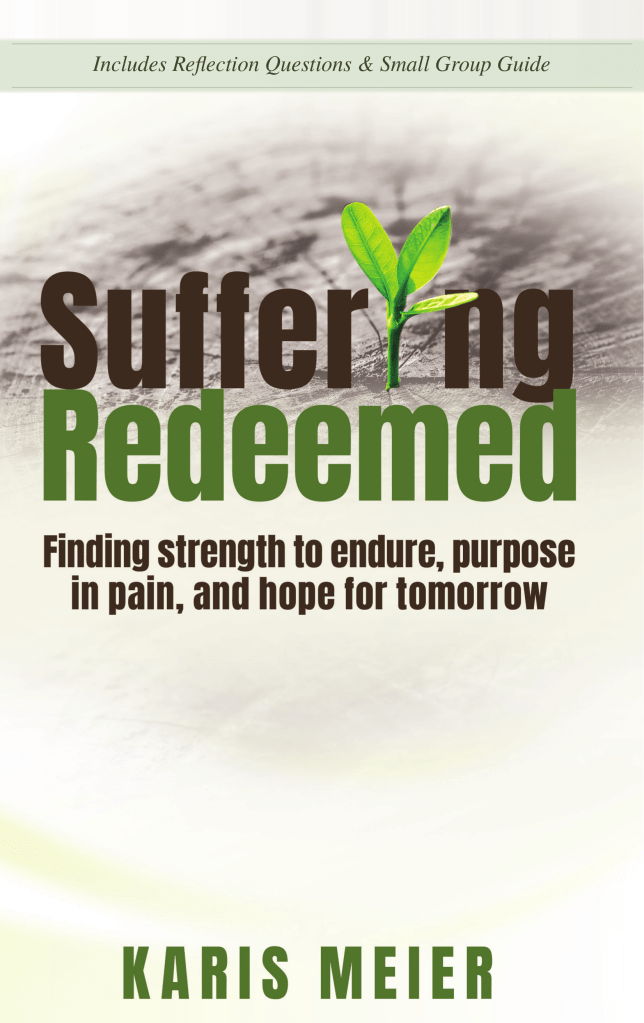



 Suffering Redeemed